Malaysia’s diversified economy, export markets to cushion external shocks in 2027, says Amir Hamzah
BANGKOK, Oct 18 — Malaysia’s diversified economy, resilient export markets and stronger fiscal buffers...
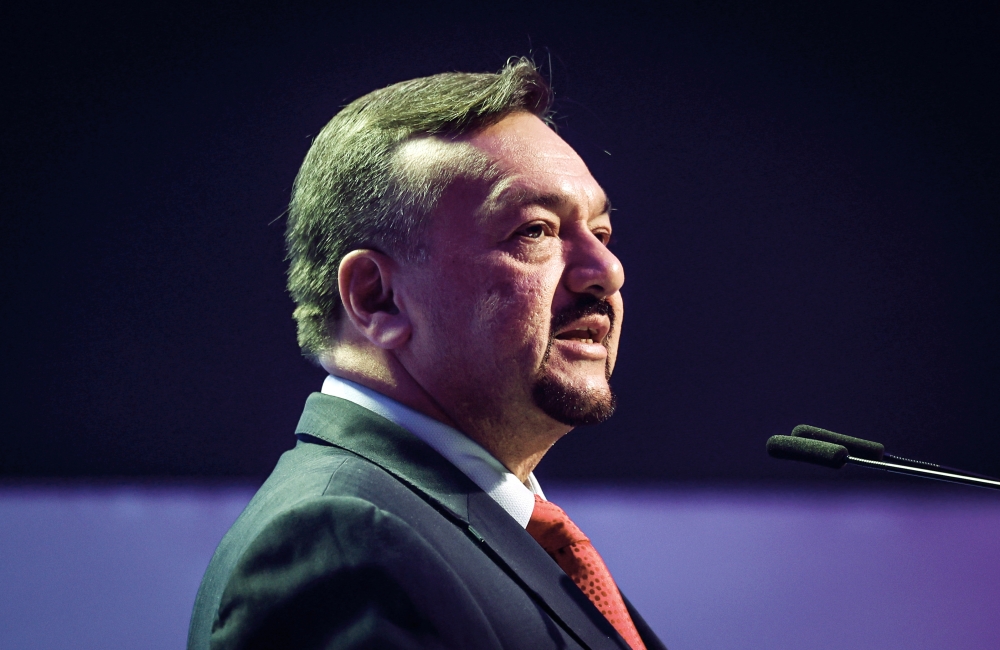
Malaysia's diversified economy and robust export markets are expected to help the country withstand external shocks and maintain its growth trajectory in 2027, according to Finance Minister II Datuk Seri Amir Hamzah Azizan. Amidst geopolitical tensions, shifting global trade patterns, and economic uncertainties, the Malaysian government is poised to better handle disruptions, thanks to earlier experiences with crises such as the Russia-Ukraine war and ongoing trade tensions.
Hamzah highlighted that Malaysia's trade volume in the first eight months of the year increased by 27% compared to the same period last year, reflecting the sector's resilience.
The Finance Minister emphasized that Malaysia's economic base has expanded beyond commodities and oil and gas to encompass electrical and electronics, semiconductors, data centers, and advanced manufacturing. This diversification reduces the nation's dependence on any single sector, making it more adaptable. Additionally, Malaysia's export markets are diversified, with no single market accounting for over 17% of exports.
This diversification allows businesses to redirect trade towards more favorable markets. Hamzah noted that the government is strengthening domestic industrial ecosystems to enable manufacturers to source more components locally, thereby minimizing exposure to international supply chain disruptions.
In terms of fiscal preparedness, Hamzah pointed out that reforms aimed at strengthening public finances have equipped the government with enhanced capabilities to respond to external shocks. The government's approach to recent tensions in West Asia focused on securing supply chains while providing targeted assistance to affected groups through expanded financing support instead of relying solely on subsidies.
Furthermore, Hamzah mentioned that Malaysia has mobilized private capital alongside public funds to foster economic growth, including by encouraging government-linked investment companies (GLICs) to invest in strategic domestic industries while ensuring commercial returns.
He revealed that Malaysia's total approved investments last year amounted to RM431.8 billion, with foreign and domestic direct investments each constituting roughly half, indicating strong confidence among both international and local investors. Hamzah concluded by asserting that stronger domestic investment, supported by diverse industries and export markets, would further bolster Malaysia's economic resilience, thereby sustaining growth despite an uncertain global outlook.
Written by urgent.news from Malay Mail's reporting — not their text. Machine-written — may contain errors; check the original before relying on it.