Iraq renews calls for pact with Gulf and says security 'cannot be brought from abroad'
Iraq ’s Foreign Minister Fuad Hussein said on Sunday that stability in the Middle East must come from within the region itself, not from external powers, renewing calls for a security dialogue with Gulf states. Speaking after the Organisation of Islamic Co-operation (OIC) held a council of foreign ministers in Baghdad, Mr Hussein described the security situation as critical. “The security…
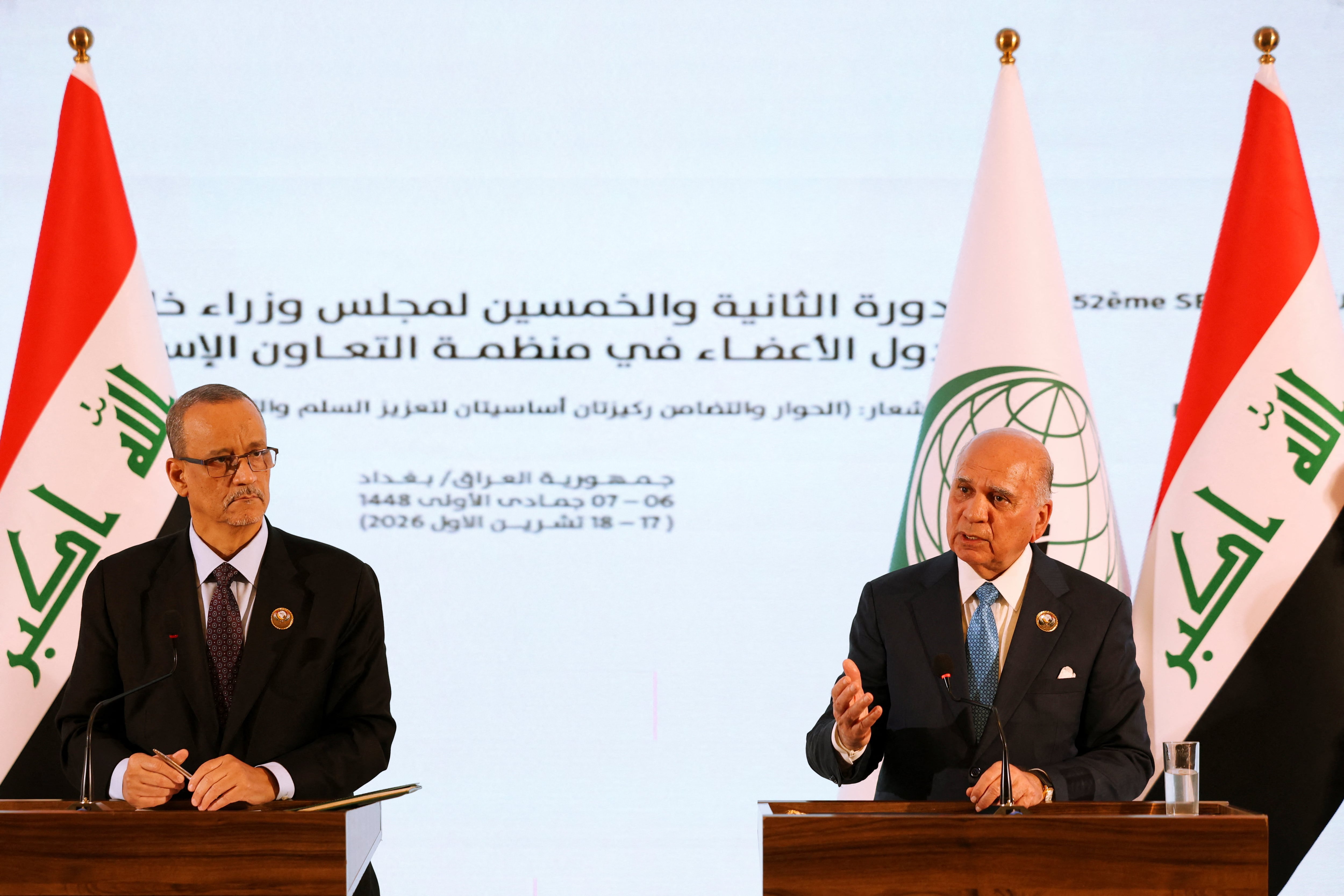
Iraq's Foreign Minister Fuad Hussein has reaffirmed the nation's stance that regional security must be achieved internally, not from external forces, as he advocated for a security dialogue with Gulf states. During a press conference following the OIC Foreign Ministers' council in Baghdad, Hussein emphasized the critical nature of the region's security situation, describing it as complex and under attack.
He stressed that the region itself needs stability and security, not security purchased from abroad. This marks Iraq's first high-level OIC meeting in Baghdad in 45 years, positioning the country as a regional mediator.
Iraq has consistently sought to act as a mediator among various powers, maintaining relations with Gulf Cooperation Council states, Iran, and the US. The minister reiterated that Iraq's call for a home-grown security framework, previously proposed as the 6+2 initiative involving the six GCC states, Iraq, and Iran, was not acted upon due to unspecified circumstances. This initiative was revived after the Iran war began in February.
Recent regional instability, including conflicts in Gaza, Lebanon, and the Red Sea, as well as tensions with Iran and threats to Gulf shipping, has prompted Iraq's renewed push for the 6+2 approach. Hussein noted that recent contacts between concerned nations, particularly between Gulf states, Iraq, and Iran, have aimed to activate this initiative. He expressed optimism about holding a meeting in Baghdad to advance this agenda.
Baghdad argues that the 6+2 framework acknowledges the shared security and economic interests of the eight Gulf states, from oil exports and freedom of navigation to climate change and water scarcity. The economic argument is central to Iraq's pitch; projects like Iraq's Development Road, linking the Gulf to Turkey and Europe, and Gulf states' interest in investing in Iraqi gas, electricity, and infrastructure, cannot proceed while the region remains in a cycle of confrontation and external security dependency. Without security and stability, Iraq cannot achieve economic development or attract investment.
Hussein emphasized that regional countries should lead peace initiatives, not foreign powers, as they should be the primary stakeholders in achieving security and stability. Iraq will continue its efforts to communicate with these countries, supported by the OIC Secretary General, until the desired outcomes are achieved.
Written by urgent.news from The National Business's reporting — not their text. Machine-written — may contain errors; check the original before relying on it.
This story
This is one outlet's version. Read the fullest account.