Bombay High Court Allows Chembur Housing Society To Terminate Tridhaatu Redevelopment Deal After Decade-Long Delay
Mumbai: The Bombay High Court has allowed a Chembur housing society to terminate its redevelopment agreement with the Tridhaatu group and appoint a new developer, holding that the developer’s commercial interests cannot prevail over the rights of residents left homeless for over a decade. Justice Arun Pedneker observed that nearly eight years after the project was abandoned, elderly members face…
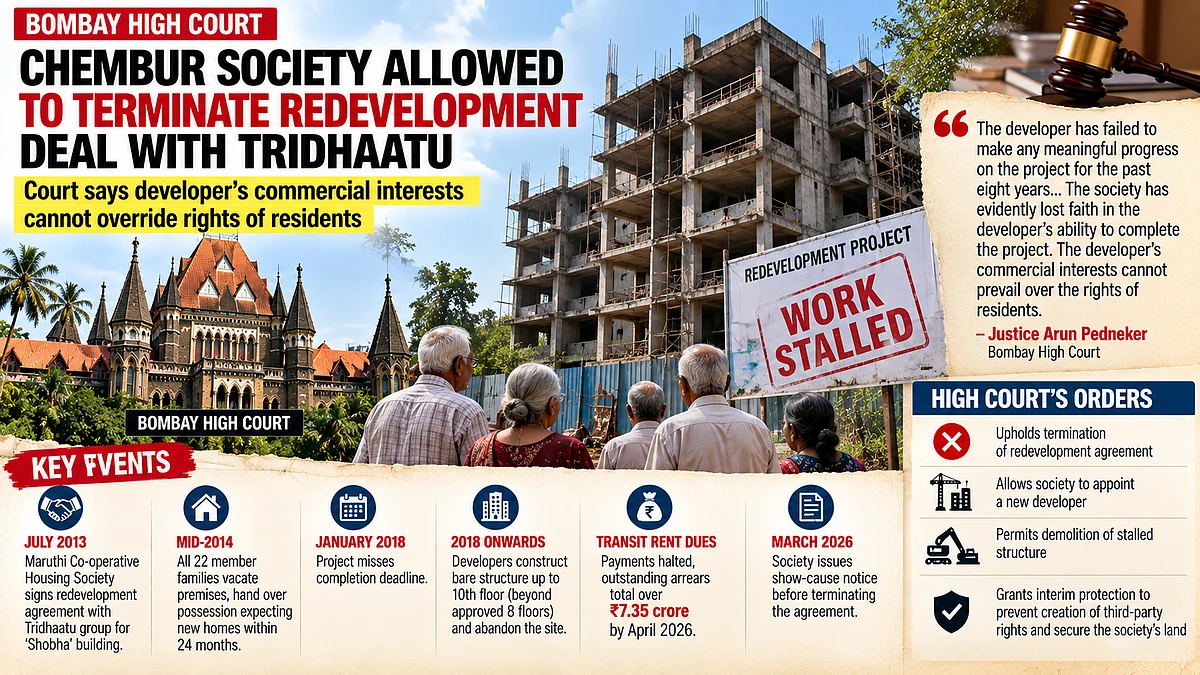
Mumbai's Bombay High Court has ruled that a Chembur housing society can end its decade-long redevelopment deal with the Tridhaatu group, prioritizing the rights of residents displaced for over a decade. Justice Arun Pedneker emphasized that the developer's commercial interests should not supersede the needs of elderly residents facing dire hardships.
The project, initially signed in 2013, saw the society vacate their premises in 2014, expecting to move into new accommodations within two years. However, construction stalled, surpassing completion deadlines and leaving residents with unpaid transit rent totaling over Rs. 7.35 crore by April 2026. The court noted the eight-year delay and ruled that the agreement should be terminated, as the developer's failure to make meaningful progress rendered the project legally untenable.
With most residents being super senior citizens, the society issued a show-cause notice in March 2026, which led to the termination of the agreement ex parte. The High Court's decision allows the society to proceed with choosing new developers, demolishing the partially built structure, and initiating a fresh redevelopment process.
Written by urgent.news from Free Press Journal's reporting — not their text. Machine-written — may contain errors; check the original before relying on it.