Einstein’s general relativity equations: explained in plain English
Although Albert Einstein is a legendary figure in science for a large number of reasons — including E = mc² , the photoelectric effect, and the notion that the speed of light is a constant for everyone — his most enduring discovery is also the least understood: his theory of gravitation, general relativity . Before Einstein, we thought of gravitation in Newtonian terms: that everything in the…
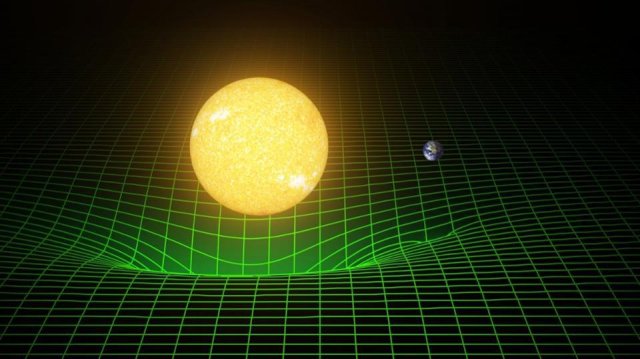
Albert Einstein's groundbreaking theory of gravitation, known as general relativity, fundamentally changed our understanding of gravity. Prior to Einstein, gravity was explained by Newtonian physics, where masses attracted each other based on their mass, the gravitational constant, and the distance between them.
Einstein revolutionized this view by introducing the concept of spacetime, where space and time are unified into a fabric. According to Einstein, the curvature of spacetime, caused by the presence of matter and energy, determines how objects move within it. Conversely, the movement of matter and energy influences the curvature of spacetime.
In 1915, Einstein presented his general relativity equations, which relate the curvature of spacetime to the distribution of matter and energy within it. This equation, expressed as G μν + Λg μν = 8πGT μν, may appear simple at first glance, with only a few symbols. However, the meaning behind each symbol becomes much more complex when delving deeper.
The Einstein tensor (G μν) represents the curvature of spacetime, while the cosmological constant (Λ) symbolizes an intrinsic energy inherent to the fabric of space itself. The metric (g μν) encodes the properties of every point within spacetime, and Einstein's gravitational constant (8πG) and the stress-energy tensor (T μν) describe the local energy, momentum, and stress within spacetime.
These five terms, interconnected through the Einstein field equations, establish the relationship between the geometry of spacetime and the matter and energy it contains. This fundamental concept has been validated through numerous observations and experiments, remaining consistent for over a century. Despite its remarkable success, general relativity remains a complex and intricate theory, with its equations encapsulating the intricacies of four-dimensional spacetime and the dynamic nature of energy and matter.
Rewritten by urgent.news; may contain errors — check the original.
Source: bigthink.com