Spices, shipwrecks and ancient trade routes: Louvre Abu Dhabi explores 1,000 years of Indian Ocean history
Visitors to Louvre Abu Dhabi's latest exhibition begin their journey in darkness, lights above mimicking a star-filled sky. It's a reminder of a time when sailors relied on the heavens to navigate the Indian Ocean, carrying spices, precious stones and textiles between distant civilisations. Such voyages connected communities from East Africa and the Arabian Peninsula to India, China and…
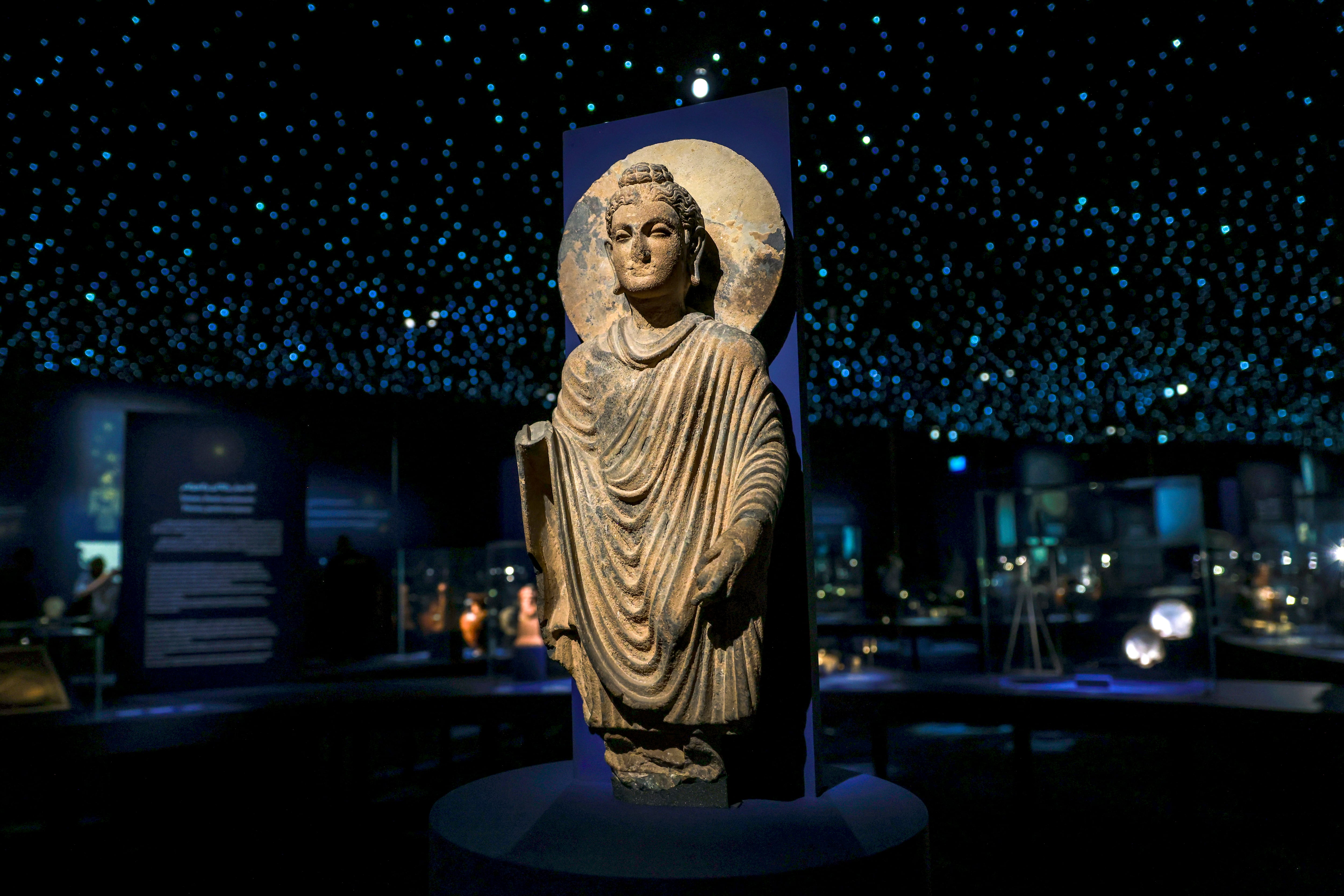
Visitors embark on a journey through 1,000 years of Indian Ocean history at Louvre Abu Dhabi's latest exhibition, "Spices and Wonders: Sailing the Indian Ocean." The exhibit, opening on October 14 and running until February 14, 2027, explores the region's interconnectedness through maritime trade and cultural exchange. It showcases approximately 240 artifacts from 24 lenders, including archaeological finds, jewelry, religious objects, and items recovered from shipwrecks.
The Arabian Gulf is highlighted as a pivotal hub in these networks, with the pearl industry playing a significant role in regional commerce. The exhibition features detailed models of historic vessels and maps, illustrating how sailors navigated vast distances using techniques like the kamal and astrolabe. Cultural exchanges are examined through items like a Buddha sculpture from Pakistan, showcasing the blending of artistic traditions.
The display emphasizes that religion and trade were intertwined, with merchants and pilgrims traversing the waters for various purposes, leaving an indelible mark on distant communities. This narrative, spanning from antiquity to the 17th century, underscores how commercial relationships and cultural exchanges flourished long before European influence dominated the region.
The exhibition runs at Louvre Abu Dhabi before traveling to the Guimet in Paris, highlighting the rich tapestry of human connections that shaped the Indian Ocean world.
Written by urgent.news from The National UAE's reporting — not their text. Machine-written — may contain errors; check the original before relying on it.