Spices, shipwrecks and ancient trade routes: Louvre Abu Dhabi explores 1,000 years of Indian Ocean history
Visitors to Louvre Abu Dhabi's latest exhibition begin their journey in darkness, lights above mimicking a star-filled sky. It's a reminder of a time when sailors relied on the heavens to navigate the Indian Ocean, carrying spices, precious stones and textiles between distant civilisations. Such voyages connected communities from East Africa and the Arabian Peninsula to India, China and…
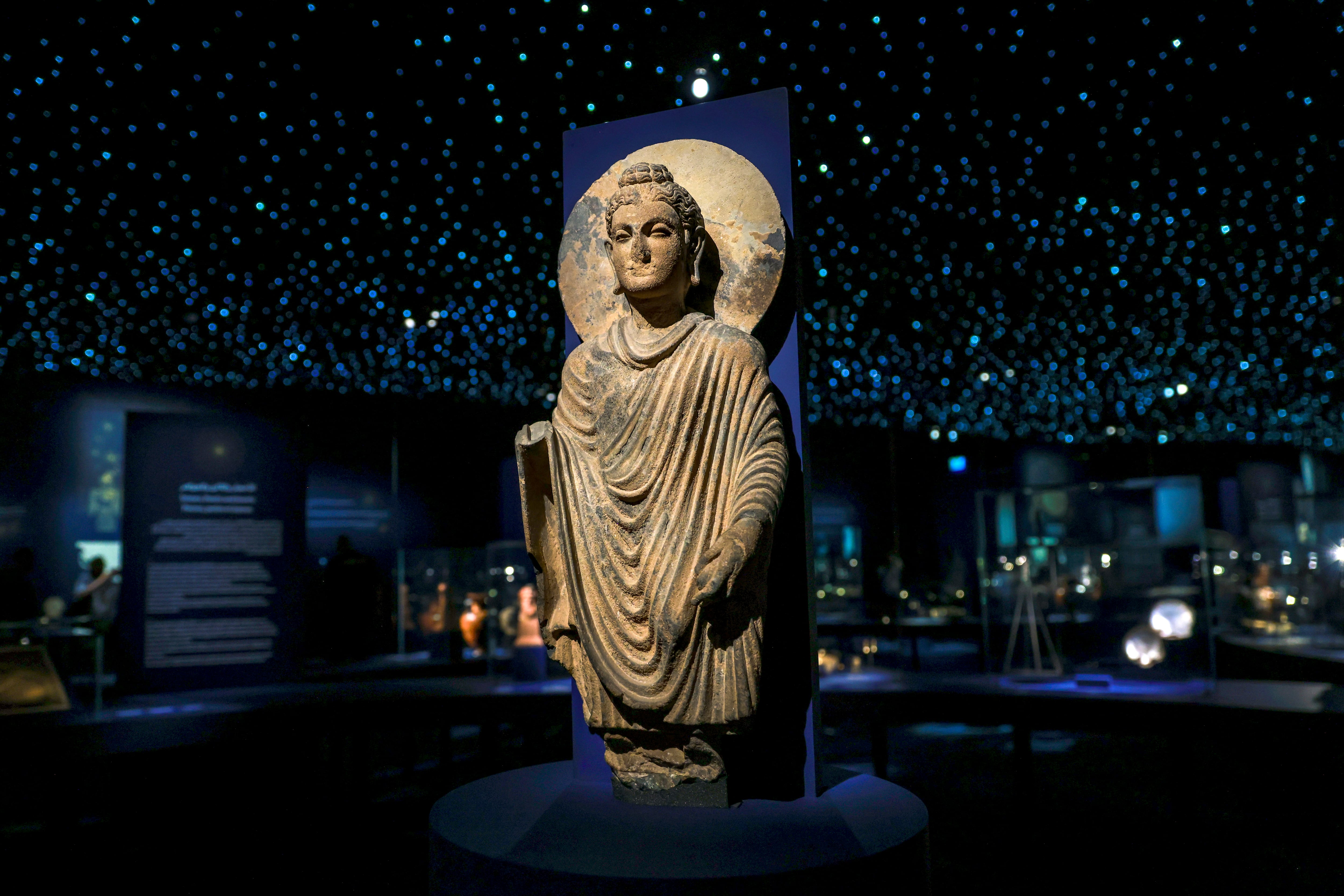
Visitors entering Louvre Abu Dhabi's new exhibition, Spices and Wonders: Sailing the Indian Ocean, are greeted by a darkened space mimicking the night sky. This evokes the era when sailors navigated the vast Indian Ocean using the stars as their guide. The 1,000-year history of maritime exchange between East Africa, the Arabian Peninsula, India, China, and South-East Asia is showcased through approximately 240 artworks and historical objects sourced from 24 international lenders.
The exhibition, organized in collaboration with the Guimet National Museum of Asian Arts in Paris, runs until February 14, 2027.
Archaeological finds, jewelry, religious artifacts, and shipwreck relics form the core of the collection, spanning from ancient times to the 17th century. Six detailed models of historic vessels and meticulously crafted maps illustrate the complex routes these sailors took, while the Arabian Gulf is positioned at the heart of this narrative, highlighting its crucial role in trade networks.
The Arabian Peninsula's pearl industry is highlighted, with pearls journeying to distant markets, while items like carnelian were traded across the ocean centuries ago. As the exhibition progresses, it delves into how the discovery of precious metals and gemstones reshaped jewelry making and how diplomatic gifts fostered relationships between rulers and communities.
Visitors are transported back to the challenges faced by ancient navigators in the exhibition's opening gallery, where they experience the darkness of the open sea and the reliance on celestial bodies and coastal landmarks to chart their course. Subsequent galleries focus on navigational tools like the kamal and astrolabe, accompanied by twenty-four newly created maps detailing the ocean's historic trade routes.
Six large ship models, built over a year in South Africa, represent various maritime traditions, from Arabian and South-East Asian vessels to Chinese, Portuguese, and Spanish designs. These models, complemented by artifacts from shipwrecks, vividly demonstrate the cargo transported across vast distances. Pierre Baptiste, the Guimet's director of collections, emphasizes the exhibition's emphasis on cultural exchange, noting that religious and spiritual practices traveled alongside goods, shaping the lives of people across the Indian Ocean.
The final gallery explores the spread of four major religions, illustrating how they interconnected with commercial activities. Baptiste notes that while the exhibition concludes in the 17th century, this decision allows visitors to appreciate the pre-existing European influence on Indian Ocean trade. The goal is to present a multicultural perspective, showcasing that Europe was just one contributor to this rich tapestry of trade and cultural exchange.
Written by urgent.news from The National Business's reporting — not their text. Machine-written — may contain errors; check the original before relying on it.
This story
This is one outlet's version. Read the fullest account.