Why Samsung, SK Hynix and CXMT shares are under pressure despite strong AI demand
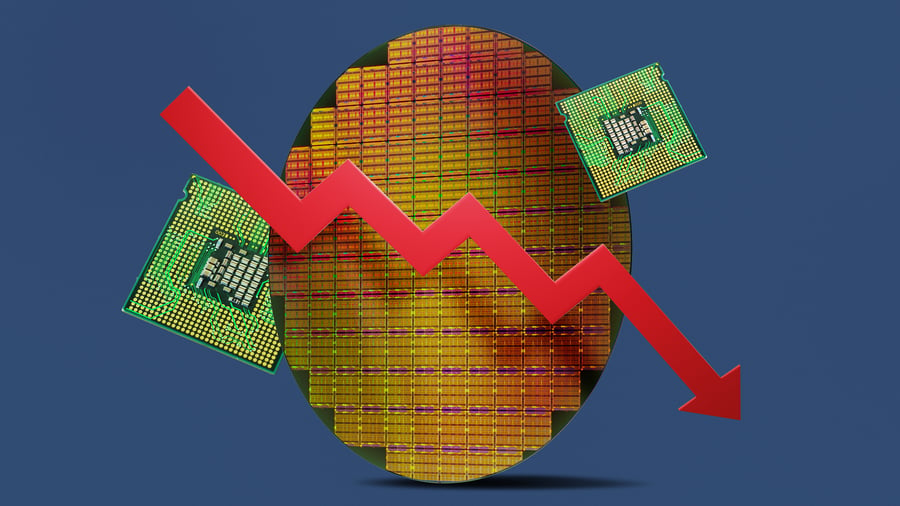
A sharp sell-off in Asian memory chip stocks this week signals growing investor doubts over whether the sector’s AI-driven profit boom can last, even as soaring prices drive strong quarterly earnings across the sector. Shares in market leaders Samsung Electronics and SK Hynix plunged in Seoul on Tuesday, extending a days-long slide that has also swept up Chinese rival ChangXin Memory Technologies…
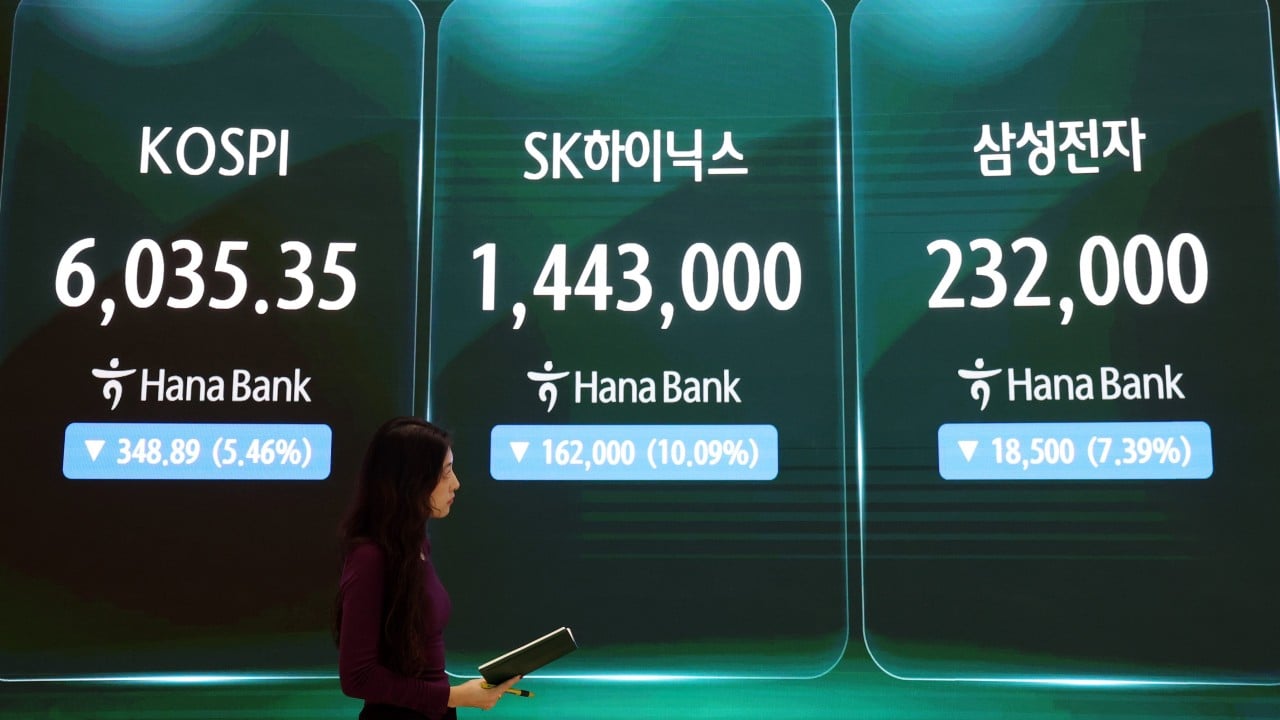
This week, Asian memory chip stocks experienced a sharp sell-off, indicating growing investor doubts about the AI-driven profit boom's sustainability. Samsung Electronics and SK Hynix, market leaders, saw their shares plunge in Seoul, with the former falling 7.4% and the latter dropping 10.1%. Their stocks have plummeted by 16% and 22% over the past five trading sessions, respectively.
These two companies together account for nearly half of South Korea's benchmark Kospi index, which experienced a 5.5% decline, down more than 7% intraday. Chinese rival ChangXin Memory Technologies (CXMT) also suffered, closing down 2.8% in Shanghai, marking a 14% decrease since China's National Day holiday. Analysts attribute the decline to waning confidence in memory chipmakers' ability to sustain profits due to longer-term supply risks and valuation pressures.
Morgan Stanley analyst Shawn Kim stated that the easy money from the current earnings surge has passed. The rally may have also prompted some investors to book profits. Kiwoom Securities strategist Han Ji-young noted that foreign investors were reducing their holdings following the strong run in South Korean equities. The retrenchment occurred despite solid financial reports.
Samsung forecasted quarterly operating profit of 107.4 trillion won, matching market expectations, but the pressure still persisted. The sentiment shift extended to the US, where chipmakers Micron and SanDisk saw a 3.9% and 6% decline, respectively, on Monday, and further 2.4% and 2.8% drops on Tuesday premarket trading. CXMT had previously surged up to a record 61.80 yuan in mid-August, with its shares now down about 20% from its September 23 close.
Analysts warned that CXMT could be particularly vulnerable if memory price growth slows. CXMT's cost of producing each bit of DDR5 memory remains over 30% higher than its three largest global rivals. SemiAnalysis estimated that the company's DDR5 memory production cost remains more than 30% higher than its three major competitors.
CXMT's rapid expansion has also raised concerns, accounting for 10% of global DRAM revenue in the second quarter, up from 4% a year earlier. The company aims to introduce a new DDR5 server-memory product by year-end using a 4F square cell architecture. If successful, this technology could bolster CXMT's position in the lucrative server memory segment, traditionally dominated by Samsung, SK Hynix, and Micron.
Tesla CEO Elon Musk expressed optimism about China's prospects in the memory industry, suggesting that Chinese manufacturers' ability to scale might surpass the rest of the world combined. However, market experts cautioned against assuming CXMT posed an immediate threat, as its planned server product hasn't entered mass production, and its manufacturing yields, performance, and customer qualification remain unverified.
Tight near-term market supplies mean that market intelligence firm TrendForecast expects conventional DRAM contract prices to rise by 10-15% this quarter, albeit at a slower pace. Morgan Stanley expects memory prices to remain firm through 2027, with growth slowing as supply catches up with demand or clients pause orders to manage existing inventory.
Investors are now eagerly awaiting Samsung's full earnings announcement on October 29 for more insights on memory-supply arrangements for 2027 and HBM pricing.
Rewritten by urgent.news; may contain errors — check the original.
Source: scmp.com