NASA Science, Cargo Launch on 35th SpaceX Resupply Mission to Station
NASA’s SpaceX 35th commercial resupply mission lifted off at 6:33 a.m. EDT Tuesday aboard a Falcon 9 rocket from Space Launch Complex 40 at Cape Canaveral Space Force Station in Florida, carrying more than 6,300 pounds of supplies and hardware, bound for the International Space Station. Following its successful launch, the SpaceX Dragon spacecraft will […] The post NASA Science, Cargo Launch on…
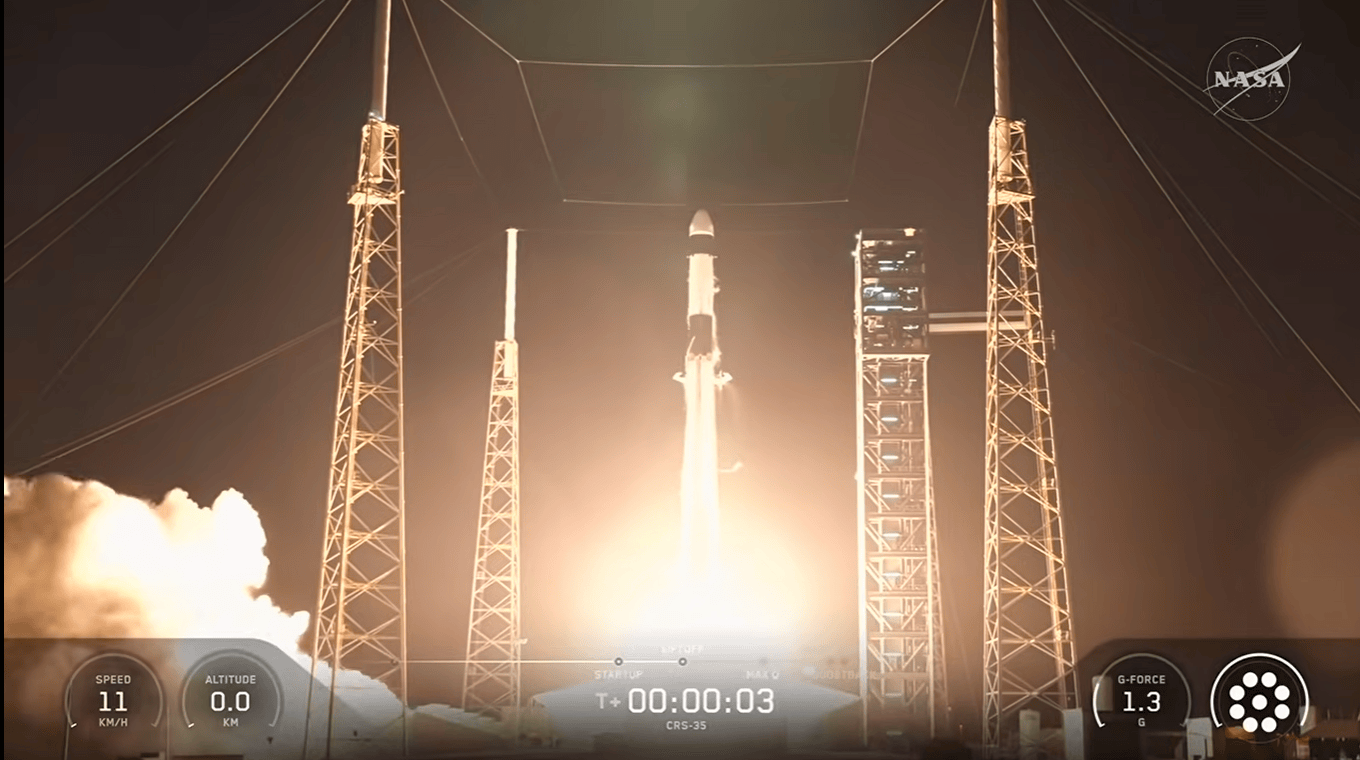
On Tuesday, October 13, 2026, a SpaceX Falcon 9 rocket and Dragon spacecraft embarked on the 35th Commercial Resupply Services mission to the International Space Station, launching from Space Launch Complex 40 at Cape Canaveral Space Force Station in Florida. The mission carried over 6,300 pounds of essential supplies and hardware, including new scientific experiments and technology. Following a successful lift-off, the Dragon spacecraft will autonomously dock with the space station on Thursday, October 15, at 11 a.m. EDT.
The final pair of International Space Station Roll-Out Solar Arrays will be installed by astronauts during subsequent spacewalks, enhancing the station's power system and enabling increased research and operation capabilities. Among the numerous experiments being transported, several aim to advance medical treatments on Earth and pave the way for future deep space exploration.
One experiment focuses on manufacturing artificial retinas in microgravity, potentially restoring vision for patients on Earth. Another involves creating 3D heart tissue models to advance drug testing for large-scale pharmaceutical applications. Additionally, the mission will study the formation of a new type of glass in microgravity, while also investigating brain organoids to uncover potential treatment targets for neurodegenerative diseases such as Alzheimer's, Parkinson's, and multiple sclerosis.
These studies are just a few examples of the hundreds of investigations conducted aboard the orbiting laboratory, spanning biology, biotechnology, physical sciences, and Earth and space science.
The research and technologies developed through these experiments benefit people on Earth and contribute to the groundwork for NASA's Artemis program, which aims to send astronauts to the Moon to prepare for future human exploration of Mars.
Rewritten by urgent.news; may contain errors — check the original.
Sources: science.nasa.gov · nasa.gov
This story
This is one outlet's version. Read the fullest account.