Urgent.News

What's breaking now, across thousands of outlets.

AI

Intel bets the next phase of AI belongs to the rightsized system, not the biggest one

For three years, artificial intelligence infrastructure has been dominated by one idea: Bigger is better. Bigger models, bigger clusters, and bigger checks written to a small group of suppliers. At this week’s Open Compute Project Global Summit, Intel Corp. argued that the next phase of AI will look very different and that Intel is well-positioned […] The post Intel bets the next phase of AI…
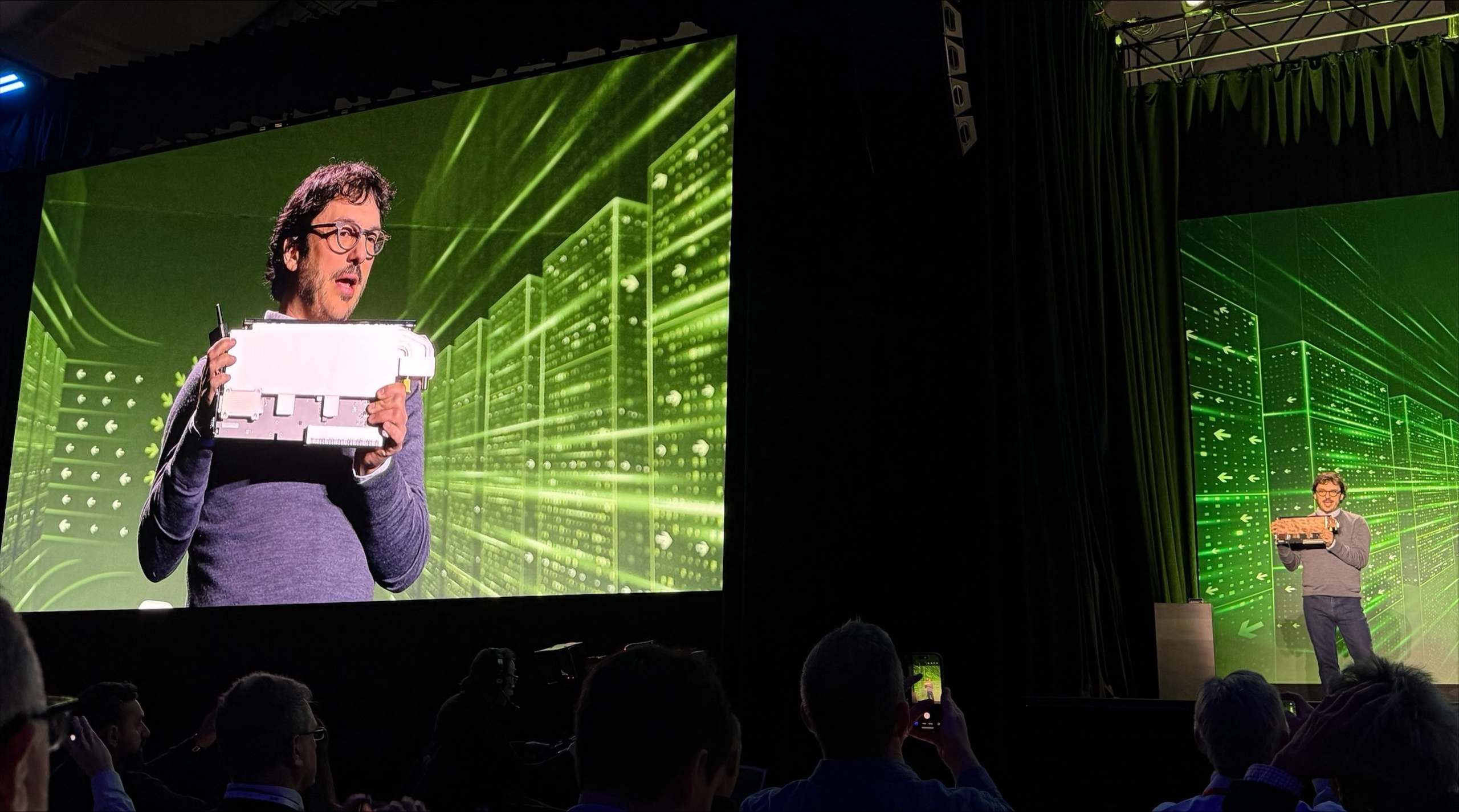
Intel bets the next phase of AI belongs to the rightsized system, not the biggest one

Intel's Nicolas Dubé argued at the Open Compute Project Global Summit that the future of AI infrastructure will be based on "rightsized" systems rather than the biggest ones. Dubé highlighted the Intel GPU D-series, or Crescent Island, and Xeon rack designs built on OCP's Open Rack v3 spec and open software work. Intel believes that inference, rather than training, will define enterprise AI economics and that agentic AI will bring the CPU back to the center of the data center.

Intel's strategy is to create an orchestration layer that evaluates each request based on factors like depth of intelligence, context length, latency, data sensitivity, and cost, allowing organizations to match the right intelligence, compute resources, and economics to different workloads.

Brief written by urgent.news from SiliconANGLE's own syndicated text. Machine-written — may contain errors; check the original before relying on it.
Read the original at siliconangle.com →

More in AI

Test document extraction before an agent acts on it

An agent can follow its instructions perfectly and still pay the wrong amount, because the parser misread a table in the invoice. The agent never sees the PDF, only the extraction.

  • Agent relies on extracted data, not original PDF
  • Parser errors can cause workflow failure
  • Accuracy threshold advised at 95%

Log what your tools put in the context window before blaming the model

Ask an agent for one person's sales calls since February 1 and it can come back with calls that person wasn't on, even though the right ones were in its context.

  • Agent returned unrelated sales calls due to large context window
  • 30,000+ tokens consumed over a month and a half
  • Logging insertion point helps identify wrong claims

Prompts don't enforce budgets. Signatures do.

A spending limit written in a prompt is not a control. It is a piece of text, sitting in the same context window as everything else the model reads, competing for the model's attention with the task…

  • Spending limits in prompts are not enforced by the model.
  • Real enforcement occurs through server-side checks.
  • Veyline performs scoped, signed authorization before transactions.

More from Tuesday 13 October →