Pigeon-powered internet packet goes under the hammer at Christie's
25 years after taking flight, a surviving packet from the world's most impractical network has attracted a $4,000 bid
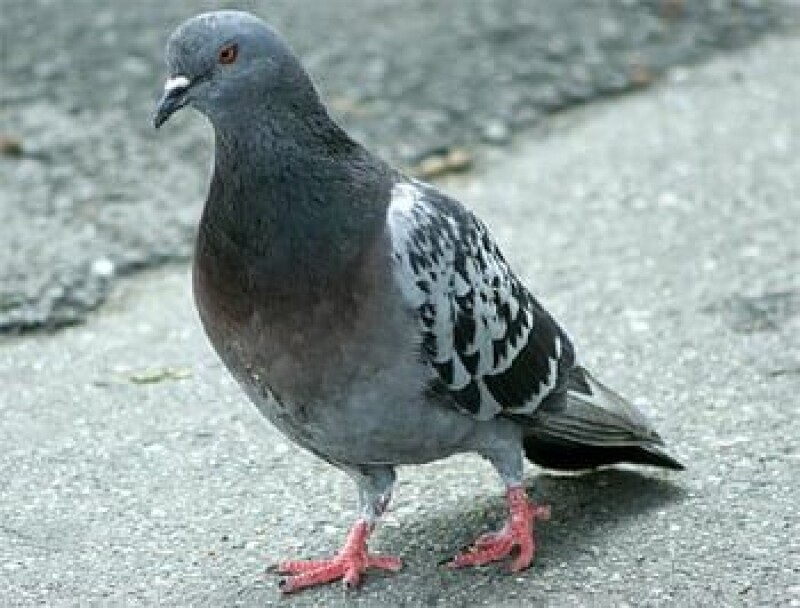
A fragment of internet history that once traveled affixed to a pigeon's leg is currently up for auction at Christie's, with an initial bid of $4,000. This unusual lot is a surviving IP packet from a 2001 experiment conducted by Norwegian Linux enthusiasts to determine if the internet could run on birds. The concept originated from April 1, 1990, when American network engineer David Waitzman published RFC 1149, proposing a standard for transmitting IP datagrams via avian carriers.
Despite the joke being widely appreciated, Norwegian Linux User Group (BLUG) decided to put the theory to the test. On April 28, 2001, using racing pigeons, printers, and scanners, they printed hexadecimal strings of IP packets on paper strips, attached them to the birds' legs, and flew them between two lofts 5km apart. While only four out of nine packets made it back, the experiment proved the internet could transmit IP packets through the air without any routers, cables, or telecom providers.
As part of Christie's Fine Printed Books & Manuscripts Including Americana and Science auction, the packet has resurfaced, framed and identified as belonging to Waitzman. Christie's originally expected the packet to sell for between $2,000 and $3,000, but bidding has already surpassed that amount. The auction closes on October 13.
Christie's describes the experiment as an illustration of the internet's tradition of the "artful hack," highlighting the technical ingenuity and humor of its early community. It's fitting that an internet packet that took to the skies 25 years ago is now commanding thousands of dollars, as most packets simply disappear once their purpose is served.
Written by urgent.news from The Register Science's reporting — not their text. Machine-written — may contain errors; check the original before relying on it.
This story
This is one outlet's version. Read the fullest account.