How XSCACE Is Taking On Bose And B&O With 12mm-Thin Speakers
For decades, names like Bose, Marshall, Bang & Olufsen and KEF have shaped how the world listens to music. Their…
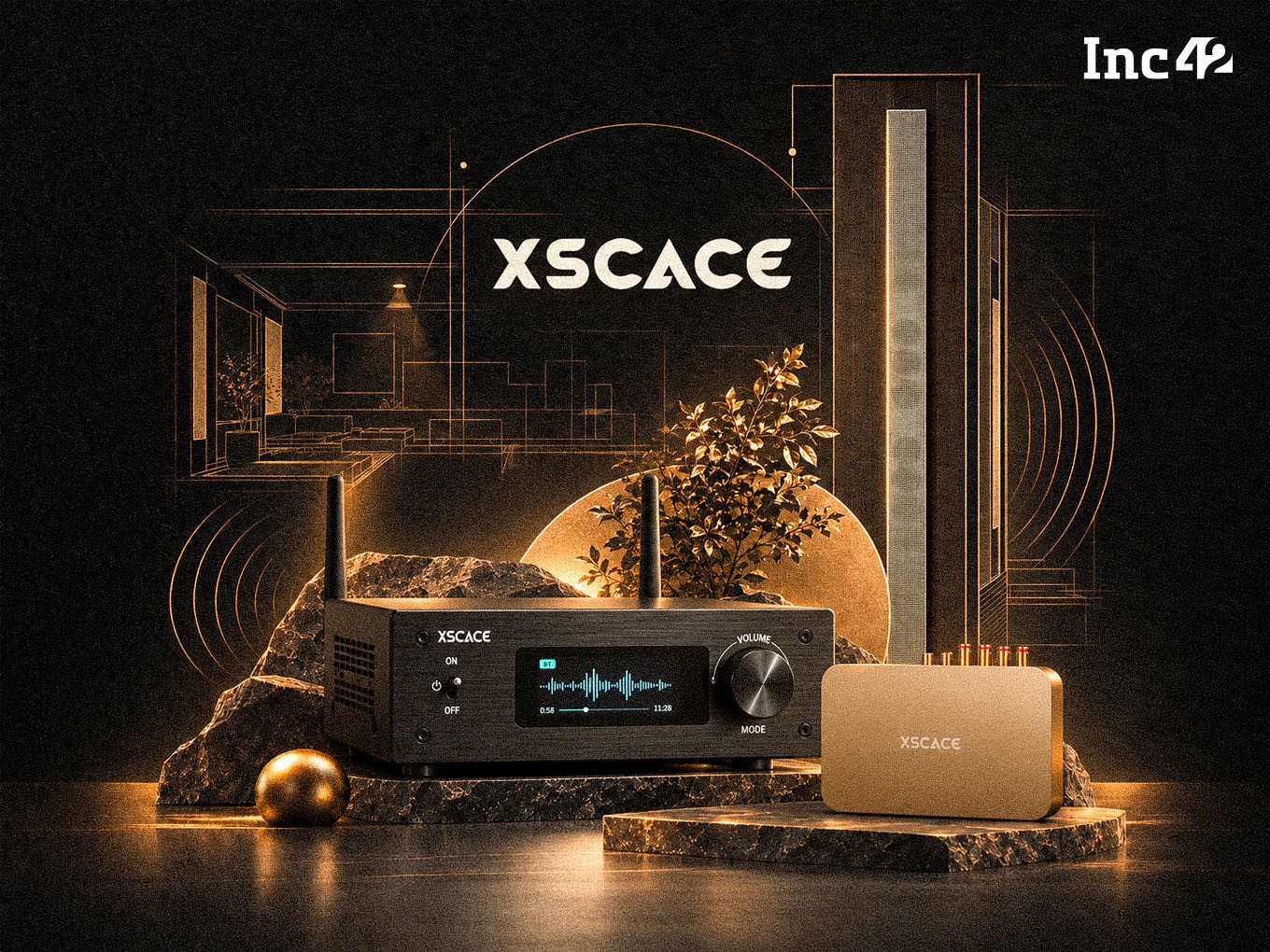
XSCACE, a Canadian startup, is challenging the dominance of established audio brands like Bose and B&O by creating ultra-thin speakers that deliver high-quality sound without consuming much space. The company's co-founder, Utkarsh Hora, was inspired by his family's history in audio engineering, having learned the trade from his grandfather and father. Hora's idea was to design speakers that could fit seamlessly into modern minimalist interiors, rather than dominating them with large cabinets and visible components.
To achieve this, XSCACE focused on overcoming the fundamental trade-off in speaker design known as Hoffman's Iron Law, which states that a designer can optimize for only two out of three factors: deep bass, a small enclosure, and high efficiency. By rethinking the driver at the heart of the speaker and designing all components as an interconnected system, XSCACE developed six proprietary technologies that address various aspects of speaker performance.
These technologies include Nano Resonance for ultra-compact driver performance, PowerDense Dynamics for extracting higher output from miniature motors, AeroFrame Chassis for reducing resonance, PrecisionXover Array for seamless driver integration, XS-Flow for improved airflow and bass response, and PsySculpt for creating a more convincing spatial experience through psychoacoustic tuning.
The first commercial products, the Bonsai and Cane speakers, were launched in January 2024. The Bonsai is an ultra-slim speaker that is just 12 mm deep and delivers 40W of power, designed to be mounted discreetly on walls or installed in walls or ceilings. The Cane is a slightly larger, 23 mm-thin slim-array speaker with 50W output, ideal for spaces where users want more output while keeping the speaker visually unobtrusive.
XSCACE's approach has allowed it to create speakers that are not only compact but also deliver high-quality sound, challenging the traditional standards set by established audio brands. The company is now expanding its distribution across international markets, looking to disrupt the speaker market with its innovative designs and technologies.
Written by urgent.news from Inc42's reporting — not their text. Machine-written — may contain errors; check the original before relying on it.