'News reports tweaked the science to speak to contemporary anxieties': How Neanderthal extinction is a projection of our own, modern fears
In this excerpt from "Neanderthals Among Us," author Peter Sahlins looks at the way Neanderthal extinction theories are often engrained with our own societal fears.
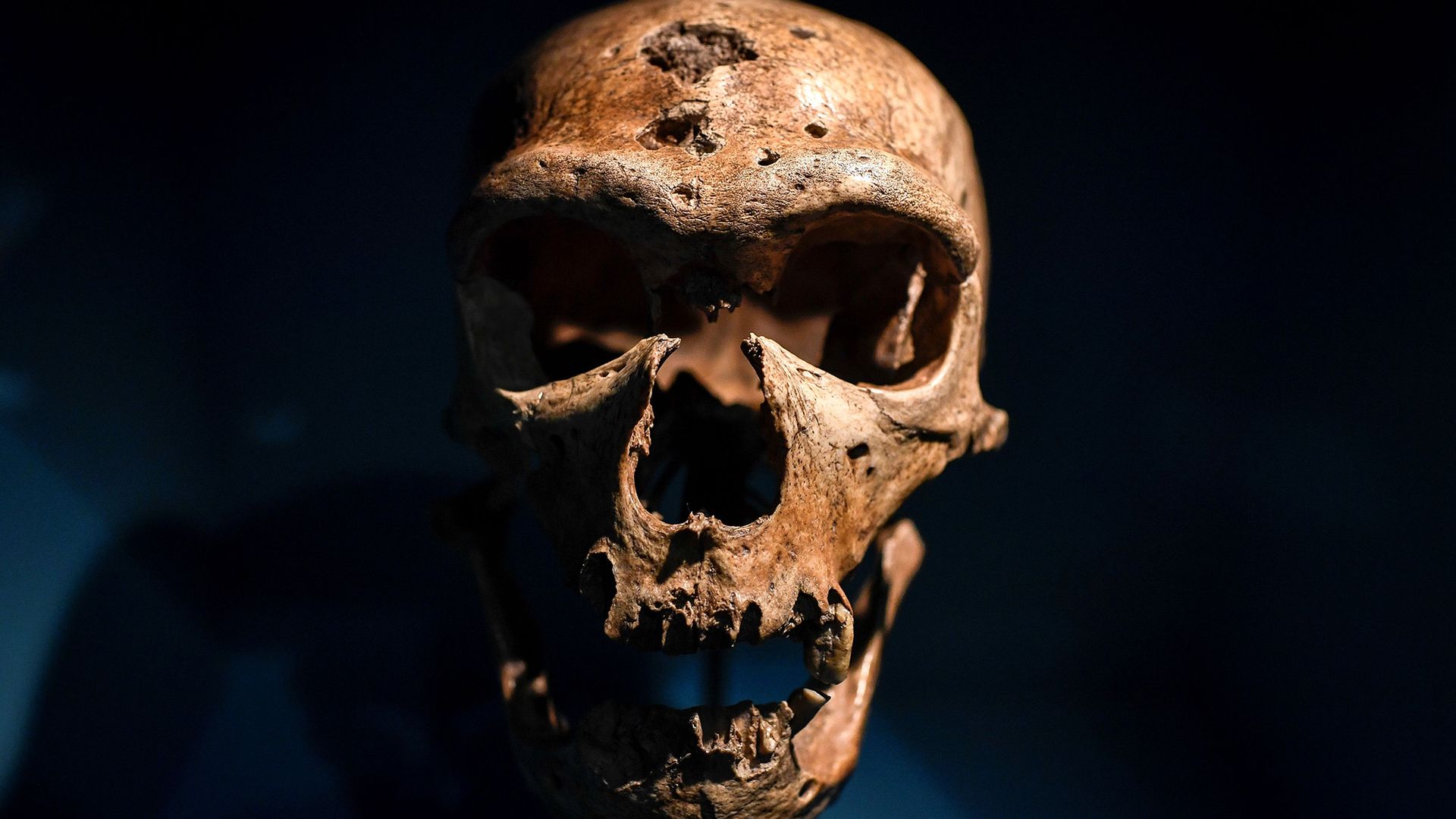
Neanderthals have long captivated scientists and the general public, with their extinction becoming intertwined with contemporary anxieties. Peter Sahlins, in his book "Neanderthals Among Us," explores the various theories surrounding the demise of these ancient hominins, which have been influenced by geopolitical events and cultural ideologies.
The extinction of Neanderthals is attributed to a range of factors, including violent extermination, peaceful absorption, and cultural exchange. The media has a tendency to translate scientific findings into relatable headlines, often projecting current concerns onto the extinct species. For example, the newspaper the Glasgow Herald once claimed that immigrants halted the Neanderthal era, interpreting Cambridge archaeologist Paul Mellars' study on population size increase during the Upper Palaeolithic as evidence of uncontrolled immigration.
The pathogen thesis gained traction during and after the COVID-19 pandemic, suggesting that Neanderthals succumbed to Sapiens-borne pathogens due to their lack of immunity. Climate change is now considered the principal cause of Neanderthal extinction, with researchers pointing to the Campanian Ignimbrite eruption near Naples, dated to around 39,280 BP, as a potential catalyst.
The extreme climatic fluctuations during the Upper Pleistocene, identified by an international team of scientists, reduced vegetation and herbivore food sources, forcing Neanderthals towards warmer climates. Some experts argue that Neanderthals were not adapted to cold environments, as their origins lay during a warm interglacial stage, or that they lacked the technology for complex clothing.
Regardless, Neanderthals ultimately died out, leaving Homo sapiens as the sole survivors of this prehistoric era.
Rewritten by urgent.news; may contain errors — check the original.
Sources: livescience.com · r.smartbrief.com