Middle East war, high debt levels to dominate IMF-World Bank meetings in Bangkok
BANGKOK: Finance officials from around the world will gather in Thailand this week under the shadow of a widening war in the Middle East, the biggest energy supply shock ever and rising interest rates that together pose daunting risks to already sluggish global economic growth.
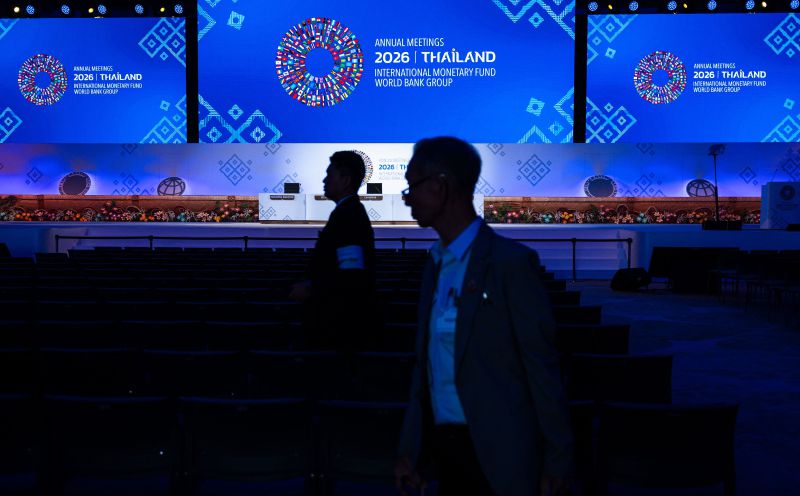
Finance officials from around the globe are set to convene in Thailand this week, confronted with the threat of escalating conflict in the Middle East, unprecedented energy supply disruptions, and surging interest rates, all of which threaten global economic growth that has been slow to recover. The ongoing US-Israeli-led war with Iran, now in its eighth month, and the resulting economic hardships loom large over the agenda, overshadowing discussions at the annual International Monetary Fund and World Bank meetings, which are being held outside Washington for the first time in three years.
US Treasury Secretary Scott Bessent, who was set to attend, will be absent, having dispatched two senior officials to handle domestic matters. His decision not to attend, alongside the Group of 20 major economies, which the US leads this year, could be perceived as frustrating by counterparts amid heightened tensions over the Iran war, Ukraine's fight against Russia's invasion, and the imposition of sanctions on the International Criminal Court.
World Bank President Ajay Banga cautioned that while global growth had held up better than anticipated following Iran's closure of the Strait of Hormuz, which halted about 20 percent of the world's oil supply, new pressures are emerging. Rising diesel and fertilizer prices, coupled with an impending "super El Nino" weather effect that could cause up to 450,000 heat-related deaths, are all combining to pose significant challenges.
The Group of Seven countries have agreed to release 100 million barrels of diesel and crude oil from emergency reserves following pressure from US President Donald Trump, who is eager to lower petrol prices before the November elections. Trump also announced a deal with Russia that would deliver additional diesel to global markets and temporarily waive US sanctions targeting Moscow's revenues from its war in Ukraine, a move that drew swift criticism from Ukrainian President Volodymyr Zelenskiy.
The Bank of International Settlements (BIS) reported that over one billion barrels of oil have been released, primarily from onshore commercial inventories, but industry executives warn that the available stock is dwindling, exacerbating market fragility and price pressures. World Bank research released earlier this week highlighted that rising food and energy prices are increasingly causing inflation expectations to persist for longer periods, worsen poverty, and jeopardize economic stability.
A key concern for policymakers is the burgeoning public debt burden, which is now at its highest level since World War Two and is projected to surpass 100 percent of GDP by 2030. Advanced economies, particularly the US, bear the highest debt-to-GDP ratios, but emerging markets and low-income countries are especially vulnerable due to a perfect storm of challenges: capital outflows seeking higher US interest rates, El Nino, and insufficient investment in artificial intelligence, which has mitigated negative supply shocks in the US and other rich countries.
Developing countries are particularly at risk, with public debt payments already exceeding 10 percent of revenue on average. Earlier in the COVID crisis, G20 leaders suspended debt service payments for the poorest countries, but there is little appetite for such actions now, as high debt levels and political pressures present greater obstacles.
Many lower-income nations are concerned about new IMF recommendations for loan programs that demand fewer, but deeper reforms as conditions for lending, a condition that many fear will result in austere measures. Iolanda Fresnillo, who works on debt justice for Eurodad, expressed concern that the IMF's review of conditionality policy may exacerbate the situation, making things worse.
Kenya, in particular, has avoided a debt restructuring by cutting public expenditures and raising taxes, but these changes sparked significant protests, especially among the youth. The IMF risks losing credibility unless it acknowledges the severity of the crisis facing many developing countries. The IMF's traditional curtain-raiser speech warned that "winter is coming," signaling that combined factors like El Nino, rising energy costs, and debt levels will present formidable challenges that require greater caution and careful preparation in the coming months.
Written by urgent.news from New Straits Times's reporting — not their text. Machine-written — may contain errors; check the original before relying on it.
This story
This is one outlet's version. Read the fullest account.