Amelia Earhart expedition heads to Pacific atoll hoping to find her plane
“Finding Amelia Earhart’s Electra aircraft would be the discovery of a lifetime,” says the expedition leader who is hoping to solve one of the century’s great mysteries.
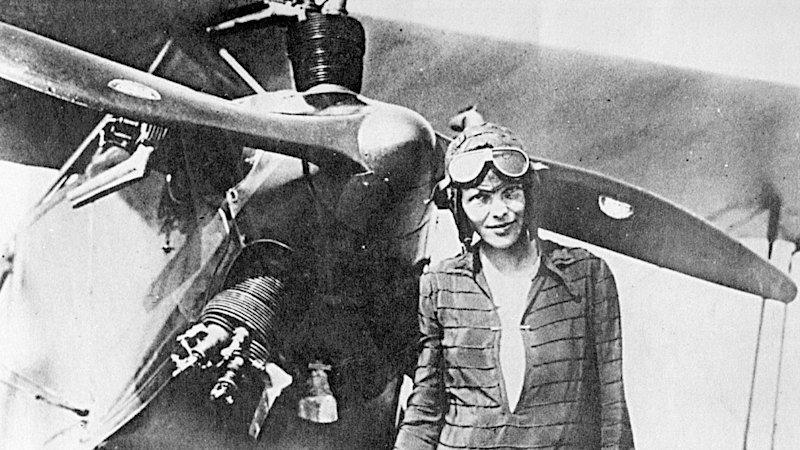
A research team comprising members from the Archaeological Legacy Institute and Purdue University has arrived at Nikumaroro Island, a remote location in the Pacific Ocean, to examine potential wreckage of Amelia Earhart, the renowned American aviator who disappeared in 1937 while attempting to circumnavigate the globe. The expedition, slated to last five days, may face challenges due to the presence of giant coconut crabs, also known as Robber crabs, and the recently recorded strongest El Niño climate phenomenon.
These crabs emerge at night to forage for small mammals and seabirds, compelling the search crew to spend nights on their ship for safety. Earhart, alongside navigator Fred Noonan, embarked on a daring journey around the world, and her disappearance has sparked numerous theories and speculation over the past decades. The researchers aim to locate a mysterious object, first observed on satellite imagery in 2020, which they believe could be Earhart's plane, although some experts remain skeptical.
This is the first authorized mission to Nikumaroro Island in seven years and the first visit to the Taraia Peninsula in over 15 years. The research vessel, Marin Mainiku, arrived at the western side of the island on Monday after a five-day journey across 830 nautical miles through the South Pacific. Expedition leader Rick Pettigrew expressed excitement about the close proximity to solving the long-standing mystery surrounding Earhart and Noonan's disappearance.
The team will spend Tuesday navigating through a narrow passage blasted in the atoll's reef by the British in 1963, preparing for landing. The initial day will be dedicated to equipment transport, vegetation clearance, and setting up staging operations. Subsequently, on Wednesday, researchers will focus on searching for evidence, including magnetic metals, on the Taraia Peninsula.
Lastly, they will use dredging equipment to move sediment for a visual inspection of the enigmatic object, which is believed to be situated only 10 feet from the shore in a depth of as little as five feet of water. Weather and ocean conditions are anticipated to pose challenges, with El Niño potentially limiting access to the shoreline.
Crew members are also concerned about the coconut crabs, the largest land-dwelling invertebrates on Earth, which can lift up to 28kg (62lbs) and possess the ability to crack open coconuts while also hunting live prey such as rats and birds. These crabs, with their leg span of up to one meter and body weight exceeding 4kg, are also the world's largest land-dwelling crustacean.
Some theories suggest that Earhart survived a crash on the island before succumbing to the crabs, which have been demonstrated to drag bodies to their burrows and strip bones in less than two weeks.
Rewritten by urgent.news; may contain errors — check the original.
Sources: investing.com · smh.com.au · theage.com.au · rnz.co.nz · bbc.co.uk
This story
This is one outlet's version. Read the fullest account.
- Amelia Earhart expedition heads to Pacific atoll hoping to find her plane theage.com.au
- Crew searching for Amelia Earhart arrives at crab-infested island bbc.co.uk
- Amelia Earhart expedition heads to Pacific atoll hoping to find her plane rnz.co.nz
- Amelia Earhart expedition heads to Pacific atoll hoping to find her plane investing.com