China’s rich coastal cities to see sea-level rise up to 20% higher than global average
International scientists warn that rising sea levels driven by melting Antarctic ice will be 15 to 20 per cent higher in cities such as Hong Kong and Shanghai compared with the global average. They said gravitational shifts caused by shrinking Antarctic ice would redistribute water across the globe, causing higher ocean levels along China’s densely populated coastlines. “Even if we limit warming…
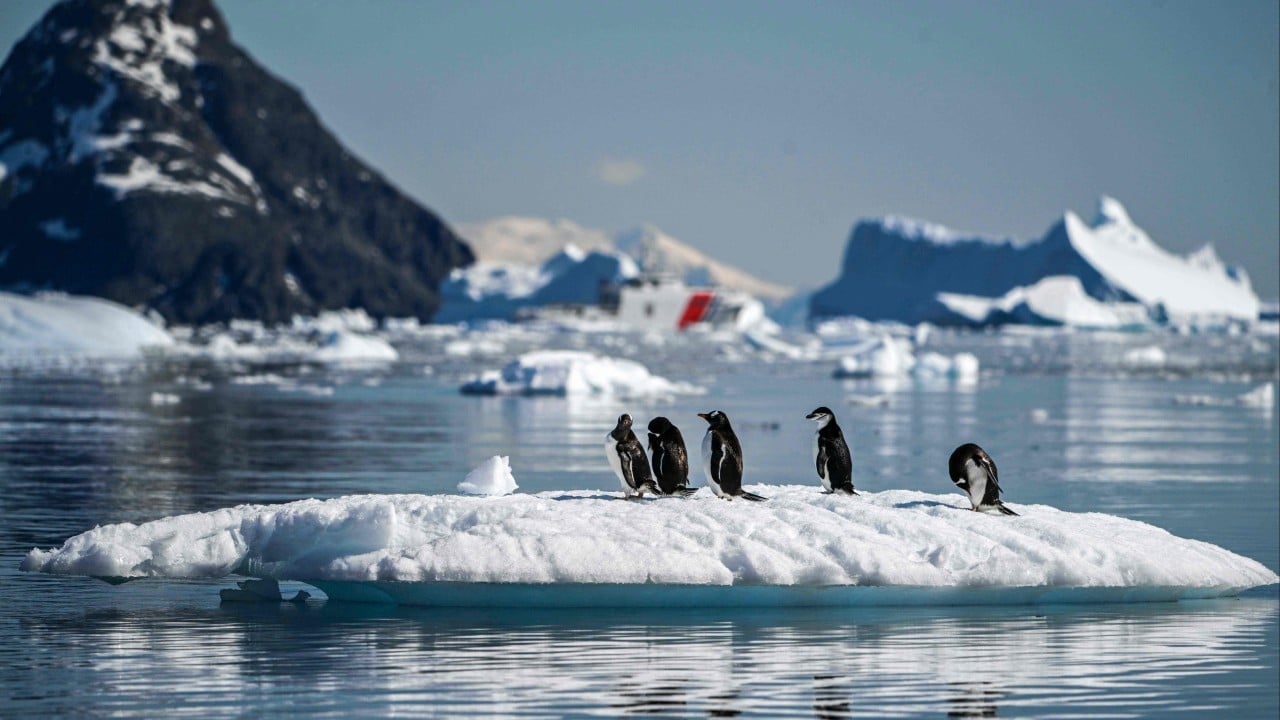
Scientists from around the world have sounded the alarm, warning that rising sea levels in major Chinese cities like Hong Kong and Shanghai are expected to be 15 to 20 percent higher than the global average. This disparity arises due to the gravitational shifts induced by the melting Antarctic ice. These scientists explained that the redistribution of water across the globe would lead to higher ocean levels along densely populated coastal regions in China.
Even if global warming is limited to 1.5 degrees Celsius, as outlined by the Paris Agreement, Antarctica still stands a 92 percent chance of losing mass this century. Lead author Lin Yucheng, an assistant professor at City University of Hong Kong’s school of energy and environment, noted that effective adaptation and coastal protection are crucial, as the costs of such measures are substantial.
If no swift action is taken to reduce greenhouse gas emissions, a domino effect could result in an additional 25cm (9.8 inches) of sea-level rise in Shanghai and Hong Kong by 2100, potentially displacing over 10 million people. This prediction is based on the melting of the Antarctic Ice Sheet, which accounts for about 10 percent of global sea-level expansion since 2006.
If the Antarctic ice starts to melt rapidly, the effects could persist for centuries, leading to sea-level rise of up to 7 meters (22.9 feet) by the year 2300 in the most extreme scenarios.
Rewritten by urgent.news; may contain errors — check the original.
Source: scmp.com