How did Roman aqueducts get water to go uphill?
Roman aqueducts used gravity to transport water. So how did they get it to go uphill?
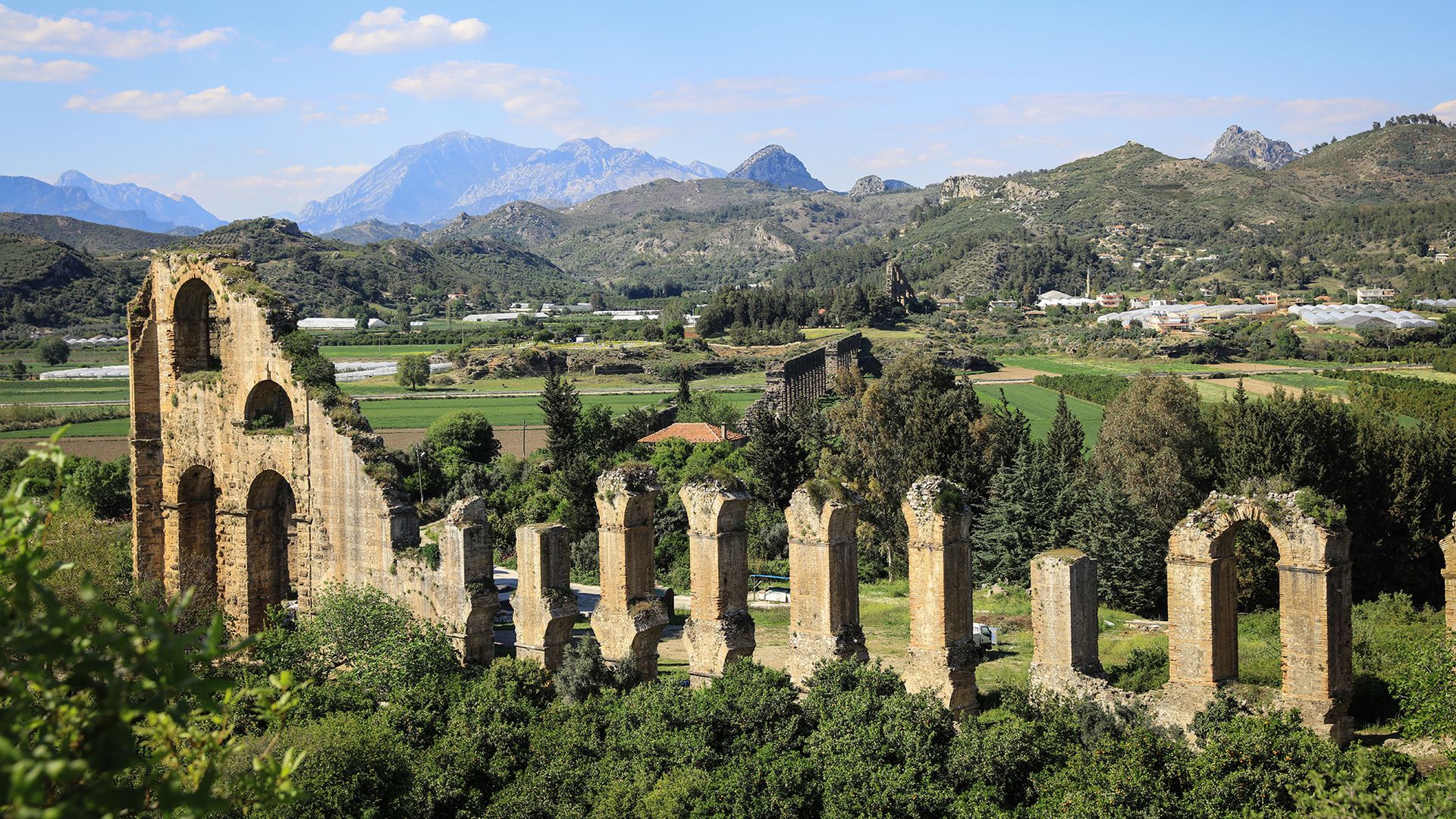
Roman aqueducts were renowned for their ability to transport water, even uphill. The ancient Romans used several ingenious methods to achieve this feat. One notable technique was the use of inverted siphons, also known as siphons. At the Aspendos aqueduct in Turkey, a second-century-A.D. Roman structure, scholars have reconstructed an inverted siphon system using virtual modeling simulations.
In a valley, the Romans built a header tank at one end and a slightly lower receiving tank at the other. Water flowing down a steep hill exerted pressure on the siphon, pushing it upwards through the first tower and then down again through the second tower, eventually reaching the receiving tank on the other side of the valley. To prevent air pockets from forming, the header and receiving tanks were large, allowing air bubbles to escape as the water velocity decreased in the chambers.
Roman engineers preferred not to use inverted siphons, opting instead to build bridges with top channels, as seen in the Segovia aqueduct in Spain. Besides siphons, the Romans employed water-lifting devices such as the Archimedes screw and water wheels to move water uphill. The Archimedes screw, a device allegedly designed by the Greek inventor Archimedes, was turned by animal power to raise water from lower river heights to higher lands.
Meanwhile, water wheels, consisting of several buckets attached to a large wheel, were often used in Roman mines to lift water out of the depths. Through these innovative methods, the Romans managed to conquer even the most challenging uphill climbs in their quest to provide water to cities.
Written by urgent.news from Live Science's reporting — not their text. Machine-written — may contain errors; check the original before relying on it.