Remnant From Rare Supernova Seen Nearly 850 Years Ago Hides a Zombie Star at its Center
Learn about the remnant of a historic supernova observed around 850 years ago and the zombie star that has survived at its center.
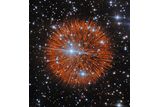
A supernova witnessed nearly 850 years ago has given astronomers a rare glimpse into a "zombie" star at its core. The remnant of this celestial event, known as Pa 30, was first spotted 7,500 light-years away from Earth. Discovered in 2013 through a citizen science campaign, astronomers have since found that the nebula's vibrant streaks are actually knots of gas, resembling pearls on a string.
What makes this supernova remnant even more intriguing is the potential presence of a surviving star - a "zombie star" that escaped its own explosion. The researchers believe this star survived the supernova after colliding with another white dwarf, the dense stellar core left behind after a star exhausts its nuclear fuel. Unlike more common Type Ia supernovae that obliterate white dwarfs, the supernova that created Pa 30 was a rare, lower-energy Type Iax explosion, leaving behind a bruised white dwarf - or zombie star.
The close proximity of Pa 30 to Earth, at just 7,500 light-years distance, has allowed astronomers to study it in great detail using the Gemini North Telescope in Hawaii. This unique case of a Type Iax supernova remnant in our Milky Way galaxy offers a new potential pathway for discovering similar phenomena elsewhere.
Rewritten by urgent.news; may contain errors — check the original.
Source: discovermagazine.com