When small businesses grow, South Africa grows
South Africa’s SMEs face persistent barriers to growth, but digital payments, online commerce and stronger market access could help more businesses move from survival to sustainability.
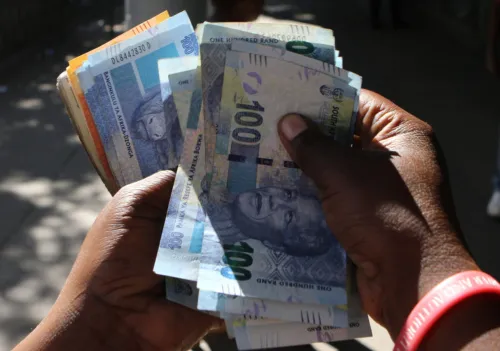
Every day, small businesses spring open in townships and communities throughout South Africa. A spaza shop owner stocks her shelves, a township designer ships an online order, and a salon owner greets a new hairdresser. These enterprises, though individually small, form one of the most vital engines of economic growth in South Africa. They generate jobs, serve communities, and keep money circulating locally.
Despite their ambition and determination, small businesses frequently encounter significant obstacles. According to the South African Government, SMEs constitute 91% of formal businesses, employ about 60% of the workforce, and contribute up to 34% of the nation's GDP. The value of the township economy alone exceeds R900 billion annually, accounting for nearly 19.5% of total employment.
These statistics underscore the critical role of SMEs in fostering inclusive economic growth. However, the challenge lies not in encouraging more entrepreneurs to start businesses, but in assisting existing SMEs to shift from survival to sustainability and from sustainability to growth.
To achieve this, SMEs require access to finance, dependable infrastructure, simplified regulations, and opportunities to enter larger markets. Digital capability is increasingly becoming essential, as it enables businesses to reach customers beyond those who visit their physical storefronts. The Mastercard SME Confidence Index reveals that South African SMEs possess a robust digital foundation and are commercially mature, with many already embracing digital payments.
Notably, more than half of surveyed SMEs identify simple and seamless payment experiences as a crucial growth opportunity, followed by safe and cyber-secure payment processing.
This shift in perspective highlights the pivotal role of digital tools in empowering SMEs to reach customers, generate sales, and build enduring enterprises. From social media marketing and digital platform sales to accepting digital payments and utilizing technology for daily operations, entrepreneurs are leveraging technology to enhance their businesses.
South Africa's online retail sector is poised to reach R159 billion by 2026, accounting for a projected 10% of national retail turnover – a tenfold increase from just 1% a decade ago.
Mastercard recognizes the potential of digital commerce in driving SME growth. By collaborating with fintechs, banks, and government entities, Mastercard aims to make digital payments, technology, and skills more accessible to SMEs. This collaboration equips businesses with the tools necessary to scale and access broader markets.
Gabriel Swanepoel, division president for Africa at Mastercard, emphasizes that today's business is no longer confined to its initial location. With the right partnerships and tools, SMEs can expand beyond their immediate markets, creating jobs and contributing significantly to the economy.
In essence, the task now is to ensure that SMEs have the necessary tools, connections, and opportunities to transform their potential into sustainable growth. This endeavor is integral to Mastercard's global mission to connect and protect 500 million people and small businesses on their journey toward financial health.
Written by urgent.news from IOL's reporting — not their text. Machine-written — may contain errors; check the original before relying on it.
This story
This is one outlet's version. Read the fullest account.
- SA vs AUS Test series 2026: Full list of commentators and broadcast talent for Australia tour of South Africa sports.yahoo.com
- We cannot keep buying our way out of a broken South Africa sabcnews.com
- South Africa has legalised the queue iol.co.za
- South Africa's Navanethem 'Navi' Pillay, known for anti-Israel stance, wins 2026 Nobel Peace Prize jpost.com
- Sutherland and Litchfield lead Australia to quick and convincing win in ODI series opener cricinfo.com
- Live: Aussies make long-awaited return to South Africa for Test series abc.net.au
- Australia vs South Africa cricket LIVE: Veteran Nic Maddinson gets Test shock recall as Australia bats first in Durban theage.com.au
- Australia vs South Africa cricket LIVE: Veteran Nic Maddinson gets Test shock recall as Australia bats first in Durban smh.com.au