US green card crackdown clouds Indian tech workers' American dream
Four Indian IT giants are among eight tech firms suspended from a key US permanent residency programme. Analysts tell CNA the immediate business impact may be limited, but workers face greater uncertainty.
On October 8, the Trump administration suspended eight major technology companies from a key U.S. program that permits employers to sponsor foreign workers for permanent residency. The suspended firms included four Indian IT giants - Tata Consultancy Services (TCS), Infosys, Wipro, and HCLTech - along with Microsoft, Adobe, Cognizant, and Capgemini.
The suspension stems from allegations of abuse within the immigration system. The U.S. Labor Secretary, Keith Sonderling, stated that the program would halt the acceptance of new applications and processing of pending ones.
India's Ministry of External Affairs dismissed the move, claiming it did not align with the shared goals of both nations. They added that the restriction could impact green card applications for eligible workers but not current H-1B visa holders. The National Association of Software and Services Companies (NASSCOM), an Indian IT industry body, emphasized that the program's concerns lie within permanent immigration, which is separate from the H-1B visa program for temporary workers.
Analysts predict limited immediate business impact on Indian IT firms, but prolonged restrictions could raise staffing costs and disrupt workers' plans to settle permanently in the U.S. Achyuta Ghosh, executive research leader at HFS Research, sees this as a greater talent retention concern than a business disruption. The Indian IT firms may focus on client-facing consulting, architecture, and specialized engineering, while turning to subcontractors in India for more flexibility.
The estimated cost of hiring in the U.S. is 25 to 50 percent higher than sending Indian employees there, depending on the role.
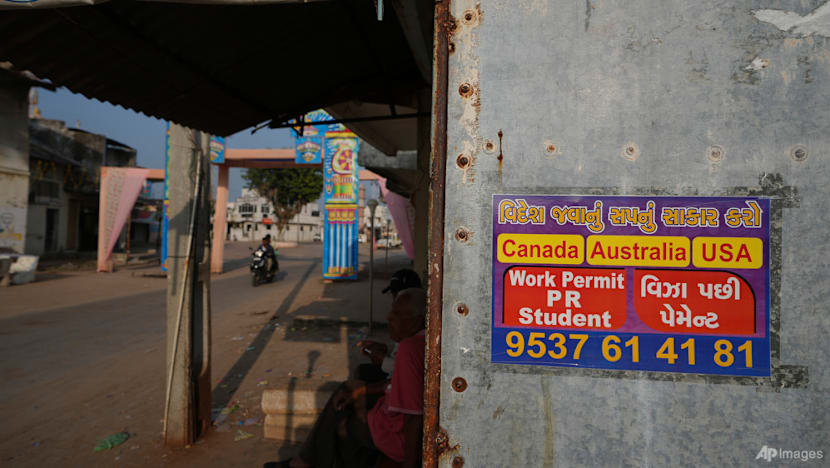
The loss of a predictable path to permanent residency in the U.S. is the main concern for Indian workers. HFS Research expects a gradual shift, with experienced Indian tech workers potentially returning to India or other global hubs. Overseas markets such as Singapore and the United Arab Emirates could attract some Indian professionals, but their tech job markets are smaller than India's.
Mallick of EIIR Trend noted that AI-driven demand creates a gap between specialist and generalist developer roles, suggesting that AI and machine-learning roles are growing at a 45 percent rate compared to overall IT hiring, which remains flat.
Written by urgent.news from Channel News Asia's reporting — not their text. Machine-written — may contain errors; check the original before relying on it.