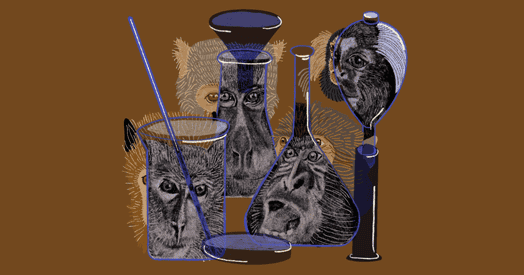
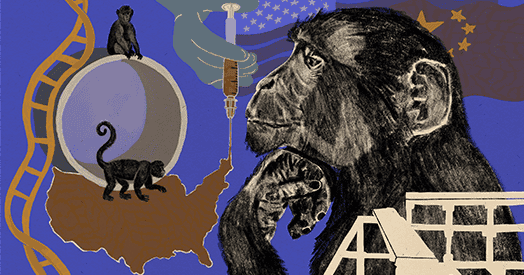
The neuroscience questions that need nonhuman primates
The Transmitter asked 17 neuroscientists what questions might remain unanswered if support for nonhuman primate research continues to decline.
The Transmitter interviewed 17 neuroscientists regarding the critical questions that may remain unanswered if funding for nonhuman primate research declines. Despite advances in artificial intelligence and new approach methodologies, nonhuman primates remain uniquely suited to answer certain biomedical questions due to their evolutionary proximity to humans.
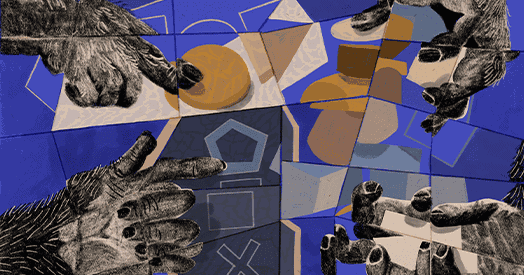
When it comes to visual system research, mice and other animals fall short compared to primates. Primates possess larger prefrontal and association cortices, enabling complex cognitive skills like interpretation of sensory information, abstract thinking, and decision-making. Monkeys, in particular, exhibit advanced hand functions and motor control, making them ideal models for studying dexterous movement and grasping abilities.
Primate research also provides deeper insights into the lateral prefrontal cortex, which plays a significant role in how humans think and make decisions.
Understanding cognition in primates is further enhanced by their ability to perform visual tasks more efficiently than rodents, often learning such tasks within just three to four trials. As for motor control, primates offer a more accurate representation of human motor functions due to their similar cortico-motoneuronal connections. This makes them invaluable for studying neurological disorders that impair movement, such as Parkinson's disease, stroke, and ALS.
In summary, the ongoing importance of nonhuman primate research is clear. Their cognitive, visual, and motor capabilities provide a level of understanding that cannot be replicated by other animal models or artificial intelligence. As long as these questions remain, support for nonhuman primate research will remain essential.
Written by urgent.news from The Transmitter's reporting — not their text. Machine-written — may contain errors; check the original before relying on it.