Gippsland registers nine earthquakes in six days
A series of earthquakes have hit Victoria's east in the past week. Experts say it is an example of normal aftershock behaviour.
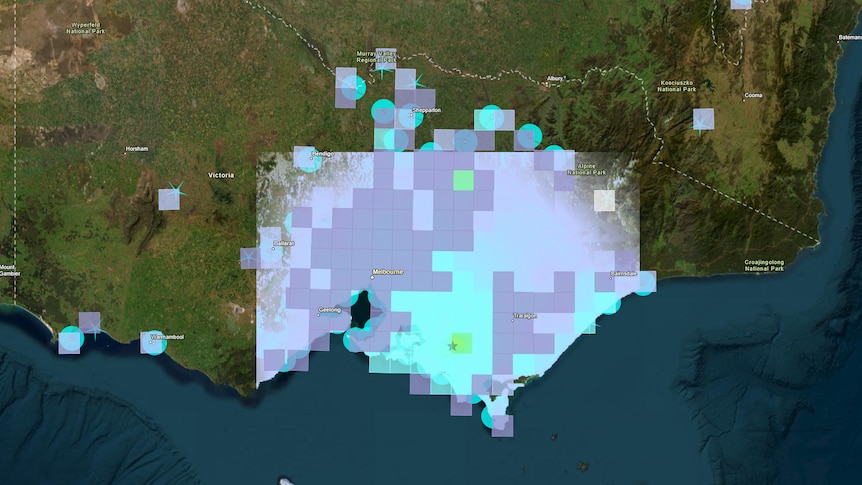
In the past nine days of October, Gippsland has experienced nine earthquakes, starting with a magnitude-4.9 quake that struck on Saturday. A week later, a magnitude-3.2 earthquake was felt in Leongatha, followed by several aftershocks, including two of magnitude-2.5 and 1.5. Geoscience Australia received over 2,000 reports of people feeling the magnitude-3.2 quake, which originated at a depth of 10 kilometres.
Seismology Research Centre chief scientist Adam Pascale stated that the recent aftershock activity is not unusual and could continue for several days and weeks. Dr. Dee Ninis, an Australian Earthquake Engineering Society president, noted that Gippsland has a history of earthquakes, with two magnitude-4.6 quakes occurring within weeks of each other in 2009.
While Australia is not located along a tectonic plate boundary like New Zealand or Japan, it can still feel the impact of distant plate movement. The largest earthquake on record in Victoria was a magnitude-5.9 quake near Woods Point in 2021, felt 130 kilometres away in Melbourne. Victoria's State Emergency Service (SES) will conduct earthquake drills in Gippsland next week, emphasizing the importance of preparedness with the "drop, cover, and hold on" safety steps during an earthquake.
The SES has been closely monitoring the aftershocks and is prepared for potential larger earthquakes in the future.
Written by urgent.news from ABC News AU's reporting — not their text. Machine-written — may contain errors; check the original before relying on it.