Scientists in Vienna and Beijing create world’s first nuclear clocks
One of the scientists said he envisions uses for nuclear clocks in areas such as satellite-based navigation and the synchronization of data transfer.
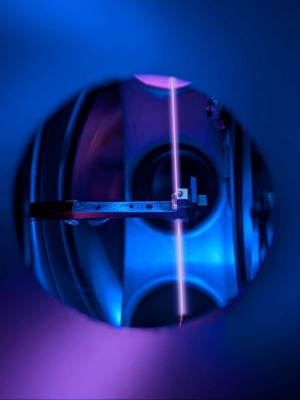
In a groundbreaking development, scientists in Vienna and Beijing have successfully created the world's first nuclear clocks, marking a significant leap in timekeeping technology. These ground-breaking devices, described in scientific papers published in the journal Nature, have the potential to surpass the precision of conventional atomic clocks, which were first developed in 1949.
The nuclear clocks, not powered by nuclear fusion or fission as one might assume, are instead based on the interaction of high-powered lasers with the nucleus of an atom. Specifically, they utilize a particular form, or isotope, of the element thorium called thorium-229, which is trapped in solid-state calcium fluoride crystals.
While the nuclear clocks have yet to outperform the best existing atomic clocks, their innovative design offers a new tool for investigating fundamental physics.
Written by urgent.news from Japan Times's reporting — not their text. Machine-written — may contain errors; check the original before relying on it.
This story
This is one outlet's version. Read the fullest account.