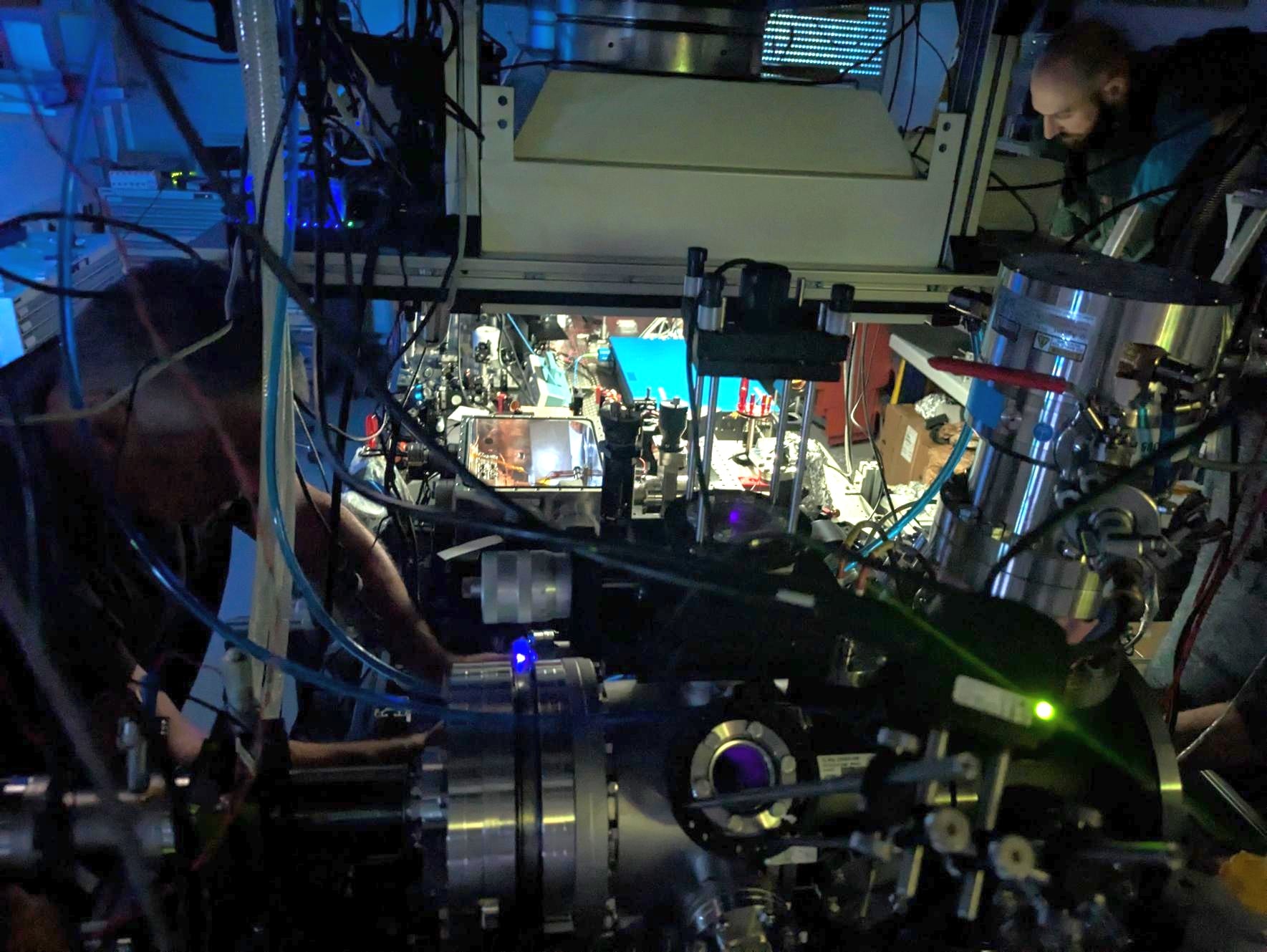
Scientists in Vienna and Beijing create world's first nuclear clocks
Scientific teams working separately in Vienna and Beijing have developed the world’s first two operating nuclear clocks in what they are calling an important advance in timekeeping that promises wide-ranging practical applications and offers a new tool to investigate fundamental physics. The two devices represent the next generation of atomic clocks, the ultra-accurate timekeeping machines first…
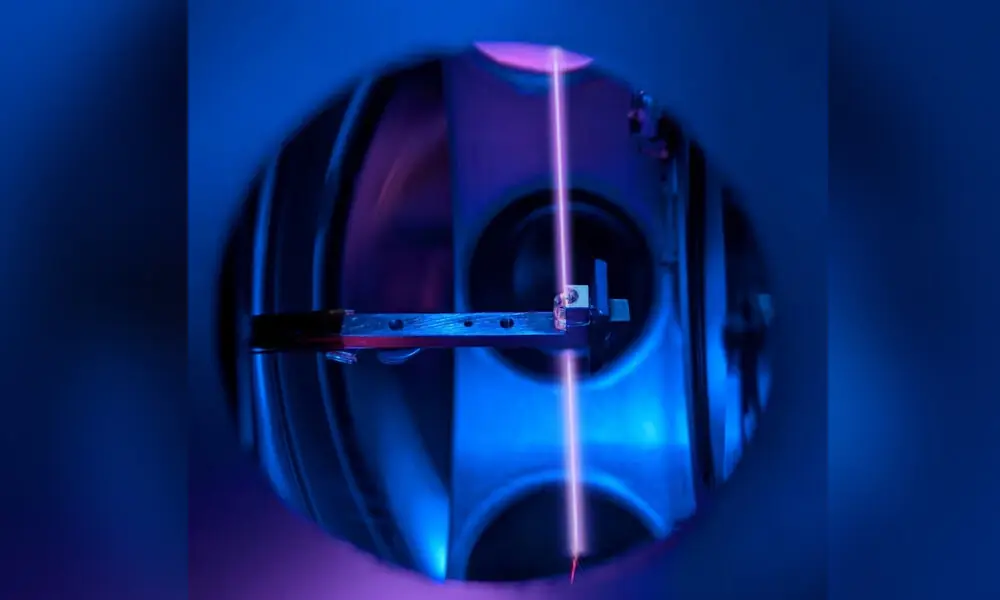
Scientists in Vienna and Beijing have developed the world's first two operating nuclear clocks, marking an important advancement in timekeeping that promises wide-ranging practical applications and offers a new tool for investigating fundamental physics. These devices represent the next generation of atomic clocks, which have been used since 1949 to achieve ultra-accurate timekeeping.
Unlike conventional atomic clocks, which measure time by tracking subatomic particles called electrons, nuclear clocks measure time by tracking transitions inside the nucleus of an atom. This is achieved by using lasers to interact with the nucleus of an atom, specifically thorium-229, a form or isotope of the element thorium. The creation of these nuclear clocks has been a dream of physicists for nearly 50 years, with research teams in Vienna and Beijing working independently to reach this milestone simultaneously.
Physicist Shiqian Ding of Tsinghua University in China, who led the Beijing team, expressed optimism about the potential of nuclear clocks, stating that the concept appears robust and not reliant on a specific technical implementation. Physicist Thorsten Schumm of TU Wien in Austria, who led the Vienna team, envisions various applications for nuclear clocks, such as satellite-based navigation, synchronization of data transfer, surveying, and metrology.
While nuclear clocks have not yet surpassed the performance of the best conventional atomic clocks, which can lose or gain only one second over billions of years, the researchers believe that perfected technology could lead to even greater accuracy. The best conventional atomic clocks are crucial for applications like global navigation satellite systems and internet, cellular, and fiber-optic communications. Nuclear clocks may ultimately outperform these clocks and be built to be less bulky and delicate.
The nuclear clocks also hold promise for probing fundamental physics. The Vienna team demonstrated that their clock could perform a precision physics experiment aimed at detecting dark matter, which has eluded observation to date. Although dark matter was not detected, the nuclear clock performed at the level of the best atomic clocks, opening up a new realm of physics.
Written by urgent.news from Business Recorder's reporting — not their text. Machine-written — may contain errors; check the original before relying on it.
This story
This is one outlet's version. Read the fullest account.