RIP Margaret Hamilton, whose code saved the Apollo 11 Moon landing
Hamilton also coined the term "software engineering" and founded two successful software companies.
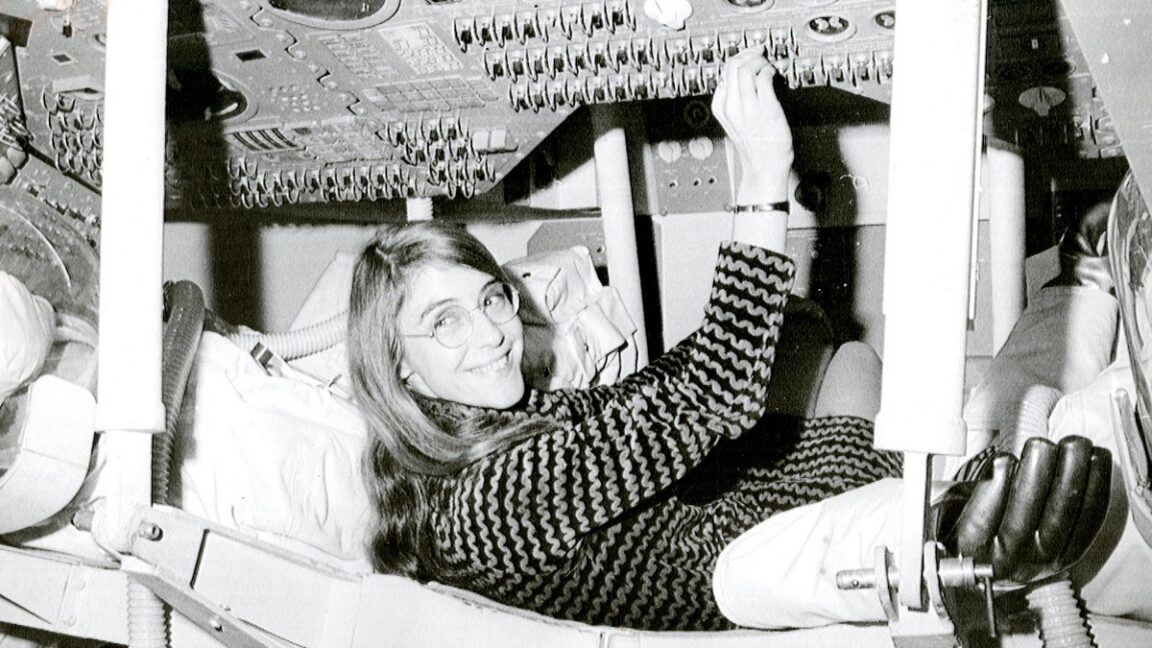
Margaret Hamilton, a pioneer in software engineering who played a crucial role in the Apollo 11 Moon landing, passed away at the age of 90 last week. Her pioneering work in the 1960s led the development of onboard flight software for NASA's Apollo program. Hamilton, who was awarded the Presidential Medal of Freedom in 2016, was also honored with a LEGO minifigure in a 2017 set featuring Women of NASA, alongside astronauts Mae Jemison and Sally Ride.
Olivier de Weck, interim head of MIT's Department of Aeronautics and Astronautics, praised Hamilton as a true pioneer, highlighting her groundbreaking work in a field that was still in its infancy. She not only developed advanced code herself, but also led a team in harnessing this nascent technology to build one of humanity's most complex systems, as noted by de Weck.
Born in 1936 in Paoli, Indiana, Hamilton earned a degree in mathematics from Earlham College in 1958, accompanied by a minor in philosophy—a tribute to her poet father and headmaster grandfather. She married James Cox Hamilton that same year, with the plan for him to support her through graduate school to earn a PhD in mathematics.
Written by urgent.news from Ars Technica Science's reporting — not their text. Machine-written — may contain errors; check the original before relying on it.