Margaret Hamilton, software pioneer who helped put humans on the Moon, dies at 90
Her team's code kept Apollo 11's landing on course when the guidance computer became overloaded
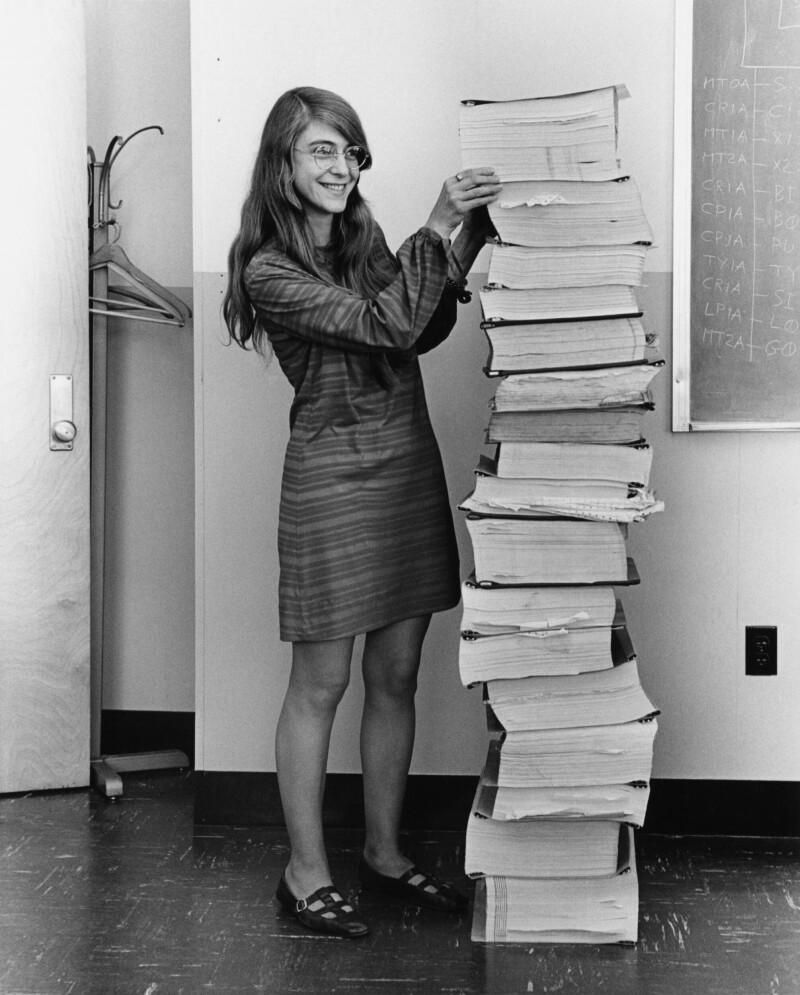
Margaret Hamilton, the American software engineer who played a crucial role in the Apollo missions that landed humans on the Moon in 1969, has passed away at the age of 90. Hamilton led the development of onboard flight software for Apollo's command and lunar modules. Her early work at the MIT Instrumentation Laboratory involved writing software for the Apollo abort procedure, which she named "Forget It" after an unmanned flight abort occurred.
Despite being initially dismissed as a trivial task, Hamilton's software proved its importance during the Apollo 11 mission when the guidance computer raised unexpected alarms due to an unwanted input from the rendezvous radar system. Her restart protection allowed essential landing tasks to continue, ensuring a successful mission.
Hamilton's contributions to software engineering were recognized with the Presidential Medal of Freedom in 2016, and her work laid the foundation for modern, ultra-reliable software design and engineering.
Written by urgent.news from The Register Science's reporting — not their text. Machine-written — may contain errors; check the original before relying on it.
This story
This is one outlet's version. Read the fullest account.
- Margaret Hamilton, computing pioneer who led software development for the Apollo program, dies at 90 news.mit.edu
- Margaret Hamilton, a Pioneering Software Engineer Who Made the First Human Moon Landing Possible, Dies at 90 smithsonianmag.com
- Margaret Hamilton, software pioneer who helped put humans on the Moon, dies at 90 theregister.com
- Margaret Hamilton, whose software helped land Apollo 11 on the Moon, dies at 90 bbc.co.uk
- Margaret Hamilton, trailblazer whose software powered Apollo 11 moon landing, dies at 90 theguardian.com
- Margaret Hamilton, Whose Software Guided the Apollo Missions, Has Died nytimes.com