Margaret Hamilton, software pioneer who helped put humans on the Moon, dies at 90
Her team's code kept Apollo 11's landing on course when the guidance computer became overloaded
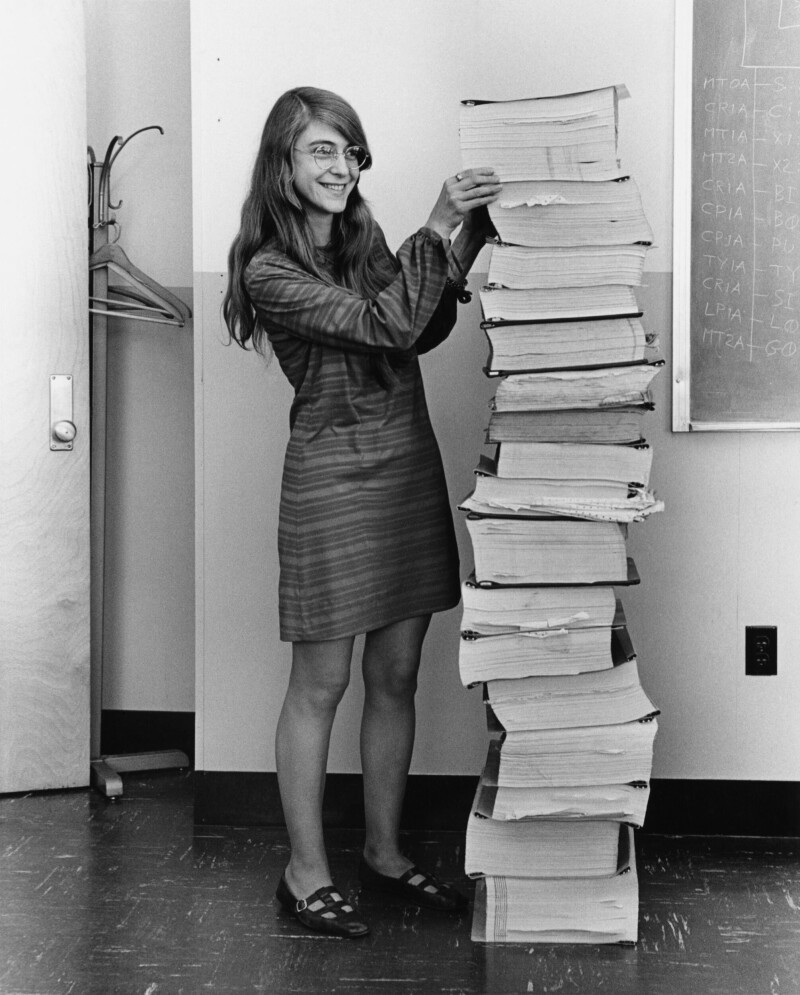
Margaret Hamilton, the American software engineer who played a pivotal role in the Apollo Moon missions, passed away at the age of 90 on September 30. Leading the development of the onboard flight software for the command and lunar modules, Hamilton ensured astronauts successfully reached the Moon in 1969. Despite initial skepticism about her small program, "Forget It," which helped the Apollo abort procedure, Hamilton's work proved crucial when an unmanned flight aborted, leading to her becoming an overnight expert in the field.
Born in Indiana and educated at the University of Michigan and Earlham College, Hamilton initially planned to pursue an academic career. However, she moved to Boston in 1959 with her husband, who was studying law at Harvard, and joined MIT, where she contributed to various projects including aerospace systems. After joining the MIT Instrumentation Laboratory in 1965, she wrote software for the Apollo abort procedure.
Initially overlooked, she eventually gained recognition when an unexpected alarm during Apollo 11's landing prompted the need for safeguards against operator error, which she proposed. During the Apollo mission, Hamilton's software's restart protection allowed essential landing tasks to continue despite system overloads, ensuring the crew's safe return to Earth.
Following the Apollo missions, Hamilton founded and co-founded several technology companies focused on fault-tolerant software and developed the Development Before the Fact (DBTF) methodology and the Universal Systems Language (USL) for systems design. In 2016, President Obama awarded her the Presidential Medal of Freedom. Hamilton's contributions to modern, ultra-reliable software design and engineering have left a lasting legacy.
She was survived by her daughter, a son-in-law, two grandsons, four great-grandchildren, and three siblings, according to MIT.
Written by urgent.news from The Register's reporting — not their text. Machine-written — may contain errors; check the original before relying on it.
This story
This is one outlet's version. Read the fullest account.
- Margaret Hamilton, computing pioneer who led software development for the Apollo program, dies at 90 news.mit.edu
- Margaret Hamilton, a Pioneering Software Engineer Who Made the First Human Moon Landing Possible, Dies at 90 smithsonianmag.com
- Margaret Hamilton, software pioneer who helped put humans on the Moon, dies at 90 theregister.com
- Margaret Hamilton, whose software helped land Apollo 11 on the Moon, dies at 90 bbc.co.uk
- Margaret Hamilton, trailblazer whose software powered Apollo 11 moon landing, dies at 90 theguardian.com
- Margaret Hamilton, Whose Software Guided the Apollo Missions, Has Died nytimes.com