Why polls keep getting it wrong on Brazil's right
Pollsters across the world have struggled to gauge support for the right from voters who can be cagey about their choices. Brazil's election, last Sunday, was no different. Leer más
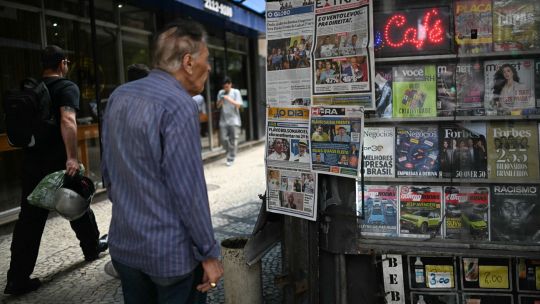
Brazilian pollsters failed to accurately predict the outcome of Sunday's first-round election, joining a global trend of difficulty in gauging voter support for right-wing candidates. Flávio Bolsonaro, the son of former President Jair Bolsonaro, secured nearly 47 percent of the vote, edging out incumbent President Luiz Inácio Lula da Silva, who received 45 percent.
The Datafolha pollster had initially shown a three-point lead for Lula, while Quaest showed a one-point lead for Lula. Polling firms have been notably off in other countries as well, with some wrongly predicting a 2024 Democratic victory in the United States and underestimating the strength of libertarian candidates in Argentina and Bolivia.
The phenomenon of the "shy vote" is believed to play a role, as some voters may not disclose their preference to pollsters due to dislike for the other options. Additionally, Brazil's election featured significant volatility among undecided voters right up until the final days of the campaign, complicating predictions. James Bosworth, a political risk consultant, notes that pollsters overestimated the support of third-party candidates who collectively garnered only eight percent of the vote.
Some voters strategically voted for leading candidates to ensure their vote would count, a tactic Bolsonaro actively encouraged.
Despite a larger polling error compared to the 2022 first round, where Lula had a 10-point advantage over Bolsonaro, this year's error was comparatively smaller. Bolsonaro's campaign manager, Senator Rogerio Marinho, pointed out that the right-wing forces in Brazil have historically outperformed poll predictions by three to four percent in the past four elections.
Written by urgent.news from Buenos Aires Times's reporting — not their text. Machine-written — may contain errors; check the original before relying on it.
This story
This is one outlet's version. Read the fullest account.