Solar panels have (another) surprising side effect: Stopping dust storms in their tracks
In a first, researchers realistically calculated how solar farms in the Gobi Desert improve air quality in northern Chinese cities
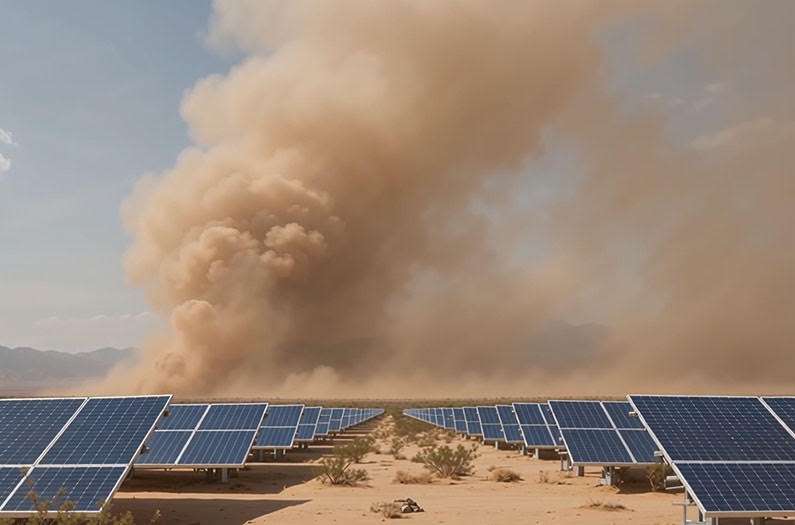
A recent Chinese study reveals that solar farms in desert regions could have an unexpected positive impact: they may help curb dust storms and improve downwind air quality. In the Gobi Desert, strong winds regularly lift up vast amounts of desert dust, which can be transported for hundreds of kilometers to major cities in China. As China continues its efforts to improve air quality by reducing reliance on fossil fuels, dust pollution is becoming an increasingly significant problem.
Solar energy development in the Gobi Desert—where there are currently over 42 solar farms covering more than 13,000 square kilometers—has already begun to show positive results for the surrounding air quality. Researchers believe the potential for future benefits could be even greater. Using satellite observations and computer modeling, the new study quantifies the effects of existing solar farms on dust emissions from the Gobi Desert during springtime, when dust pollution is at its peak.
The analysis shows that these solar farms reduce springtime dust emissions by a significant 352,400 metric tons per month. This reduction is attributed to several factors: the increased roughness of the terrain due to the panels slows down wind speeds near the ground, preventing them from picking up as much dust; the panels help stabilize the soil by increasing vegetation cover; and they act as windbreaks, altering local wind patterns and reducing the amount of dust being blown downwind. In total, solar farms are estimated to decrease dust emissions by 131,400 metric tons each month.
If China were to expand its solar farm coverage in the Gobi Desert to 140,000 square kilometers—roughly eleven times the current area—the researchers calculate that dust emissions would decrease by 12%, and downwind transport would fall by 21%. This represents a much larger benefit than the current solar farms provide. Additionally, climate change is expected to exacerbate dust pollution by increasing wind speeds, which could lead to a 13% rise in springtime dust emissions from the Gobi Desert and a 27% increase in downwind transport without the additional solar farms.
The positive impact of solar farms on air quality is particularly noticeable in the big cities downwind of the desert. With future solar development, average springtime concentrations of larger dust particles could decrease across northern China by about 14%. This improvement would raise most northern Chinese cities to a higher tier in the World Health Organization's air quality rating system.
Moreover, both current and future solar developments are expected to have their greatest effect on days when dust pollution is at its worst, highlighting the unexpected contribution of solar energy to respiratory health.
Written by urgent.news from Anthropocene Magazine's reporting — not their text. Machine-written — may contain errors; check the original before relying on it.