Mercury May Have Shrunk More Than Scientists Thought
Mercury may have contracted 10% to 30% more than scientists previously estimated because billions of years of asteroid impacts have obscured some of the geological evidence of its shrinking. A study published Sept. 10 in Geophysical Research Letters found that Mercury’s roughest regions contain fewer visible structures associated with contraction, suggesting that impact debris may […]
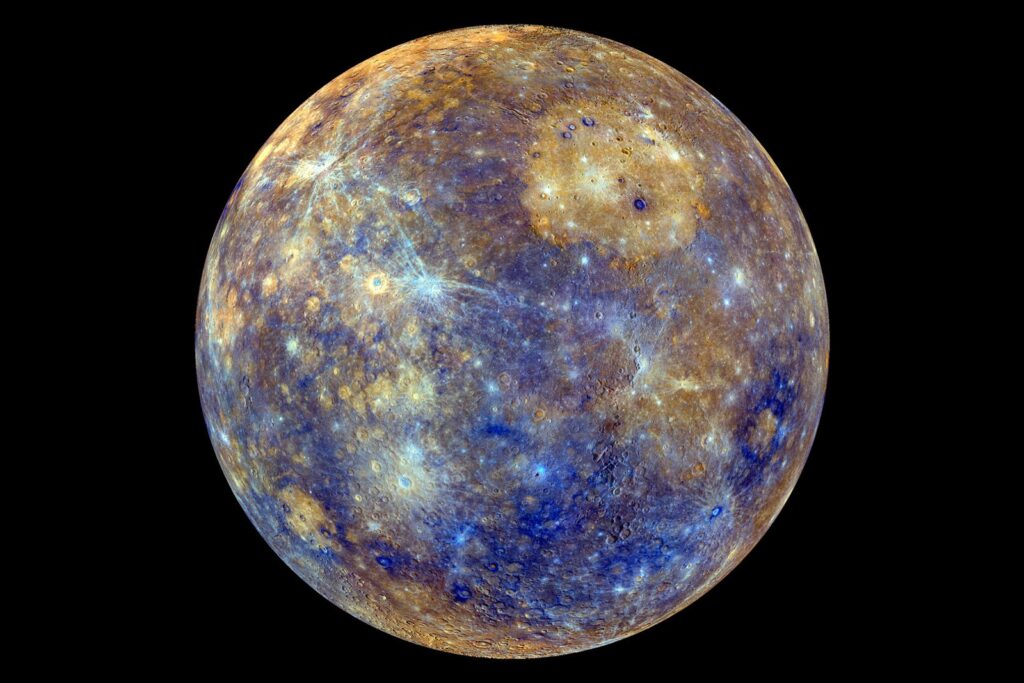
Recent research suggests that Mercury may have shrunk more than scientists previously realized. A study published in Geophysical Research Letters found that asteroid impacts over billions of years could have obscured some geological evidence of the planet's contraction, leading to an estimated total diameter change of up to 23 kilometers (14.5 miles) since the planet's formation, compared to earlier estimates of 4 to 16 kilometers (2.5 to 10 miles).
The study's lead author, Gaku Nishiyama of the German Aerospace Center, explained that the revised estimate could help determine characteristics such as Mercury's core composition, regolith thickness, and the amount of heat-producing elements in its interior. The research focused on an issue that has complicated previous estimates: the uneven distribution of contraction structures across Mercury's surface, which may be due to impact debris obscuring older tectonic features.
By comparing surface roughness with the distribution of contraction structures, the researchers found that these structures become less common as the terrain becomes rougher, suggesting that impact debris may have hidden parts of the planet's tectonic record. The study's authors caution that the correction should be considered a lower bound rather than a definitive measurement, as rough terrain may still obscure some structures and other processes could have hidden evidence of contraction over time.
The findings highlight the importance of continued observations, such as those from NASA's upcoming BepiColombo mission, which will provide a more detailed view of Mercury's scarps, ridges, and impact features, potentially revealing additional contraction structures and helping improve our understanding of the planet's thermal evolution.
Written by urgent.news from Colombia One's reporting — not their text. Machine-written — may contain errors; check the original before relying on it.