Shooting Light Pulses Down a 3-Kilometer Borehole Could Illuminate Seismic Hazards
Borehole distributed acoustic sensing (DAS) offers a more precise way to measure small earthquakes, if appropriate care is taken.
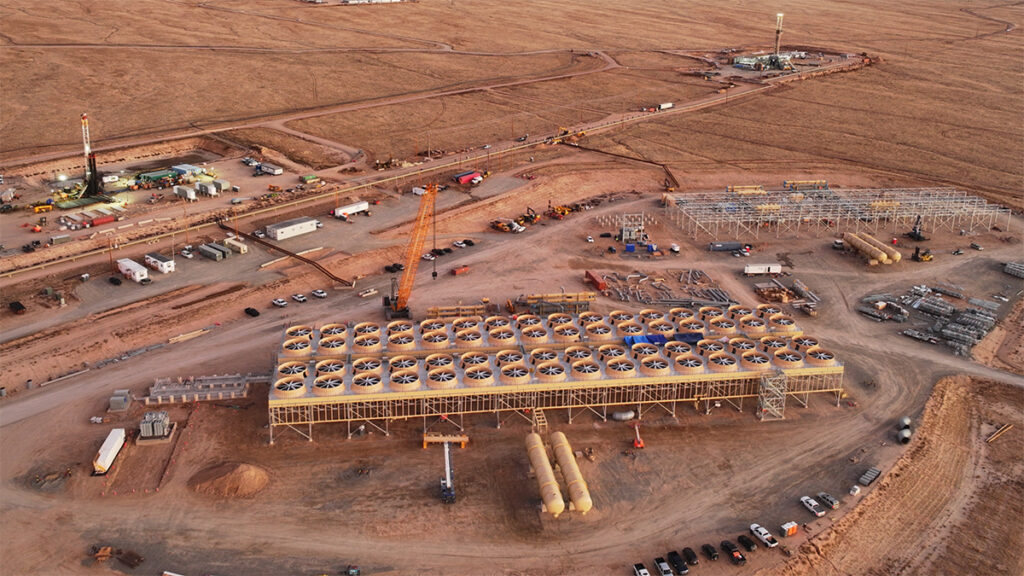
Researchers have found a new way to gather data on small earthquakes using fiber-optic cables in deep boreholes. This method, called borehole distributed acoustic sensing (DAS), involves measuring small variations in light reflection along the cables to detect vibrations caused by seismic waves. A team led by Chang et al. evaluated the performance of a DAS array deployed at the Cape Modern geothermal site in Utah, which extends 3,000 meters underground.
The array consisted of 1,600 stations placed 2 meters apart along a fiber-optic cable. The researchers exposed the array to seismic waves from thousands of microearthquakes and found that attenuation near the surface decreased with depth and varied with rock type. They also discovered that spectral stress drop, a measure of shear stress released during an earthquake, did not depend on magnitude and might have varied due to differences in faults or rupture type.
The results could help scientists better understand the relationship between small earthquakes and seismic hazard assessment. However, future studies should be cautious about cable directivity and gauge length, as these factors can introduce biases in magnitude and corner frequency measurements. To address these biases, researchers could compare source parameter data with data obtained using other methods, such as the empirical Green’s function approach.
Written by urgent.news from Eos's reporting — not their text. Machine-written — may contain errors; check the original before relying on it.