Scientists Finally Think They Know What Made These Geometric Fossils
Arthropods, with harder bodies and better cognition than some other candidates, seem to be the most likely culprit.
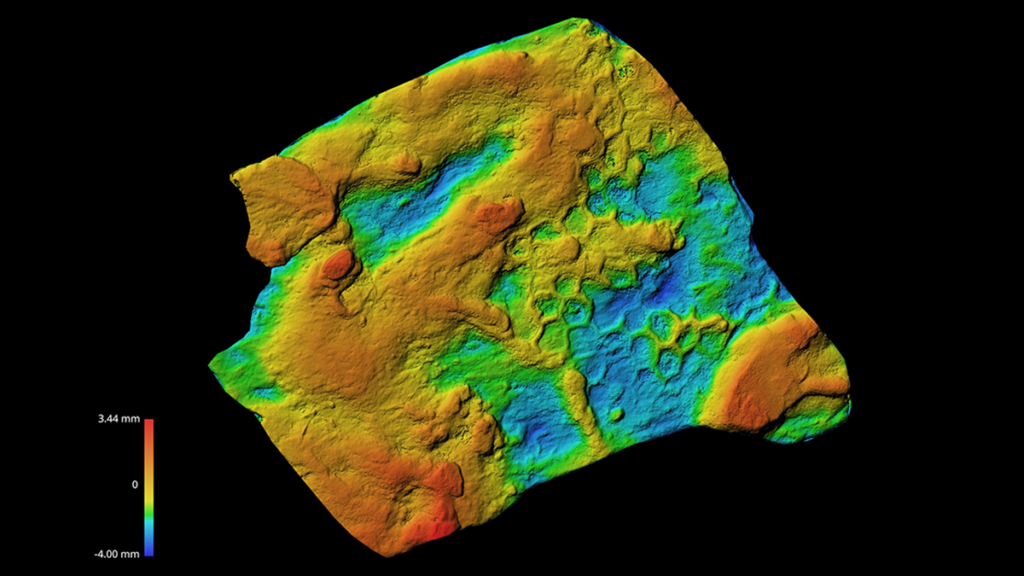
In the Apennine mountains of Italy, buried within sedimentary rock once part of an ancient ocean floor, lie hexagonal networks of fossilized burrows known as Paleodictyon. Though scientists have observed similar burrows in modern oceans, the creatures responsible for their creation have remained a mystery. A new study published in Earth-Science Reviews offers one of the most detailed explanations yet.
Based on precise measurements of the interior angles, width, and spacing of Paleodictyon from various locations, the researchers believe an unidentified marine arthropod, possibly still existing today, was responsible for creating these enigmatic patterns. These findings could shed light on how certain behaviors evolve and persist in different animal lineages.
Understanding such trace fossils is crucial for gaining insight into evolutionary developments. Andrea Baucon, a paleontologist from the Università degli Studi di Cagliari in Italy, and his research team meticulously measured over 1,000 aspects of the hexagons, burrow depths, and vertices to support their hypothesis. The fossils demonstrated a high degree of precision and uniformity, with interior angles averaging just 8.5° off the ideal 120° and side lengths varying by only 0.5 millimeters within a structure.
This level of geometric consistency suggests the burrows were likely created by hard-bodied arthropods rather than softer creatures like worms or corals. Such tunneling is characteristic of arthropods, which possess strong exoskeletons and jointed appendages that allow for straight, precise movements. The researchers argue that an arthropod's ability to correct mistakes during the creation process further supports this hypothesis, as the deviations in the hexagons' lengths and angles do not propagate through the network.
Additionally, the burrows' geometric complexity, when compared to the architecture produced by familiar arthropods like bees, indicates a high level of cognitive ability required to construct such patterns. The study's authors acknowledge that while their evidence is compelling, definitively identifying the trace maker as an arthropod remains uncertain.
Nonetheless, the findings provide valuable insights into the evolutionary history of these mysterious fossils and the behaviors of the creatures that produced them.
Written by urgent.news from Eos's reporting — not their text. Machine-written — may contain errors; check the original before relying on it.