'Ghost particles' from space telescope wins physics Nobel
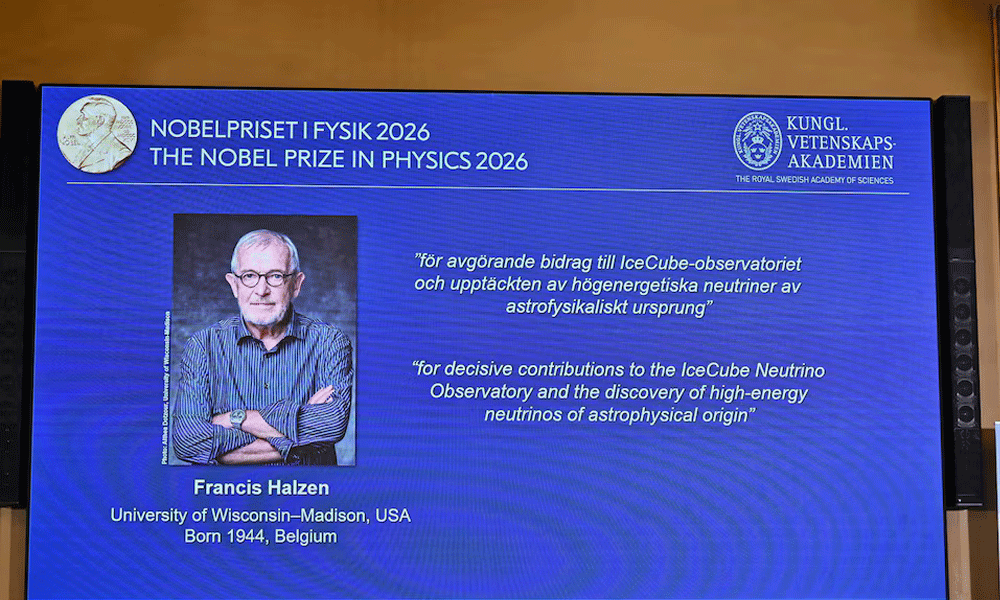
Belgian physicist Prof Francis Halzen has won for his pioneering work on an observatory that detects particles from space.
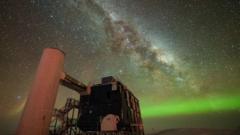
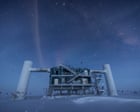
Canadian-born physicist Francis Halzen has been awarded the Nobel Prize in Physics for his groundbreaking work on IceCube, a space telescope that detects high-energy particles called neutrinos. Located deep within the Antarctic ice, IceCube uses a cubic kilometer of ice embedded with light sensors to capture neutrinos, which serve as cosmic messengers conveying information about extreme, high-energy events in the universe.
The Royal Swedish Academy of Sciences praised Halzen's visionary leadership and scientific acumen that were instrumental in the development of IceCube. In 1988, Halzen first proposed the concept of using the South Pole as a site for neutrino detection. Mark Pearce, Chair of the Nobel Committee for Physics, highlighted Halzen's tenacity and scientific vision, noting that his work has ushered in a new era of astronomy.
Neutrinos, despite being produced in abundance by the Sun and countless other cosmic sources, are notoriously difficult to detect due to their elusive nature. However, IceCube specializes in identifying high-energy neutrinos, those generated by cataclysmic phenomena in distant galaxies. These neutrinos interact with the ice in the observatory, resulting in faint flashes of light that serve as clues to their origins and the extraordinary conditions that gave rise to them.
Through IceCube, scientists can explore regions and events inaccessible to conventional telescopes, thereby expanding our understanding of the cosmos.
Written by urgent.news from BBC World's reporting — not their text. Machine-written — may contain errors; check the original before relying on it.
This story
This is one outlet's version. Read the fullest account.