'Ghost particles' from space telescope wins physics Nobel
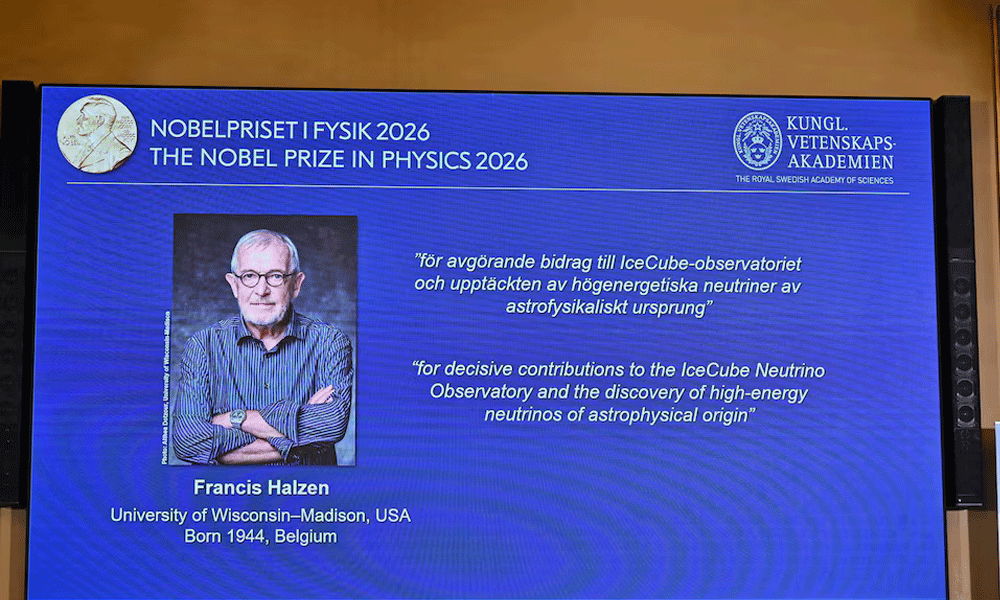
Belgian physicist Prof Francis Halzen has won for his pioneering work on an observatory that detects particles from space.
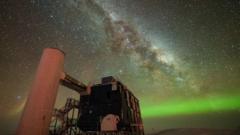
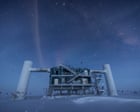
Physics Nobel Prize has been awarded to Belgian physicist Prof Francis Halzen for his groundbreaking work on an observatory that detects cosmic particles, revealing insights into the far-off universe. Halzen spearheaded the development of IceCube, a cubic kilometer of Antarctic ice equipped with light sensors to detect neutrinos.
These particles provide valuable information about high-energy cosmic events. The Royal Swedish Academy of Sciences commended Halzen's vision and leadership in creating the IceCube Neutrino Observatory. Halzen first proposed his idea for detecting neutrinos in the South Pole back in 1988. Under his guidance, an international team of researchers and engineers has created a remarkable instrument, according to Mark Pearce, Chair of the Nobel Committee for Physics.
Halzen's relentless determination and scientific foresight have laid the groundwork for a new type of astronomy. Neutrinos, which are unobtrusive subatomic particles, originate from the Sun, with billions passing harmlessly through a fingernail-sized area every second. However, IceCube focuses on higher-energy neutrinos, those generated by intense processes in distant galaxies.
Neutrinos function as celestial messengers, pointing towards these fundamental occurrences. At the observatory, most neutrinos pass through the ice undetected, but occasionally one interacts with it, generating a distinctive flash of light. These rare signals offer clues about the neutrinos' origin and the extreme conditions that produced them, enabling scientists to explore regions that conventional telescopes cannot easily access.
Written by urgent.news from BBC Science's reporting — not their text. Machine-written — may contain errors; check the original before relying on it.
This story
This is one outlet's version. Read the fullest account.