What China has that Elon Musk doesn’t: A state-backed solid-state battery push
Elon Musk has scale, capital and a global EV brand. China has something harder to replicate: a vast, vertically integrated battery ecosystem now backed by a national plan to push all-solid-state batteries from the lab towards "initial large-scale" use by 2030. Beijing’s latest roadmap aims to extend China’s existing lithium-ion advantage into the next battery era — where longer range, faster…
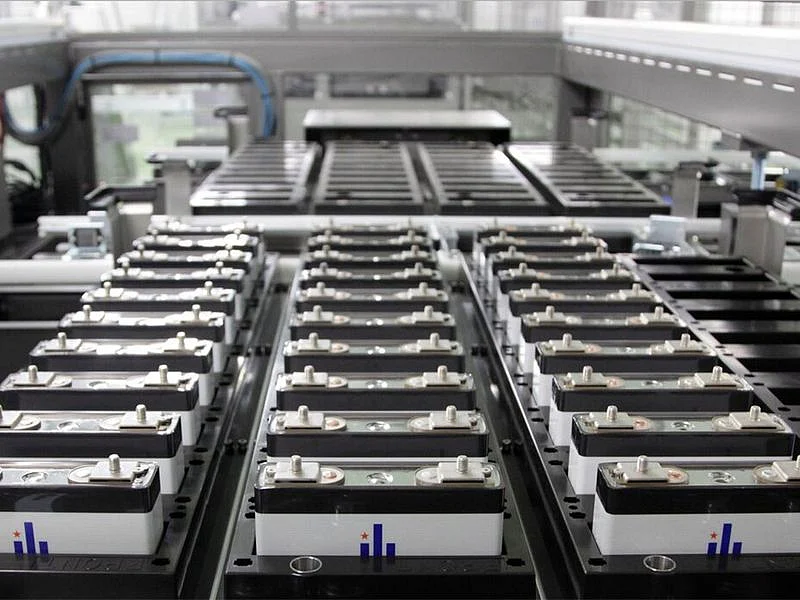
Elon Musk may possess scale, capital, and a global electric vehicle (EV) brand, but China boasts a more formidable advantage: an extensive, vertically integrated battery ecosystem supported by a national plan aimed at advancing all-solid-state batteries by 2030. Beijing's roadmap seeks to elevate China's existing lithium-ion battery expertise into the next generation of battery technology, promising longer range, faster charging, and enhanced safety for electric vehicles.
China's Ministry of Industry and Information Technology, alongside six other government bodies, has issued a development plan for its new-type battery industry from 2026 to 2030, targeting breakthroughs in advanced electrode materials, new electrolytes, and high-end auxiliary materials. By 2030, China aims to achieve breakthroughs in these areas and deploy all-solid-state batteries on a large scale.
The roadmap identifies technical challenges that must be overcome, such as ionic conductivity, battery-cycle stability, electrode-electrolyte contact, and manufacturing capabilities. To address these issues, China is developing production equipment, such as isostatic presses, and promoting industrialization technologies to reduce costs while improving consistency.
Furthermore, China's strategy extends beyond EVs, encompassing grid storage, ships, aviation, low-altitude aircraft, intelligent robots, and heavy machinery. Solid-state batteries hold promise due to their higher energy density, quicker charging, longer service life, and lower fire risk, which are particularly valuable for EVs, aviation, and high-performance storage applications.
However, solid-state batteries are still in the early stages of development and have yet to reach mass-market reality. While Tesla CEO Elon Musk has stated that battery costs are declining at a rate of 8 percent per year, solid-state batteries still face significant challenges that need to be addressed before they can become mainstream.
Written by urgent.news from Gulf News's reporting — not their text. Machine-written — may contain errors; check the original before relying on it.