Preserving Soil Carbon by Preserving the Forest Floor
A 20-year study of British Columbia forests examines how soil carbon is affected by logging.
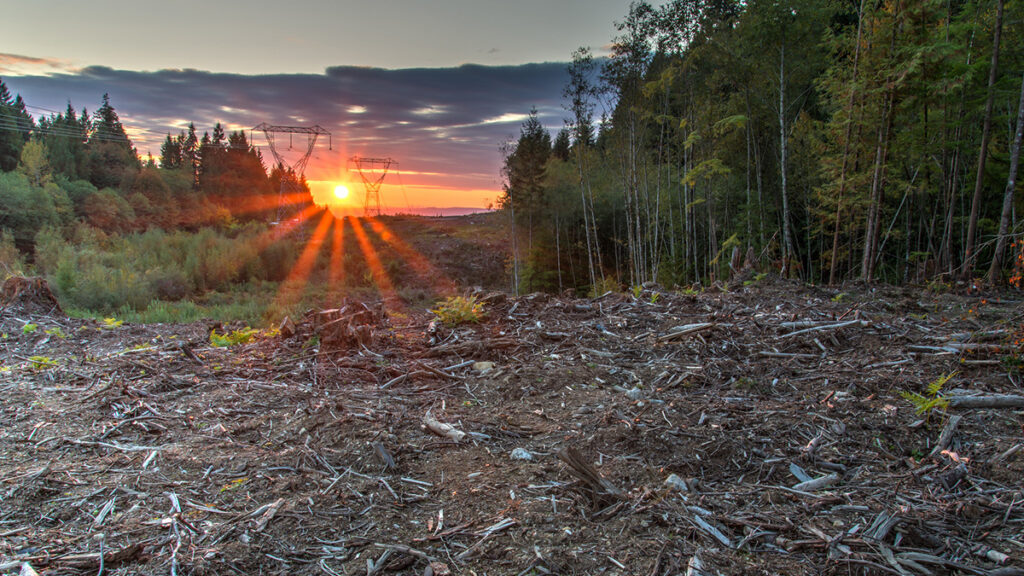
Forest soils contain about 40% of the world's terrestrial carbon, yet harvesting can cause a significant loss of 15%–30% of that soil carbon. Tracking these losses is complex, as factors like wildfire, insects, disease, and management practices can all influence the carbon content in forest soil. The British Columbia Long-Term Soil Productivity (BC-LTSP) study, led by Wallace et al., investigated how the removal of organic matter and soil compaction affected soil carbon over a 20-year period after heavy harvesting.
Researchers analyzed data from 12 BC-LTSP forest sites, spread across four British Columbia regions, which had been postharvest for 20 years. Each site was divided into nine plots to test different levels of soil compaction and organic matter removal. In some plots, only tree trunks were removed during harvesting, known as stem-only harvesting.
In others, the whole-tree harvesting method was used, where both the trees and the canopy residue that falls on the forest floor during logging were taken away. In certain plots, the entire forest floor—the layer of organic material covering the mineral soil—was removed. The researchers collected samples of both the forest floor and mineral soil before harvesting and again after 5, 10, and 20 years to measure changes in soil carbon.
Their findings revealed that soil carbon is more stable when the forest floor remains intact. After 20 years, forest floor carbon had decreased by just 5%, while carbon in the mineral soil below the forest floor had increased by 14%. Stem-only harvesting preserved around 15% more forest floor carbon compared to whole-tree harvesting.
The greatest carbon loss occurred when both the forest floor residue and the forest floor itself were removed. Within 5 years, total soil carbon dropped by 52% and remained 33% below preharvest levels for the next 20 years. The recovery time varied among the sites where the forest floor was completely removed, ranging from 22 to 86 years for the soil carbon to return to preharvest levels.
The authors of the study recommend that preserving organic residue and avoiding heavy disturbance of the forest floor are crucial for maintaining soil carbon during timber harvesting and logging operations.
Written by urgent.news from Eos's reporting — not their text. Machine-written — may contain errors; check the original before relying on it.