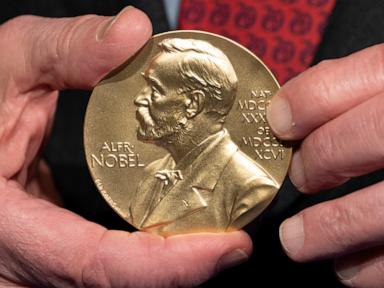
Particle physicist Hideki Yukawa: Japan’s first Nobel laureate
Yukawa laid the foundation for an active post-war generation of particle physicists in Japan The post Particle physicist Hideki Yukawa: Japan’s first Nobel laureate appeared first on Physics World .
Japan did not secure its first Nobel Prize until 48 years after the establishment of the prestigious awards in 1901. The honor was bestowed upon particle physicist Hideki Yukawa, who in the 1930s proposed a theory explaining the interaction between protons and neutrons through mesons. Born in Tokyo on January 23, 1907, Yukawa graduated from Kyoto University in 1929 before moving to Osaka University for a PhD.
It was at Osaka University where he conducted his Nobel-prize-winning research. Yukawa's groundbreaking theory posited a short-range, strong nuclear force that overcame the repulsion between positively charged protons, allowing the atomic nucleus to remain intact. This force, he suggested, is created by the exchange of massive subatomic particles between protons and neutrons, which he named mesons.
Yukawa calculated that the mass of these exchange particles should lie roughly between that of an electron and a proton. In 1937, experiments using cloud chambers discovered a particle whose mass supported Yukawa's prediction, though this was initially identified as a muon. Yukawa himself received the 1949 Nobel Prize in Physics "for his prediction of the existence of mesons based on theoretical work on nuclear forces."
This news was celebrated in Japan, inspiring scientists to persevere in their research despite the postwar challenges. In recognition of his contributions, the Japanese government constructed Yukawa Hall in 1952, which later became the Research Institute for Fundamental Physics (now the Yukawa Institute for Theoretical Physics), with Yukawa serving as its inaugural director.
Yukawa's legacy extended beyond the Nobel Prize, as he advocated for issues such as nuclear disarmament. He passed away on September 8, 1981. To date, Japan has produced 11 Nobel laureates in physics, establishing itself as one of the most successful nations in this domain.
Written by urgent.news from Physics World's reporting — not their text. Machine-written — may contain errors; check the original before relying on it.
This story
This is one outlet's version. Read the fullest account.
- C V Raman: the physicist with a ‘Himalayan ego’ who went to Stockholm convinced he’d win a Nobel prize physicsworld.com
- Nobel prize for medicine goes to trio who developed optogenetics newscientist.com
- 2026 Nobel Prize in Physiology or Medicine awarded to Karl Deisseroth, Georg Nagel and Peter Hegemann for work on optogenetics scientificamerican.com
- What it’s like to wait for the call from the Nobel Prize committee statnews.com
- Can you name the women who have won a science Nobel prize? nature.com
- Could the International Space Station win a Nobel Peace Prize? Here's what to know pbs.org