What it’s like to wait for the call from the Nobel Prize committee
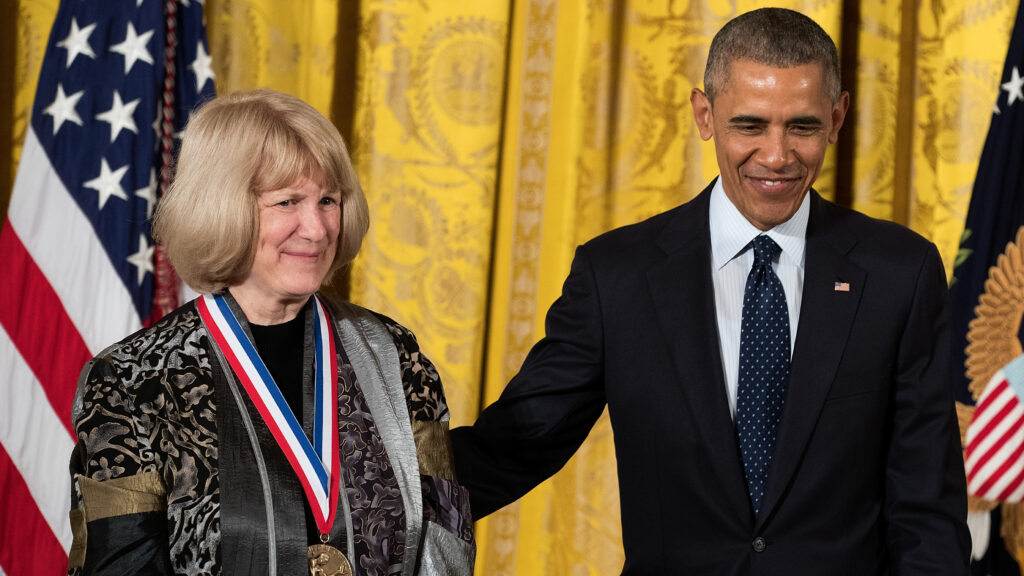
Ahead of this year's Nobel Prize announcements, STAT chatted with Mary-Claire King, who discovered the BRCA cancer mutations and is frequently mentioned in prize predictions.
In 1930, Indian physicist C V Raman embarked on a journey to Stockholm with unwavering confidence that he would be awarded the Nobel Prize in Physics. The Indian intellectual, renowned for his groundbreaking research on light scattering and the subsequent discovery now known as Raman scattering, set sail from India in July 1930, accompanied by his spouse. Their voyage, which took two months, culminated in their arrival in Stockholm on 9 December of that year, in time for the Nobel ceremony scheduled for 10 December.
Raman's audacity and belief were well-placed, as he indeed became the first person from India to win a Nobel Prize, receiving the accolade for his discovery of the Raman effect. Born in Thiruchchirappalli in 1888, Raman was an early innovator who had already proven his prowess in physics by topping the University of Madras in 1904 at the age of 16 and publishing his first research paper at just 18.
His obsession with the Nobel Prize propelled him throughout his career, as evidenced by his reply when elected as a fellow of the Royal Society in 1924: "The Nobel prize of course!" Raman's initial inspiration for his Nobel-winning discovery came from a 1921 voyage across the sea, during which he meticulously observed the blue hues of Mediterranean, Red, and Arabian seas.
Using pocket Nicol prisms, a small telescope, and a diffraction grating, Raman meticulously documented his findings and even published a letter to the journal Nature while docked at Aden in Yemen. This initial work laid the foundation for Raman's subsequent discovery, which would ultimately earn him the Nobel Prize.
Written by urgent.news from Physics World's reporting — not their text. Machine-written — may contain errors; check the original before relying on it.
This story
This is one outlet's version. Read the fullest account.