Our Solar System Is Unstable and Doomed for Destruction
Finally, some good news! The post Our Solar System Is Unstable and Doomed for Destruction appeared first on Futurism .
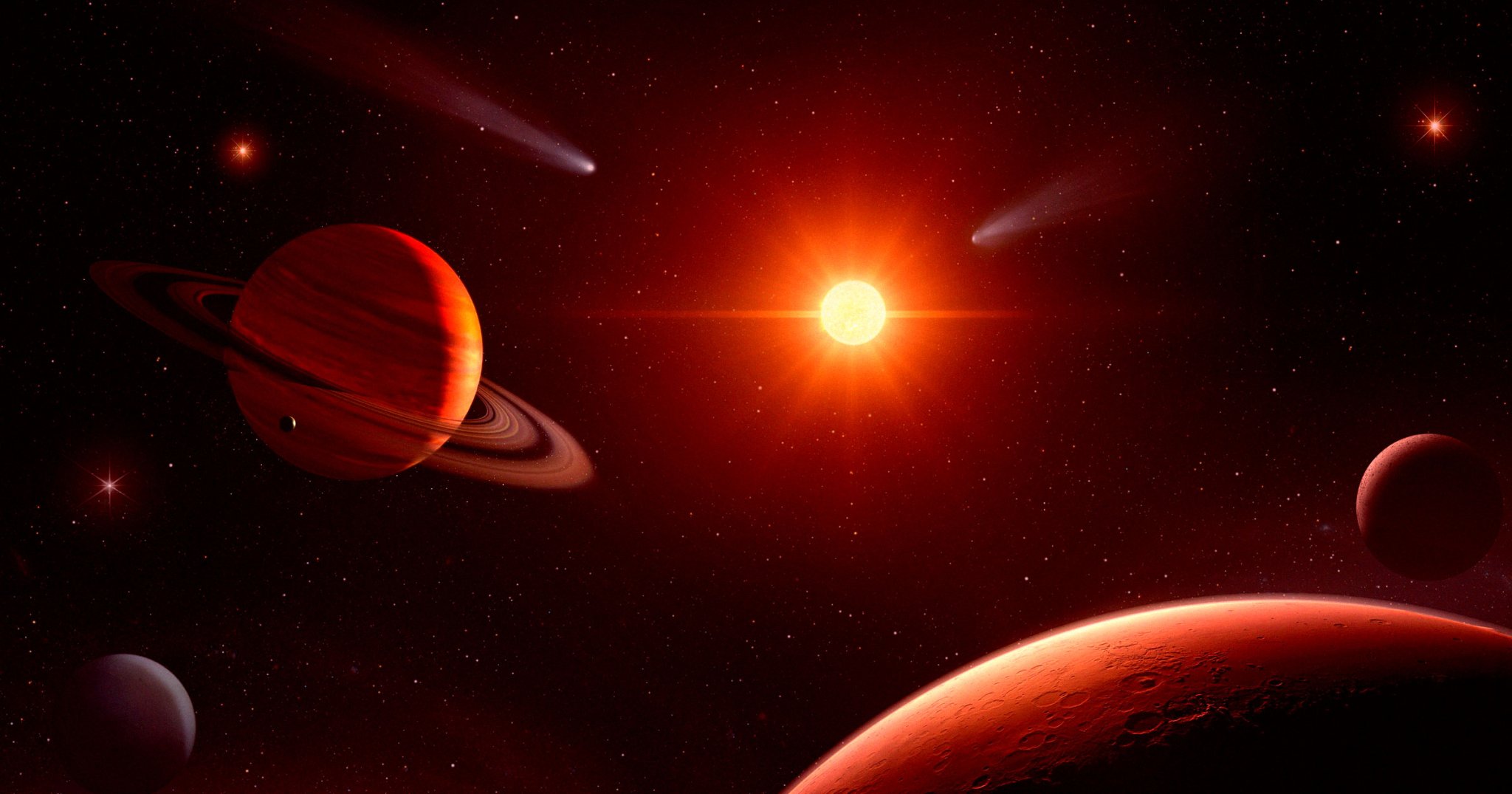
The sun at the heart of our solar system was born approximately 4.5 billion years ago, allowing life on Earth to develop billions of years later. Present models indicate that the sun will eventually become a red giant, then collapse to form a white dwarf in about six billion years. However, the future of the surviving planets, including Earth, is uncertain.
Previous research indicated that planets near the sun would be consumed, while those farther away would largely remain intact after the sun's demise. New research, however, paints a much more alarming picture. Led by Konstantin Batygin from the California Institute of Technology, a team of astrophysicists contend that even the more distant gas giants could be destroyed before the sun fully transforms into a white dwarf.
The team suggests that as the sun transitions into a white dwarf, its violent oscillations could cause the orbits of planets to intersect, triggering a rapid "dynamical instability" that could lead to the destruction of the entire planetary system within a billion years. To reach this conclusion, the scientists used a supercomputer to simulate the movement of planets as the sun goes through its final stages over billions of years.
They note that the sun's death throes could be sudden and unpredictable, leading to the "violent scattering" of planets. The paper concludes that the sun itself, in its dying moments, doesn't merely expand the planetary system it created, but also shakes it, potentially resulting in the scattering and destruction of the system.
Written by urgent.news from Futurism's reporting — not their text. Machine-written — may contain errors; check the original before relying on it.