Disappearing Planets, Dragon Fireballs, Hunter’s Moon Fill October’s Spooky Skies
From disappearing planets to dragon‑born fireballs, the October skies will play a few tricks this month, but they’ll be nothing but treats for skywatchers. As the daylight wanes and the evenings grow longer, October is one of the best months to step outside, look up, and enjoy the crisp and clear night skies that feel […] The post Disappearing Planets, Dragon Fireballs, Hunter’s Moon Fill…
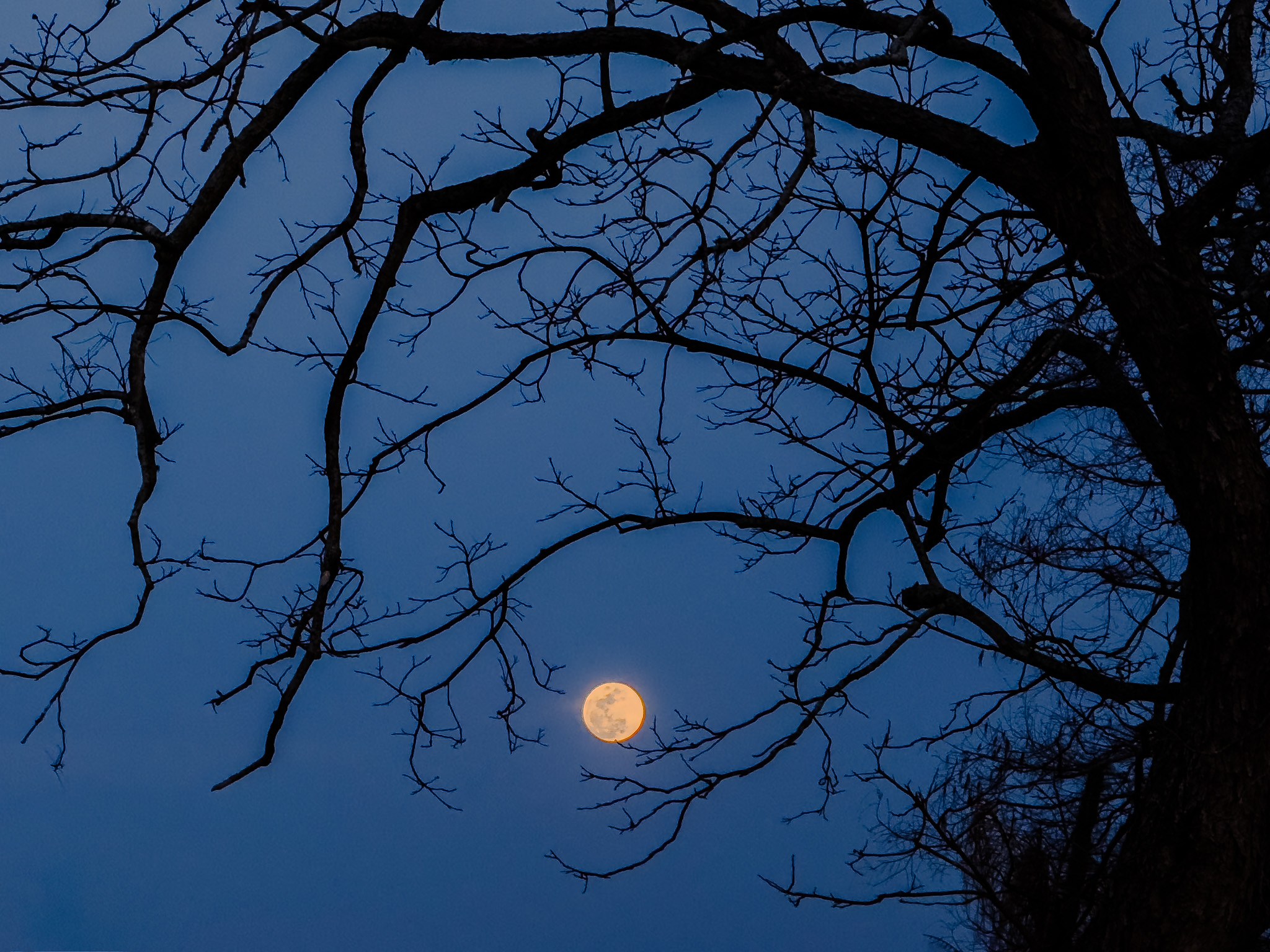
October's night skies are set to offer a thrilling mix of celestial phenomena for skywatchers, according to NASA. The full Moon will frame a pecan tree on March 13, 2025, creating a hauntingly beautiful sight outside New Orleans, Louisiana. As the days grow longer, the month presents a perfect opportunity to appreciate the crisp, clear night skies associated with Halloween. NASA has compiled a list of the most remarkable events to make the most of the season.
Early in the pre-dawn hours of Tuesday, October 6, the Moon will perform an occultation of Jupiter. The bright, star-like glow of Jupiter will be hidden behind the Moon's crescent for about an hour before reappearing, a spectacle visible with the naked eye or enhanced by binoculars, which may reveal Jupiter's moons. The event is expected to be visible across most of North America, with the pre-dawn hours beginning around 4 a.m. EDT.
The Draconid meteor shower will reach its peak the evening of Thursday, October 8, and into the early morning of Friday, October 9. This particular meteor shower is an opportune choice for casual skywatchers, as it begins just after dusk, rather than during the early morning hours. A nearly new Moon phase ensures minimal interference from moonlight, making the shooting stars easier to observe.
Despite the eerie name, the Draconid shower is named after the constellation Draco, the dragon, where the radiant point is located. To catch a glimpse, find a dark spot, allow your eyes to adjust, and watch for meteors streaking across the sky. While this may be a relatively modest shower, viewers may still see a few meteors per hour.
The Orionid meteor shower will peak on October 21, with observers in suburban areas seeing around 3-6 meteors per hour under some ambient light, while those in darker areas may witness even more. These meteors are remnants of Halley's Comet, which have ignited in Earth's atmosphere as we pass through the comet's trail. The radiant point of the shower is located near the constellation Orion, the hunter, home to the red supergiant star Betelgeuse.
This year, the Moon will be in a waxing gibbous phase, slightly dimming the fainter streaks but offering a prime viewing window once it sets around 3 a.m. local time and the radiant climbs higher in the sky.
Written by urgent.news from NASA Science's reporting — not their text. Machine-written — may contain errors; check the original before relying on it.