Modern forensics reveals human sacrifice in ancient Egypt's royal burials
Over 500 years before the building of the Great Pyramid in Egypt, First Dynasty kings were buried in a tomb surrounded by many burials of household officials and artisans—many of which seem to have taken place at the same time, a suspiciously high number of simultaneous deaths.

New forensic analysis of ancient Egyptian burials has shed light on a practice known as retainers' sacrifice, where royal household members were killed after the death of a king. This disturbing revelation came to light after a reassessment of skeletal remains from the Abydos site, using modern forensic techniques. The findings, published in Frontiers in Environmental Archaeology, suggest that up to 39% of individuals buried in subsidiary graves around First Dynasty royal tombs may have been deliberately killed with blows to the head.
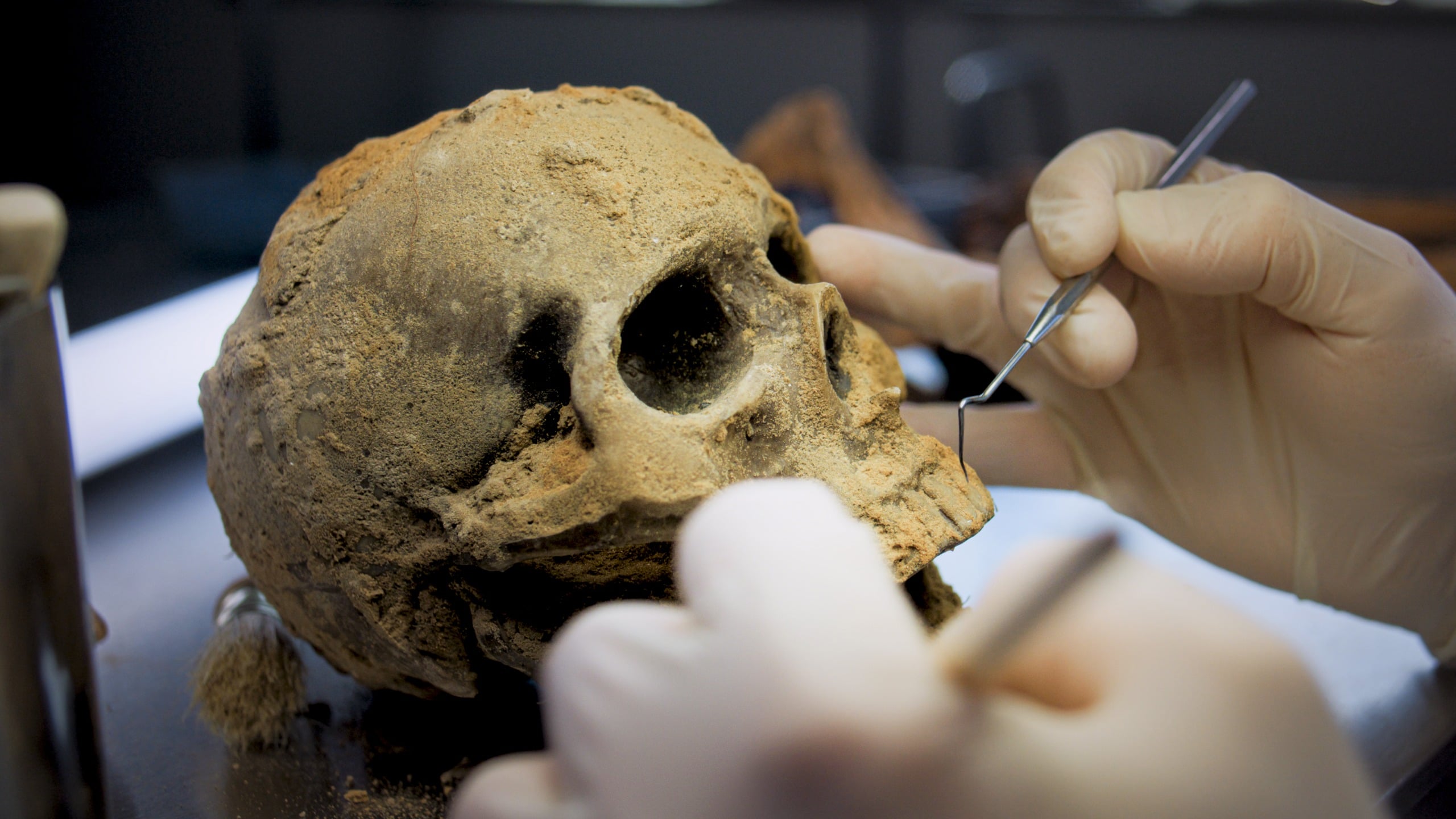
Originally, excavations in the 1920s by Flinders Petrie did not find any evidence of fatal wounds, leading him to suspect these deaths were due to natural causes. However, advancements in forensic science have allowed researchers to identify evidence of linear fractures and sharp-force trauma on the preserved skulls, indicating perimortem (around the time of death) injuries. This suggests that these individuals were likely executed deliberately.
The subsidiary burials, which were discovered during the early phases of Abydos' funerary complexes built around 3000 BC, contained simple coffins, grave goods like ceramics and tools, and names or titles on grave markers. These titles mostly referred to lower- or mid-level officials and artisans. The sheer number of these burials, some surrounded by hundreds, made Petrie suspect that these individuals were victims of retainer sacrifice.
While the new evidence supports the possibility of retainer sacrifice, the exact circumstances of death for the remaining individuals remain uncertain. Some may have died naturally, while others could have been killed in ways not visible skeltally, such as asphyxiation or other methods that would not leave visible skeletal evidence. Further analysis of remaining remains could provide more insights into the lives and deaths of these individuals.
Written by urgent.news from Phys.org's reporting — not their text. Machine-written — may contain errors; check the original before relying on it.
Also reported by 1 other outlet
- Modern forensic science uncovers human sacrifice in ancient Egypt thenationalnews.com