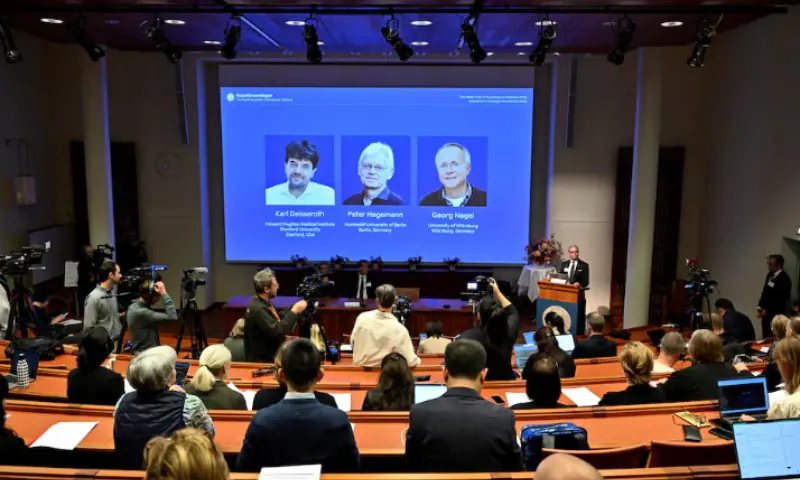
German, US scientists win Nobel medicine prize for work on optogenetics
STOCKHOLM — American Karl Deisseroth and Germans Peter Hegemann and Georg Nagel won the 2026 Nobel Prize in Physiology or Medicine on Monday for their discoveries on light and optogenetics that have helped understand how the brain works. The Nobel Assembly of Sweden's Karolinska Institute medical university said Deisseroth, 54, Hegemann, 71, and Nagel, 73, were selected for their "discoveries…
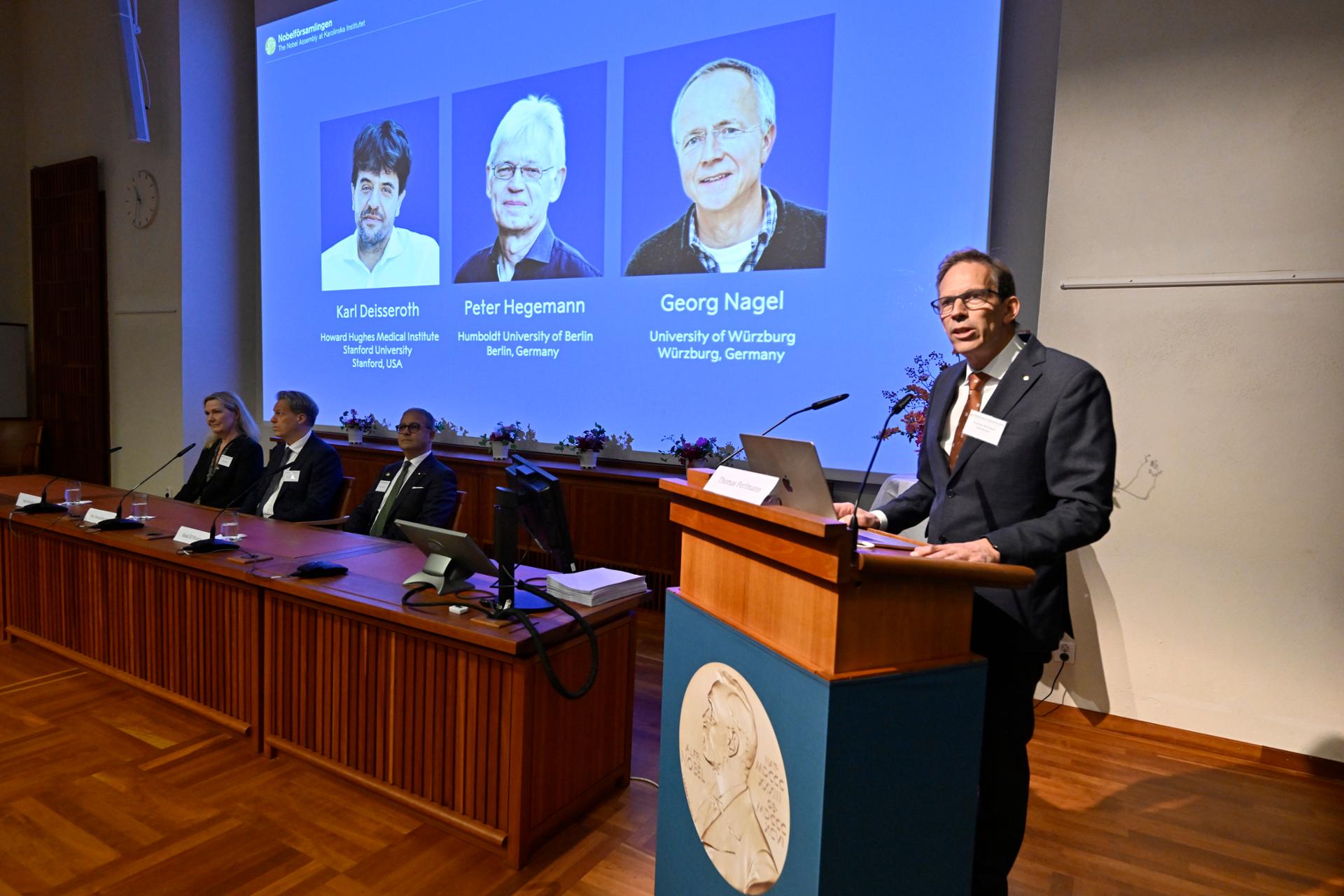
American Karl Deisseroth and German scientists Peter Hegemann and Georg Nagel were awarded the 2026 Nobel Prize in Physiology or Medicine on Monday for their groundbreaking discoveries related to light and optogenetics. The Nobel Assembly of Sweden's Karolinska Institute medical university recognized the trio for their work on light-gated ion channels and optogenetics.
Optogenetics enables scientists to control individual nerve cells' activity in a living brain, as explained by Thomas Perlmann, Secretary-General of the Nobel Assembly at Karolinska Institutet. This innovative method is now being utilized globally to unravel the mysteries of the brain. In clinical trials, researchers are employing optogenetics to restore vision in individuals affected by retinitis pigmentosa by introducing light-sensitive proteins into the retina.
Furthermore, scientists envision that optogenetics could enhance cochlear implants, providing more precise stimulation of the auditory nerve than current electrical devices.
Written by urgent.news from The Korea Times's reporting — not their text. Machine-written — may contain errors; check the original before relying on it.
This story
This is one outlet's version. Read the fullest account.