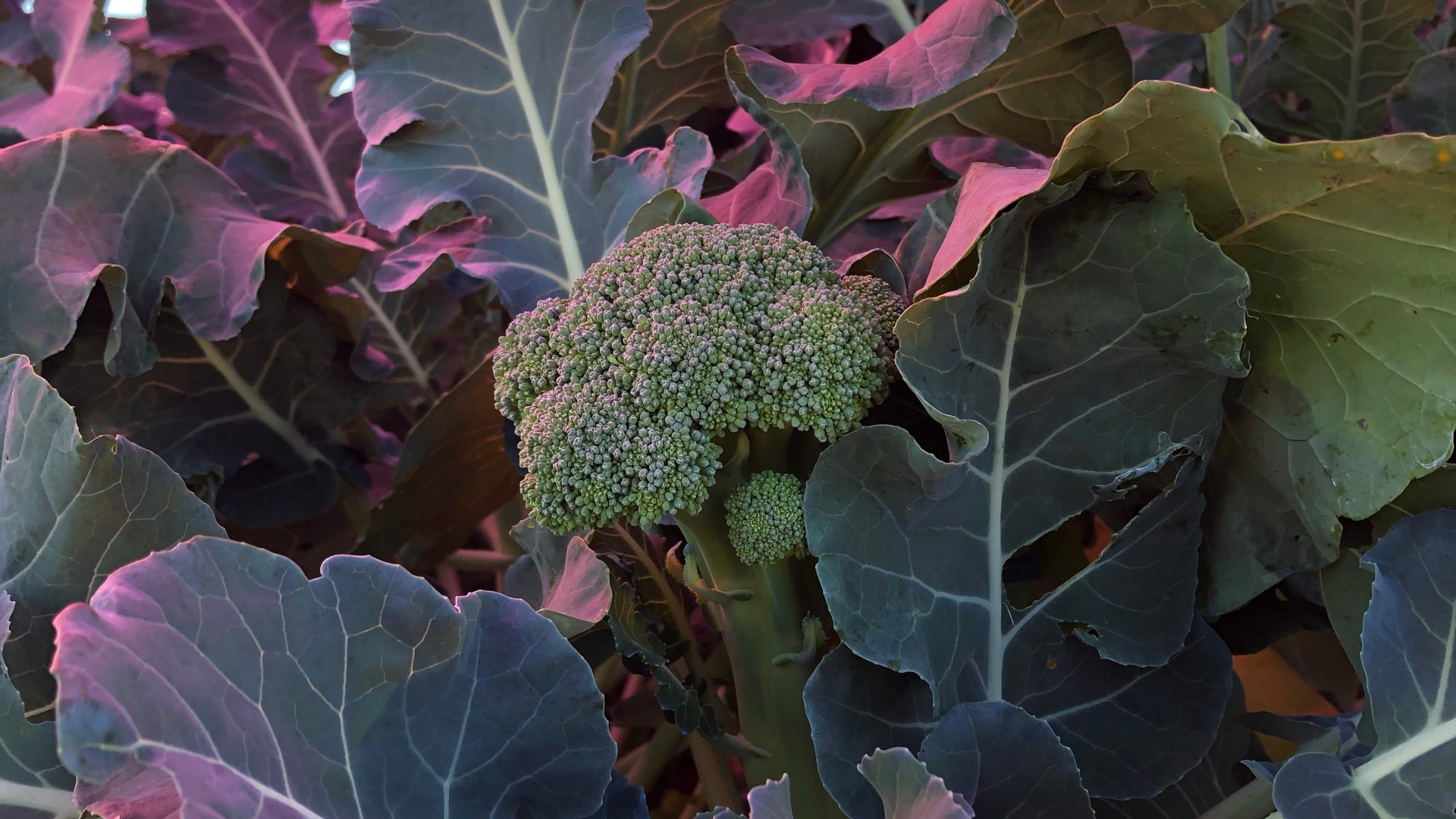
Multitasking in magenta: Colored solar panels could help farms grow crops and generate electricity on shared land
Broccoli grown under magenta solar panels absorbed sunlight more efficiently than plants grown out in the open, according to a study to be published Oct. 2 in Cell Reports Physical Science.

Scientists have discovered that colored, semitransparent solar panels can help both farms grow crops and generate electricity simultaneously. A study in Cell Reports Physical Science reveals that broccoli grown under these magenta-colored panels absorbed sunlight more efficiently than those grown outdoors. The panels allow some sunlight to pass through while using part of it to produce renewable electricity.
As a result, the broccoli plants grew just as large as those grown traditionally, although it took them 25 days longer to mature. The research team, led by Silvia Ma Lu of Mälardalen University in Sweden, built two 20-meter-by-20-meter systems using these panels and compared the broccoli's performance with plants grown in open sunlight.
The findings show that the broccoli performed similarly under the two solar panel systems, with the magenta panels allowing 4.5 times more efficient sunlight use. While these results are promising, further research is needed to validate the performance across different crops, system configurations, and growing seasons. If scaled up, these solar panels could power farm operations or supply electricity to the grid, potentially lowering electricity bills and providing an additional income source for farmers.
Written by urgent.news from Phys.org's reporting — not their text. Machine-written — may contain errors; check the original before relying on it.