Ivory still legal to sell in Australia despite 2019 promise to ban it
A new study has found hardly any of the $1.2 million worth of elephant ivory sold or advertised in a six-month period in Australia came with paperwork proving its origin.
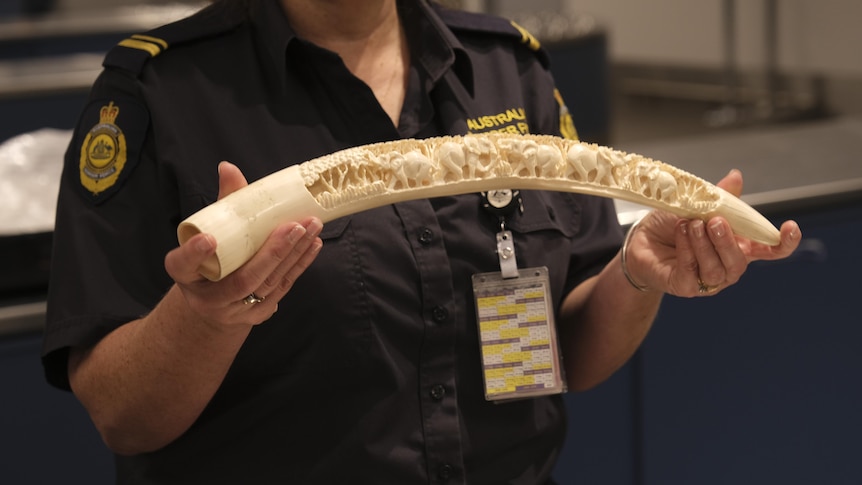
Despite a 2019 promise to ban ivory sales, Australia continues to allow the sale of elephant ivory objects. Roughly $1.2 million worth of ivory items were advertised in the country over a six-month period last year. A study found that less than 1 percent of these listings, totaling 1,698, included documentation proving their legality.
Only 9 percent of items listed their country of origin, while 62 percent had an approximate age. Many sellers did not disclose the presence of certification in their online listings, according to the study's lead author, Damien Huffer, from the University of Adelaide. The study suggests that the lack of enforceable laws requiring verification and disclosure of an item's composition, origin, or legality has led to a culture of ambiguity rather than compliance.
This is due to a federal government promise from 2019 to enforce a domestic ban on ivory and rhinoceros horn, which was never implemented. Ivory can only be imported if it came from Asian elephants before 1975 or African elephants before 1990, and if there is certification of the object's legitimacy. Elephant populations have drastically declined, with Asian elephants estimated to have halved to about 50,000 over the past 75 years, and African elephants down from an estimated 1.3 million in 1979 to around 400,000 today.
While Australia's domestic market for ivory doesn't significantly threaten wild elephant or rhino populations and the country already effectively bans most commercial imports and exports of African elephant items since 1990, Huffer warns that it is relatively easy to launder recently poached ivory into Australia or other markets with active domestic trade.
Conservation groups and auctioneers are calling for a clearer, nationally consistent framework to govern the domestic trade in elephant ivory and rhinoceros horn, with exemptions only for items with proven historical, cultural, or legitimate purposes.
Written by urgent.news from ABC News AU's reporting — not their text. Machine-written — may contain errors; check the original before relying on it.