How does cloud seeding work? What it could do for haze at Sepang this weekend
KUALA LUMPUR, Oct 3 — For more than a month, haze has blanketed parts of Malaysia as transboundary smoke from mass...
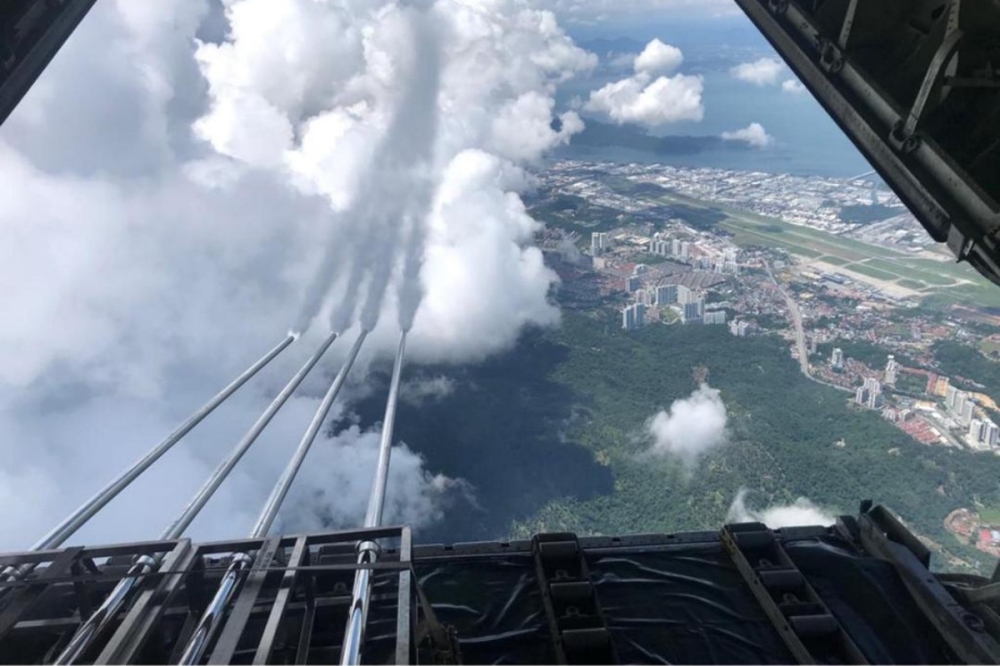
Haze has hung over parts of Malaysia for over a month, as smoke from fires in neighboring Indonesia drifts across the region. The Sepang International Circuit (SIC), where the Bahrain F1 Grand Prix is set to take place, has been affected by this haze. SIC CEO Azhan Shafriman Hanif has suggested deploying cloud seeding operations around the circuit to help improve air quality and visibility before the event.
Malaysia has ramped up its cloud seeding efforts due to the haze and hot, dry weather conditions. As of September 30, 2026, 14 cloud seeding operations involving more than 50 flights had already been carried out nationwide, with additional operations in Sabah and Sarawak. The National Disaster Management Agency (Nadma) has been implementing these operations to increase rainfall and maintain sufficient dam water levels.
Cloud seeding involves introducing particles into clouds to enhance precipitation. Clouds are composed of tiny water droplets or ice crystals that form when water vapor cools and condenses around microscopic particles. Cloud seeding attempts to boost this natural process by adding more particles to existing clouds that already have sufficient moisture and suitable atmospheric conditions.
There are three main types of cloud seeding techniques used in Malaysia: static, dynamic, and hygroscopic seeding. Static seeding, the most common method, introduces substances like silver iodide into cold clouds to encourage ice crystal formation, which can then grow and fall as precipitation. Dynamic seeding aims to increase cloud size and vertical development, while hygroscopic seeding uses salt particles in warm-cloud environments to act as cloud condensation nuclei (CCN) and promote water droplet growth.
When cloud seeding agents are released into or around suitable clouds using aircraft, ground-based generators, or other methods, the particles provide additional nuclei for water vapor to condense upon. As water vapor collects on these particles, droplets or ice crystals grow larger and heavier, eventually falling as rain, snow, or hail at the appropriate temperatures. Typically, rainfall is expected within 30 to 60 minutes after a cloud seeding operation, although the timing may vary depending on the specific conditions.
Written by urgent.news from Malay Mail's reporting — not their text. Machine-written — may contain errors; check the original before relying on it.
This story
This is one outlet's version. Read the fullest account.