How does cloud seeding work? What it could do for haze at Sepang this weekend
KUALA LUMPUR, Oct 3 — For more than a month, haze has blanketed parts of Malaysia as transboundary smoke from mass...
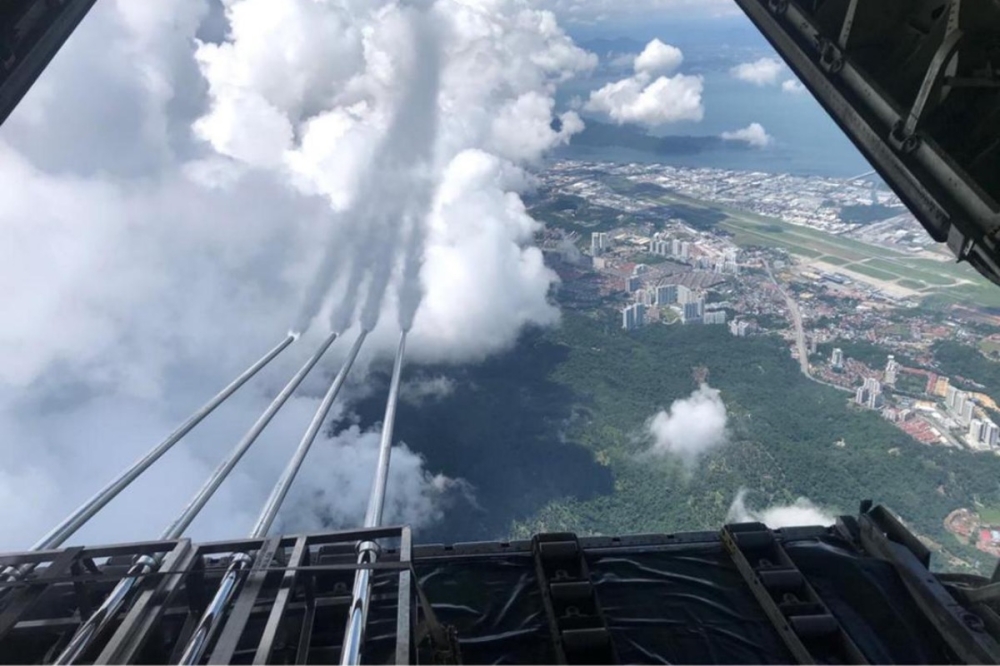
Cloud seeding is a weather modification technique that seeks to increase precipitation in existing clouds. It works by introducing particles into clouds to provide additional surfaces for water vapor to condense upon, thereby encouraging the formation of ice crystals or water droplets that can fall as rain. The idea is to enhance the natural process of cloud formation and precipitation without creating rain from clear skies.
In Malaysia, cloud seeding operations have been ramped up in response to the region's haze problem and hot, dry weather. The National Disaster Management Agency (Nadma) has conducted over 50 cloud seeding flights as of September 30, 2026, in a bid to improve rainfall and reduce air pollution. This includes operations in the Air Itam Dam catchment area and other regions to ensure sufficient water levels.
There are three main types of cloud seeding. The most common is static seeding, which involves spraying silver iodide into cold clouds to stimulate ice crystal formation. Dry seeding uses flares to release salt particles that act as cloud condensation nuclei in warmer clouds. Hygroscopic seeding is used in warmer environments to form water droplets around salt particles. Each method targets specific cloud and weather conditions to maximize the chances of successful precipitation enhancement.
Written by urgent.news from Malay Mail's reporting — not their text. Machine-written — may contain errors; check the original before relying on it.