Crop outputs grew up to 100% in China’s big agricultural experiment: scientists
Large-scale field trials across China show that irrigation water treated with natural minerals radiated by sunlight could dramatically increase the yields of several crops, according to Chinese scientists behind the experiments. The team said the trials, including on rice, wheat, soybeans, peanuts, sweet potatoes, sugar cane and vegetables, improved photosynthetic efficiency. Their study,…
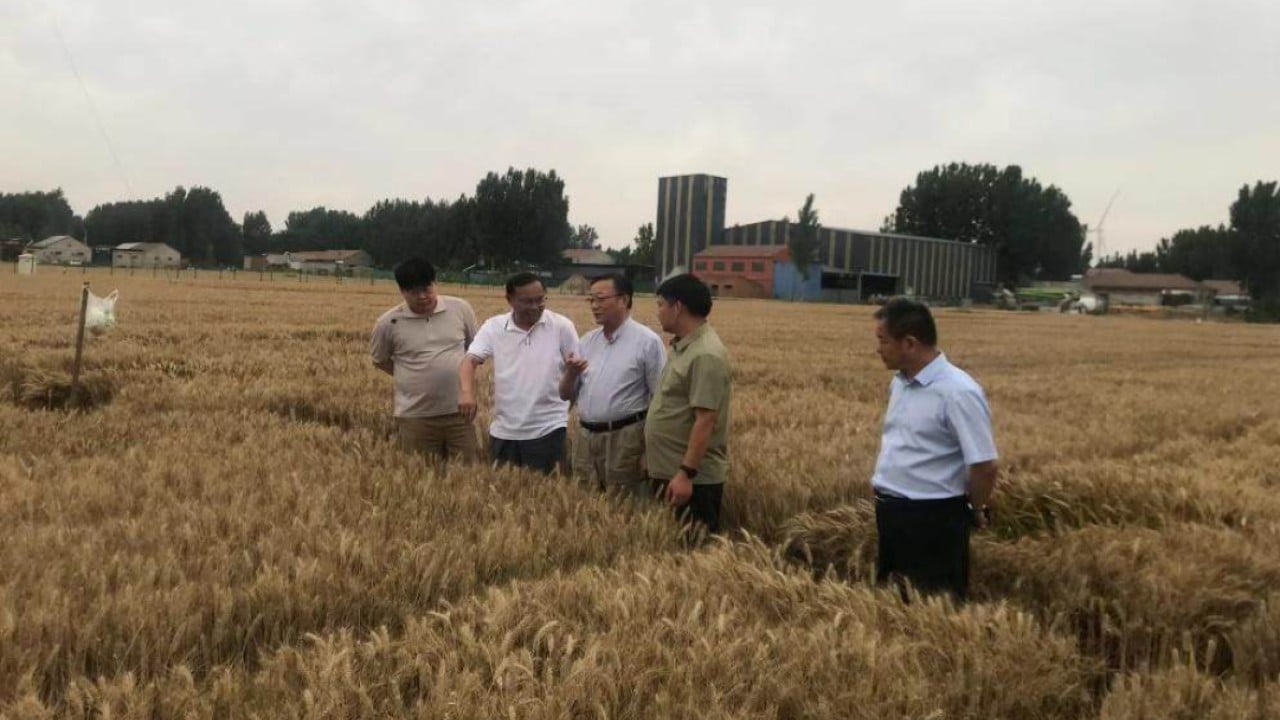
Chinese scientists conducted large-scale field trials across the nation, treating irrigation water with natural minerals that have been radiated by sunlight. The experiment focused on enhancing the photosynthetic efficiency of various crops, including rice, wheat, soybeans, peanuts, sweet potatoes, sugar cane, and vegetables. According to the researchers, the trials were conducted in multiple provinces, from Heilongjiang in the northeast to Hainan in the south.
The results from the experiments showcased significant yield increases for several crops. Rice output saw a 40.6% increase, with wheat experiencing a 24.7% boost, and sugar cane achieving a remarkable 45.7% rise. One sweet potato trial even recorded an astounding 109.5% increase in yield. Lu Anhuai, a professor at Peking University and the lead scientist behind the project, stated that this approach provides an alternative method to improve agricultural production by optimizing the way plants utilize sunlight through irrigation water.
Lu emphasized that this innovative technique goes beyond traditional methods that have relied on seeds and fertilizers, instead focusing on water and photosynthetic efficiency. He believes that the technology can be applied to various crops that require irrigation, such as major agricultural crops like rice and wheat. The researchers are optimistic about the potential for this approach to be expanded in agricultural regions worldwide, noting that current Western research in this field is lacking.
The field trials demonstrated that the mineral-treated water was applied to crops in a specific method: the mineral powder was mixed into regular irrigation water at a rate of approximately 0.5%, before being stirred under sunlight for an hour. The clear water was then used for irrigation, allowing the minerals to remain at the bottom for reuse.
The researchers highlighted the cost-effectiveness and ease of preparation of this method, as the materials involved are natural minerals that are straightforward to produce. They also noted that the core formulation of the technology is protected by patents.
Written by urgent.news from South China Morning Post's reporting — not their text. Machine-written — may contain errors; check the original before relying on it.