Switzerland Loses Nearly 20 Per Cent Of Glacier Ice Since 2021 As Scientists Warn Of ‘Explosion’ In Melt Rates
Zurich, October 1, 2026: Switzerland has lost nearly one-fifth of its glacier ice in just five years, with scientists warning that rapidly rising melt rates are transforming once ice-covered Alpine landscapes into barren stretches of rock. Swiss glaciers shrank by 5.5 per cent during the first eight months of 2026, according to an annual monitoring report. The decline followed a winter with…
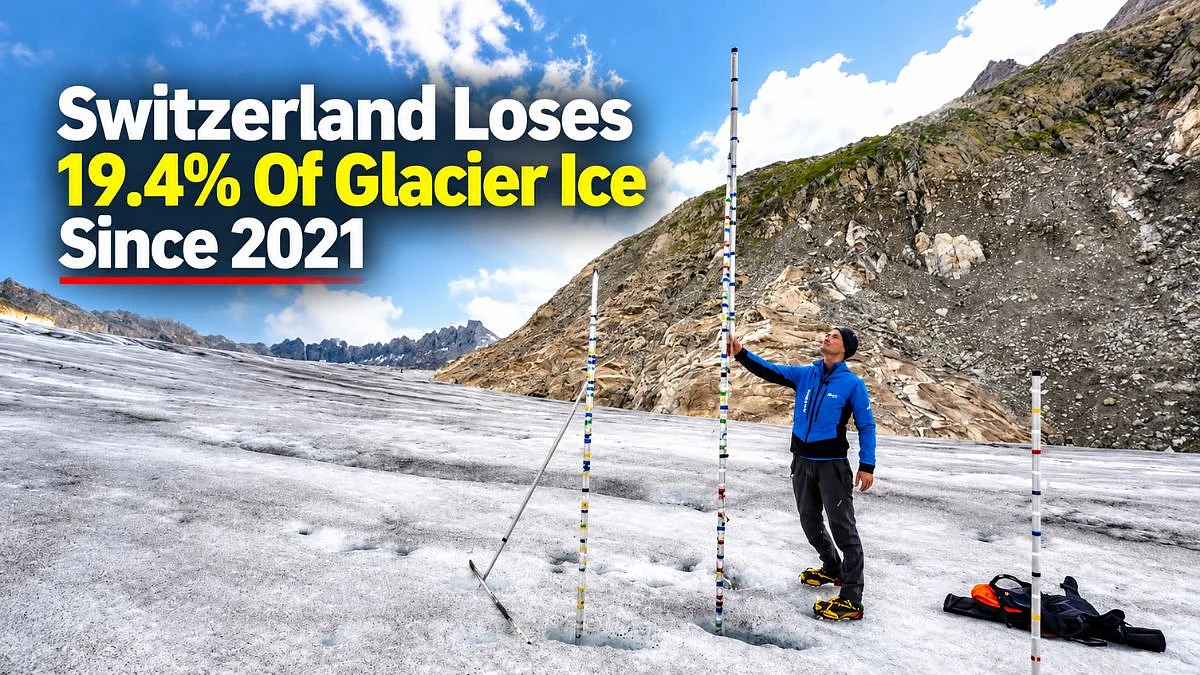
Switzerland has witnessed a significant loss of glacier ice, with nearly one-fifth of its glaciers disappearing over the past five years. Glaciologists warn that the rapid melt rates are transforming once ice-covered Alpine landscapes into barren rock formations. Swiss glaciers contracted by 5.5 percent during the first eight months of 2026, following a winter with little snow and a summer marked by intense heatwaves.
This loss is just below the record set in 2022 and brings the total reduction in glacier ice since 2021 to 19.4 percent. Matthias Huss, a glaciologist at ETH Zürich and lead author of the report, expressed astonishment at the speed of the retreat, as areas that were once covered by glaciers hundreds of meters thick are now barren.
The average thickness of individual glaciers declined by between 2.5 meters and 4 meters in 2026. Scientists have also observed glaciers collapsing from within due to internal streams carving out large caverns, weakening the glaciers and accelerating their collapse. Europe, particularly Alpine regions, is warming at twice the global average, with Switzerland experiencing its hottest and driest summer half-year since records began in 1864.
Despite the severity of the heat in 2026, the country's glacier loss remained slightly below the record set in 2022, largely due to limited Saharan dust deposits and slightly greater snow cover at the end of winter.
Written by urgent.news from Free Press Journal's reporting — not their text. Machine-written — may contain errors; check the original before relying on it.