Clothes that cool you, warm you—and make power as you move
In a bid to cool people, not rooms, engineers made a printable fabric that turns body motion into electrical signals that switch on cooling and heating when you need it.
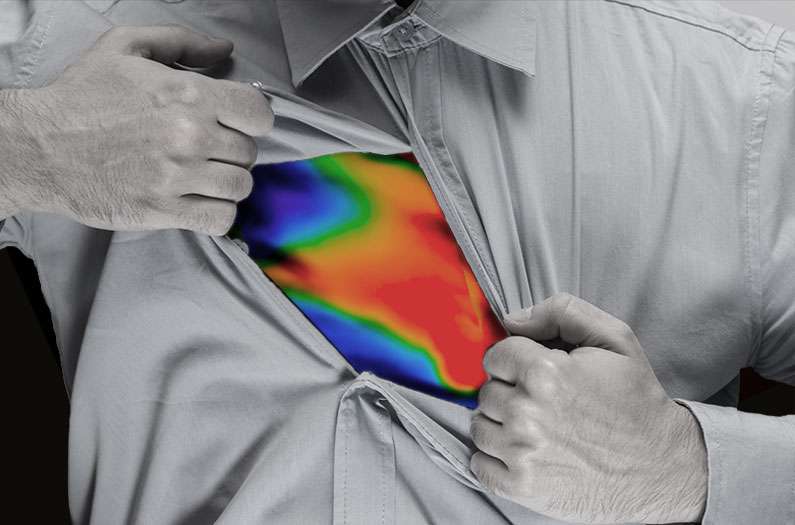
As global temperatures rise and energy demand increases, scientists at the University of Illinois at Urbana-Champaign have developed a groundbreaking material that could revolutionize personal cooling and power generation. The innovative textile combines cooling capabilities with the ability to generate electricity from human motion, offering a promising solution for sustainable wearable technologies.
Traditionally, cooling and energy-harvesting have been achieved through separate layers with distinct functions. However, this new material by researchers Lili Cai and her team is the first of its kind to integrate both features into a single printable textile. With the projected tenfold increase in cooling demand by 2050 due to climate change and the urgent need for energy-efficient cooling alternatives, this development holds immense potential.
The material's unique properties make it ideal for radiative cooling, a method that relies on materials absorbing heat and emitting it at wavelengths that pass through Earth's atmosphere, ultimately dissipating it into space. By incorporating triboelectric energy nanogenerators into the textile, the researchers were able to convert the kinetic energy generated by human motion into usable electricity.
The researchers achieved this by creating a composite textile using zirconium oxide, a material known for its high refractive index and dielectric properties. Through a process called direct ink writing, the composite was printed into flexible, breathable textile structures suitable for wearable applications such as athletic clothing. In outdoor tests, the material reflected 96% of incoming sunlight and maintained temperatures approximately 3-6°C cooler than the surrounding air.
This breakthrough in smart fabrics not only offers efficient personal thermal management but also significantly reduces the need for external power sources. As the demand for cooling continues to grow, this innovative textile presents a promising path forward for sustainable and energy-efficient wearable technologies.
Written by urgent.news from Anthropocene Magazine's reporting — not their text. Machine-written — may contain errors; check the original before relying on it.