Commentary: China opens door to 100,000 American students. The US must do more to get them there
If Americans head to China for educational exchanges, their experience and expertise could benefit more than the US, says Kevin Chen from the S Rajaratnam School of International Studies.
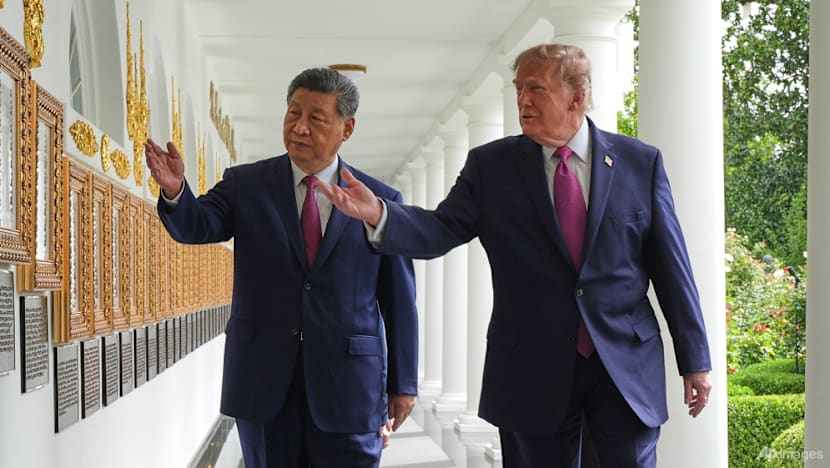
Kevin Chen, from the S Rajaratnam School of International Studies, argues that American students studying in China could provide valuable insights to the United States. China's President, Xi Jinping, recently invited 100,000 American students to study in China over the next five years, a pledge that should be understood in context.
In 2012, around 15,000 Americans studied in China, but this number has dwindled to fewer than 2,000 in 2026 due to the pandemic and political tensions. This shrinking pool of experienced students weakens the US' ability to develop, utilize, and retain expertise on China, as relying on second-hand information increases the risk of miscalculation.
Familiarity with the Chinese language and culture can offer unique perspectives that official statements and second-hand accounts cannot. The experiences of past American scholars, such as Derk Bodde, who studied in China from 1948 to 1949, show the value of firsthand experience. Bodde's work provided unique insights into the founding of the People's Republic of China, revealing the excitement and complexities of the revolution for Chinese citizens.
American scholars who have studied in China have gone on to work in government, academia, and inform policy or testify before Congress.
However, the situation is not straightforward. Funding cuts have limited opportunities for American students to study in China, and employment risks discourage them from taking such opportunities. Previous programs like the Fulbright Program, Boren Awards, and Critical Language Scholarship have been cut or reduced, leaving young Americans with fewer avenues to study in China.
Additionally, concerns over links to the Chinese military have led universities to end or scrutinize partnerships with Chinese counterparts, creating an atmosphere of suspicion for American students.
The loss of experts and specialized research in Chinese studies further undermines the strategic analysis ecosystem that supports American policymaking. The disestablishment of the Pentagon's Office of Net Assessment and elimination of funding for the US Air Force's China Aerospace Studies Institute are examples of this trend. Addressing these systemic and political factors is crucial for encouraging more American students to study in China and for them to contribute to strategic conversations.
Restoring funding for Chinese area studies and programs, as well as ensuring employment opportunities for returning students, can help build a stronger understanding of China and manage the relationship more effectively.
Written by urgent.news from Channel News Asia's reporting — not their text. Machine-written — may contain errors; check the original before relying on it.