US-led coalition ends mission in Iraq
Coalition troops deployed to Iraq and Syria in 2014 to fight the Islamic State group, which had seized large swathes of territory, committing massacres and forcing thousands of women and children into slavery.
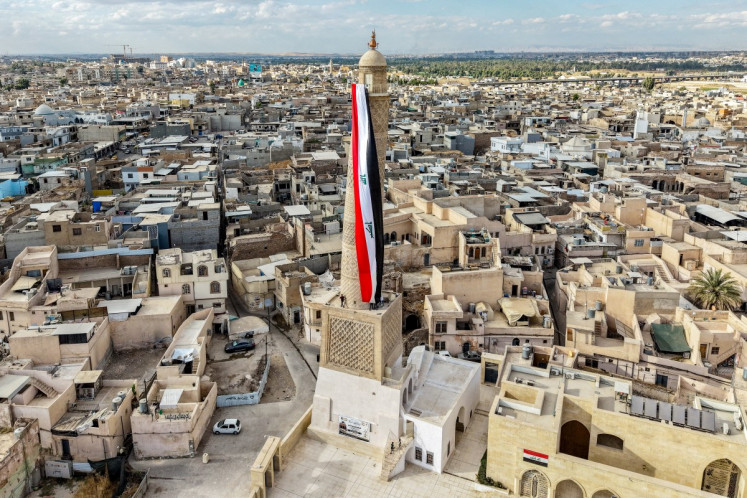
After a decade-long presence, the US-led coalition is wrapping up its mission in Iraq, a role it played in countering militant groups while often clashing with local factions. The coalition initially entered Iraq and neighboring Syria in 2014 to combat the Islamic State (IS) group, which had taken control of significant territories and carried out horrendous acts.
Although IS was vanquished in Iraq by 2017 and in Syria by 2019, coalition forces persisted to counter the group's remaining forces. In 2024, Baghdad and Washington reached an agreement to phase out the coalition's involvement, with Iraqi troops gradually pulling back from bases nationwide and confining themselves to the autonomous Kurdistan region.
Their complete withdrawal from the latter region is set for Wednesday. The Iraqi government perceives the coalition's departure as eliminating the pretext powerful militant factions have employed to maintain their arsenals. Iraqi Prime Minister Ali al-Zaidi designated October 1, the day post the coalition's departure, as Sovereignty Day, heralding it as "a national occasion that affirms the completion of Iraq's journey toward sovereignty and reinforces the state's authority and institutions."
Zaidi, who assumed office this year with the US's endorsement, pledged to bolster the state's control over weapons, ensuring armed factions surrender theirs to the state. The Iraqi leader initially set September 30 as the disarmament deadline, but subsequently abandoned it as negotiations aimed at regulating weapons dragged on, a matter that is anticipated to be protracted and fraught with challenges.
Despite several dominant groups declining to disarm, senior politicians are endeavoring to forge a compromise. Factions have presented conditions that encompass not only the exit of foreign troops but also a cessation of American political and economic influence. The formidable Kataeb Hezbollah group hailed the coalition's withdrawal as a step toward full sovereignty, yet also warned Zaidi's administration: "A government that doesn't serve its people will be toppled by all feasible means."
Throughout the IS onslaught, both the US-led coalition and other factions fought alongside Iraqi forces against the common enemy. However, post-IS's defeat, the coalition's presence became a persistent source of contention between Iraqi authorities and the factions, who denounced the US troops and began targeting them with drones and missiles, prompting retaliatory strikes by the US that claimed several faction commanders' lives.
Written by urgent.news from Dawn's reporting — not their text. Machine-written — may contain errors; check the original before relying on it.
This story
This is one outlet's version. Read the fullest account.
- US-led coalition ends mission in Iraq dawn.com
- US-led coalition ends mission in Iraq al-monitor.com
- US-led coalition ends mission in Iraq lemonde.fr
- US-Led Coalition Ends Mission In Iraq, Moves Out After 12 Years ndtv.com